Evanston Epoxy Flooring brings more than 20 years to epoxy flooring in Wood Dale, and on a typical residential call here the slab is not bare. It already carries old paint, a kit coating from a hardware store or a sealer gone chalky, and the first decision is what to do about that layer before anything new is mixed.
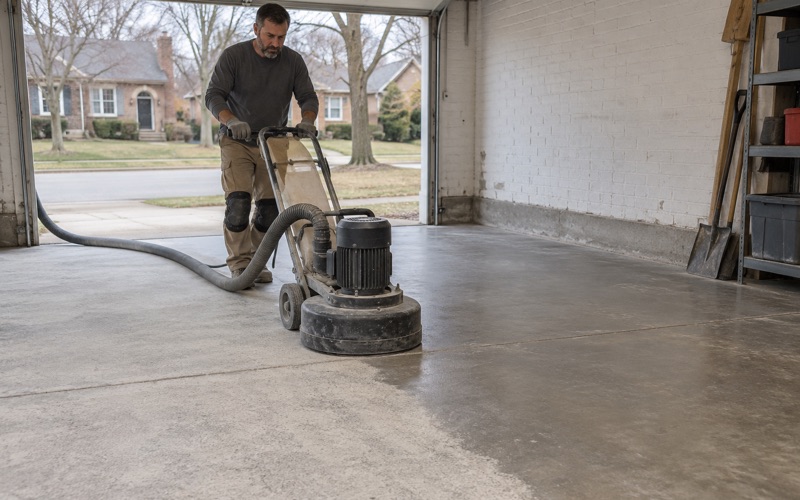
We open every slab mechanically, with a diamond grinder or a shot blaster, and we do not acid etch. That matters more on a recoat than on new concrete, because acid does nothing to an old film. Only abrasion takes it off, and only abrasion shows what the concrete underneath looks like once it is gone.
Our proposals name the product, the system build and the finished thickness, so a homeowner can check what was quoted against what went down. When a floor needs repair before it can take a coating, the proposal says that too, in plain words and before any money changes hands.
2,760 Homes From Two Decades, 82 From the Last One
Half of Wood Dale’s housing went up in a single twenty-year window. The ACS 2024 five-year estimates count 1,382 units built in the 1960s and 1,378 in the 1970s, together 50.6 percent of the city’s 5,454 housing units. Only 82 were built between 2010 and 2019, and the same table records none since 2020.
Slabs Poured Before 1980
A garage slab poured in 1965 or 1975 has had decades to collect whatever its owners put on it. One may carry a single coat of porch paint, another a two-part kit from the early 2000s, another three layers nobody can name. Across the whole stock, 68.1 percent of Wood Dale’s units predate 1980, so an old slab is the normal case here.
Age alone tells us little about condition. A 1960s slab can be sound and flat, and a newer one can be cracked and dusting. What age does tell us is that the surface has a history, and that history has to be read before a price is put on the job.
Why New-Concrete Advice Fits Few Homes Here
Much of what is written about garage coatings assumes fresh concrete: wait out the cure, check the moisture, grind once and coat. With 82 homes built in the last full decade on the census table, that sequence describes very few garages in Wood Dale. The more common starting point is a slab that has been coated before.
That changes how we scope the job. A recoat proposal carries removal as its own line, with the method named, because stripping an old film can take as long as building the new system. Folding it into a vague prep charge is how a quote looks cheap and then grows.
A City of Owners
Of Wood Dale’s 5,342 occupied units, 4,112 are owner-occupied, or 77.0 percent. That points to a familiar customer: someone who has lived with a floor for years, may have coated it once already, and now wants the next coat to be the last one for a long while.
Owners also tend to know the floor’s history, and we ask for it. When a previous coating went down, what it was, and whether it was ever patched all shorten the inspection. A receipt or a can label in the garage is worth more to us than a guess.
Looking for epoxy-flooring closer to Westchester? See Epoxy-Flooring in Westchester.
Reading the Old Coating, Then Deciding Whether It Stays
What We Check Before Quoting
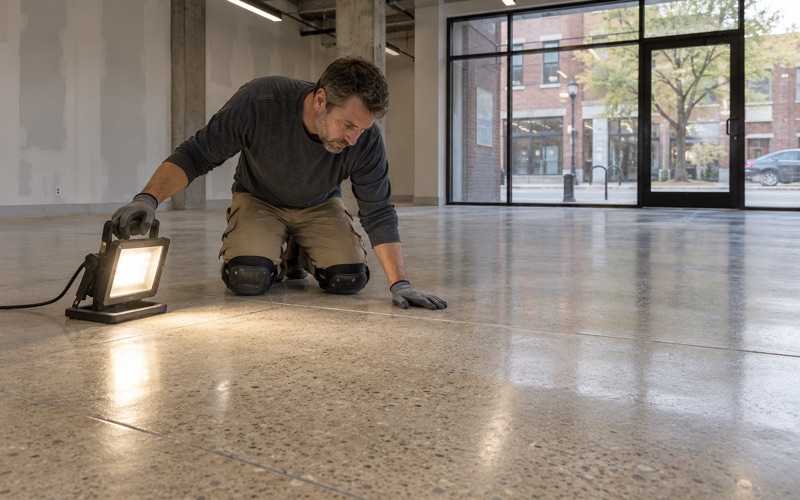
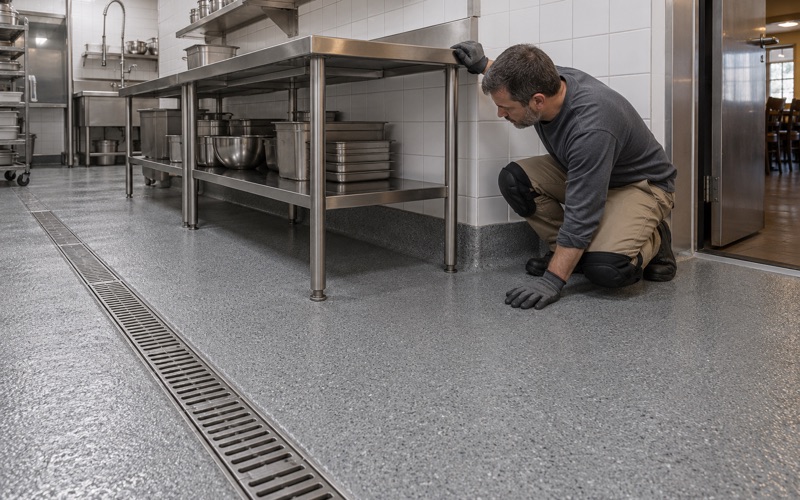
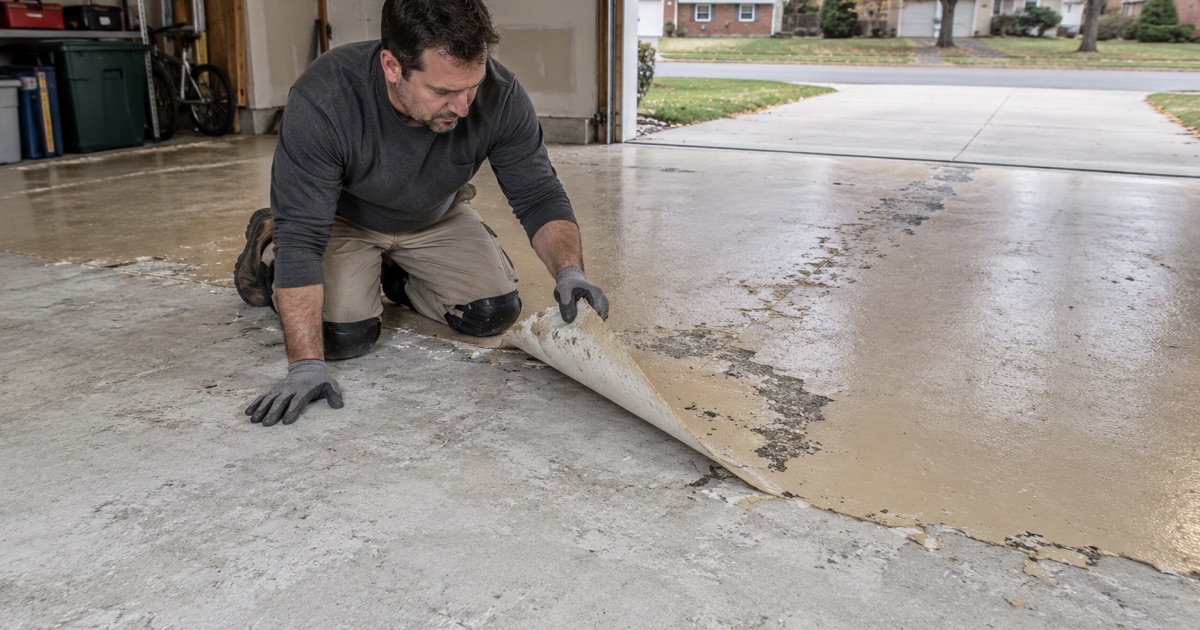
We read the cracks, the old paint and the old coating before we quote. On a previously coated slab that means tapping for hollow spots, scraping edges to see whether the film lifts in sheets or holds, and checking whether the cracks have been filled with something that will not bond to a new system.
We are careful about what we say next. Why an earlier coating let go on a particular floor is something we judge slab by slab, and we do not pin it on the neighborhood. A Wood Dale garage that peeled could have been under-prepared, wet underneath, or simply coated with a product never meant for tires.
Moisture Under an Old Film
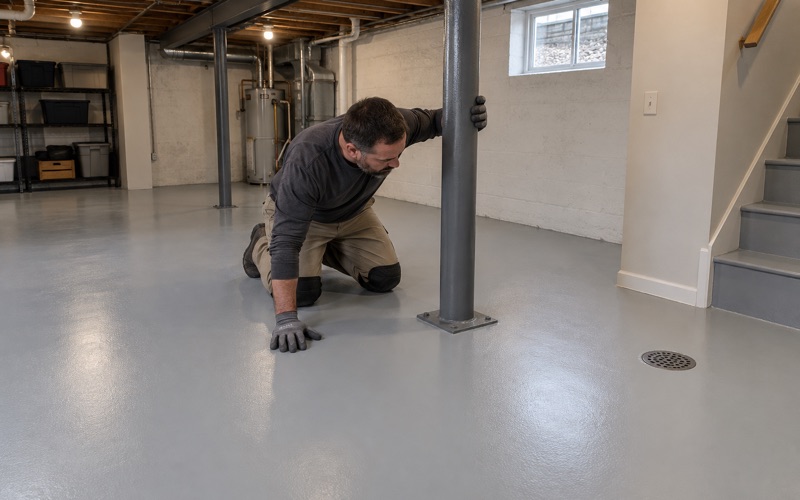
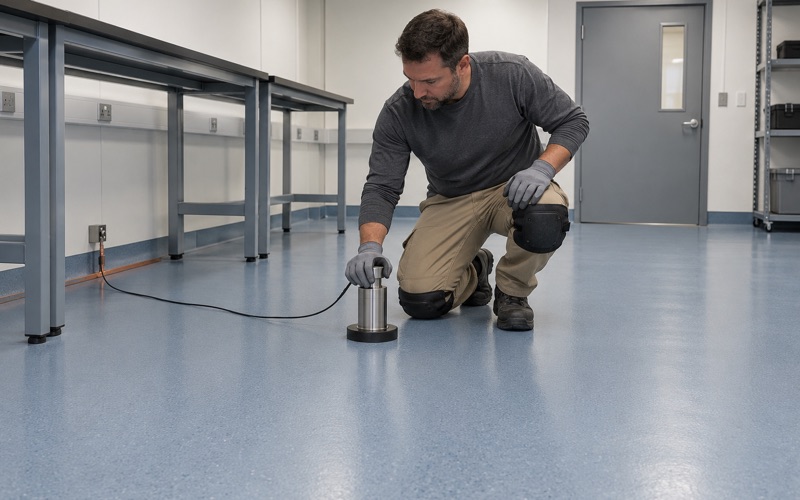
An old coating can hide a moisture problem because it sits between the concrete and any test laid on top. Moisture testing is a written line item in our garage scope, and on a recoat we run it after the old film is off, with an ASTM F1869 calcium chloride test or ASTM F2170 in-situ relative humidity probes.
Warranty exclusions are read out before the job is sold, and moisture is named first. If the reading on a 1970s slab comes back high, the proposal adds a moisture-mitigation primer or says plainly that the floor is not a candidate, rather than leaving the homeowner to discover it as blisters.
Grinding It Off Versus Coating Over It
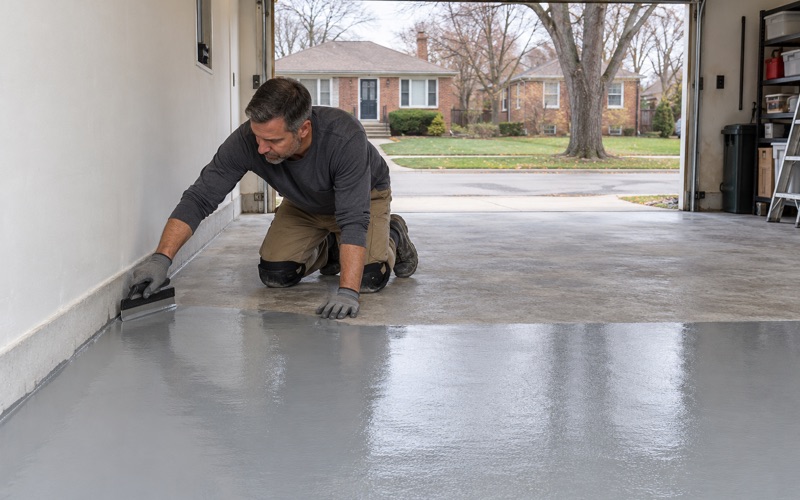
Coating over an old film is only as strong as that film’s grip on the concrete. When the earlier coat is sound, thin and well bonded, we can grind it to a profile and build over it. When it lifts anywhere, it comes off everywhere, because a new system bonded to a failing one fails with it.
Full removal means diamond grinding or shot blasting down to clean concrete and an ICRI surface profile, usually CSP 2 or 3 for a broadcast system. It is the dusty, noisy part of the job, and we plan it inside Wood Dale’s construction hours so a one-day floor does not run into a neighbor’s evening.
Attached and Detached Garages Across Wood Dale
Among owner-occupied homes, Wood Dale counts 2,635 single-family detached houses and 745 single-family attached ones, such as townhouses. Those figures describe buildings, not garages; the census has no garage count, so we use them only as a rough proxy for the kind of slab a homeowner is likely to have.
The Garage Under the House Roof
An attached garage shares a wall, and often a door, with the living space. That shapes the job: odor and dust control matter more, the grinder’s vacuum runs the whole time, and we pick topcoats with the house in mind. Floor coatings are chosen within the Illinois limit on VOC content, which binds the installer as well as the manufacturer.
Attached garages are also where the threshold detail matters. A 1960s or 1970s house may have a step or a sloped apron at the door into the house, and edges are where a thin film often lets go first. We grind right to the wall and the step so the new film has a clean edge to hold.
The Detached Garage Out Back
A detached garage is usually unheated, and that decides the calendar more than anything else. We schedule curing against slab temperature and the dew point spread at the slab surface rather than the date, and when a detached garage in Wood Dale is too cold to cure a coating properly, we say it has to wait for spring.
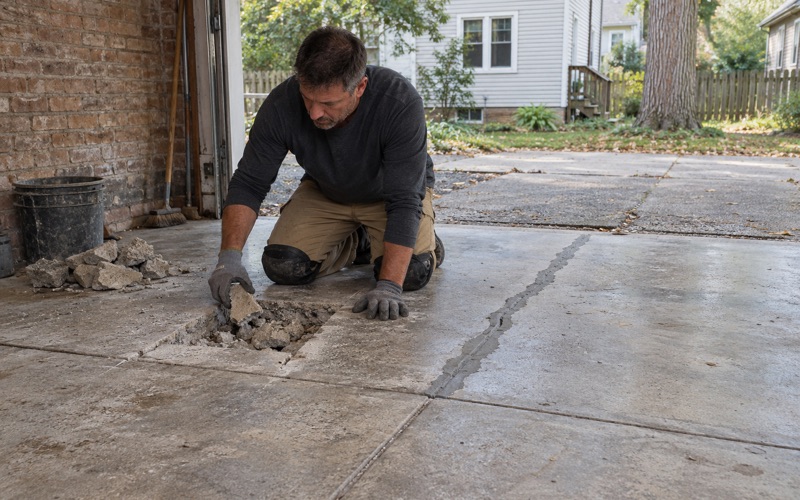
A detached slab also sits on its own, apart from the house foundation, and it moves on its own. A coating is a film that follows the slab under it, so we tell an owner before the job that it will not stop a crack from moving, and we price any repair separately.
Townhouse Garages and Shared Walls
Attached homes add a third case: a garage that shares a wall with a neighbor’s. Townhouse and condominium jobs are scheduled with the association before the first bag is opened, because grinding noise carries through a shared wall and the association may have its own rules on finishes and work hours.
Staging matters in a row of garages. We keep the grinder, dust collector and mixing station inside the owner’s own bay and off any shared drive, and we tell the next-door owner when the loud part starts and when it ends. If the association asks for a certificate of insurance, we supply it before the date is set.
Who Has to Register With the City Before a Recoat
Wood Dale’s Community Development Department requires every contractor in the building trades to be registered with the city before a permit is issued. The rule reaches general contractors, concrete and asphalt contractors and a long list of other trades, and registration comes with a certificate of insurance.
What City of Wood Dale Contractor Registration Involves
Registration with the City of Wood Dale requires a certificate of insurance carrying $2,000,000 in public liability coverage, with the City of Wood Dale named as certificate holder. Illinois issues no state license for flooring or coatings work, so this local registration, along with the bond and insurance a municipality asks for, is what we show in place of a license number.
Whether a floor coating by itself needs a city permit is a question we put to Community Development for the specific job rather than answer from memory. The department’s permit contact is permits@wooddale.com or 630-766-5133, and we would rather ask than guess on a homeowner’s behalf.
When a Homeowner Does Not Need to Register
The city’s registration rule exempts homeowners doing non-licensed work on their own property. An owner who strips and recoats their own garage floor does not register with the city; a contractor hired for the same floor falls under the registration rule, and should be able to show its paperwork.
Hiring out the job brings state rules into play as well. Every home job we take gets a written contract and the Home Repair: Know Your Consumer Rights pamphlet before work starts, as the Illinois Home Repair and Remodeling Act requires, and the proposal states what removal, testing and coating it covers.
The New System on an Old Slab
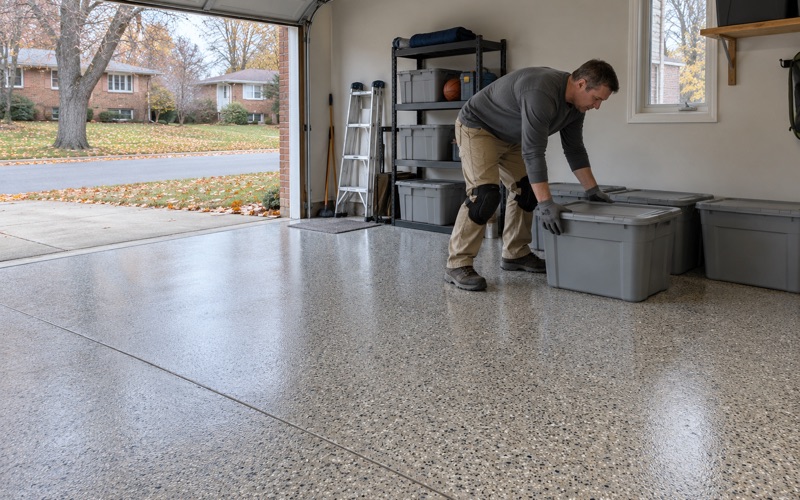
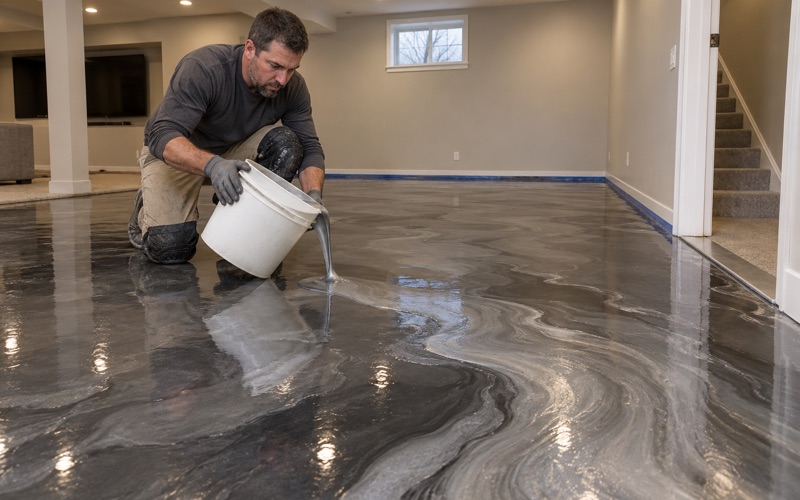
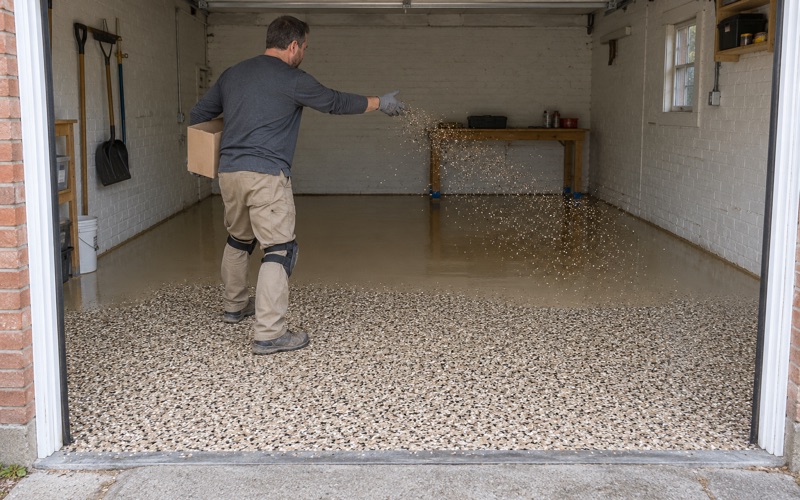
Once the slab is open and tested, a garage system we often build is a 100% solids epoxy base with a vinyl flake broadcast, finished with a polyaspartic topcoat that resists hot tire pickup. Where a floor needs more grip or wear, quartz aggregate broadcast replaces the flake.
On a slab that has been coated before, the old patches get the same attention as the open field. Filled cracks are ground out and refilled with a repair material compatible with the new system, so a 1960s floor that has been patched three times looks like one surface when it is done.
- 20+ Years in Business
- Moisture Testing in Every Quote
- Written Proposals