Evanston Epoxy Flooring handles epoxy flooring in Western Springs with more than 20 years of slab work behind it, and most of what we are asked to coat here is a garage floor. Some of those floors are original to the house. A growing number are not: they were poured within the last twenty years and have never carried a coating of any kind, which changes what the first visit is for.
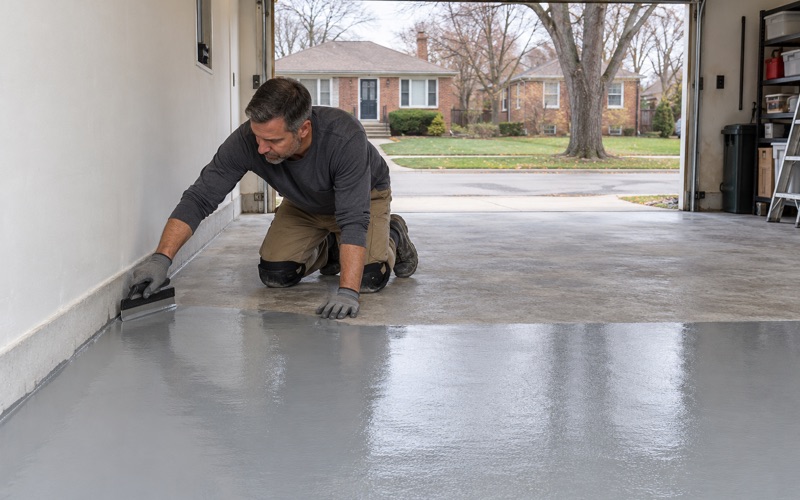
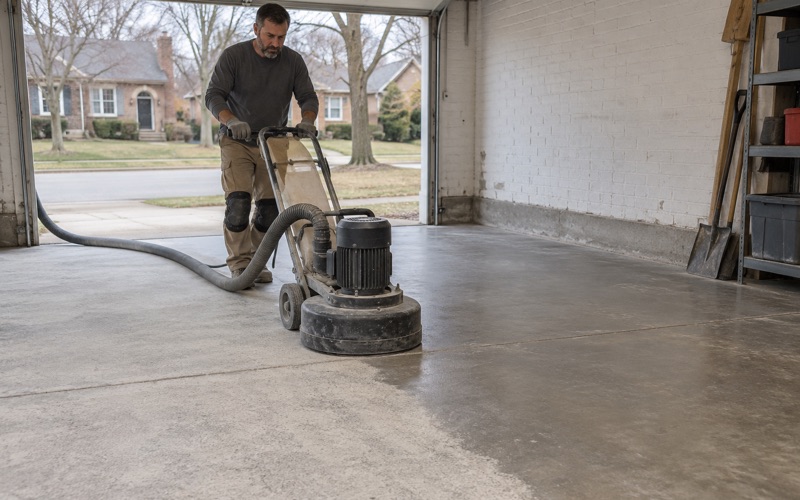
A young slab is easier to coat than an old one in some ways and harder in others. It has no paint to strip and few years of oil soaked into it, but it often carries a hard steel-trowel finish, a curing compound or a clear sealer that a coating will not grip. We open it with a diamond grinder or a shot blaster, never acid, and we test it for moisture as a line item in the written scope.
The proposal that follows names the product, the system build and the finished thickness. That gives a homeowner something concrete to hold us to once the floor is down.
From Golf Course to Neighborhood: Timber Trails and the Homes Built Since 2000
The 2005 Timber Trails Annexation
Western Springs was incorporated in 1886 and sits in Lyons Township, but its edges have not stayed still. On March 21, 2005, the village annexed the former Timber Trails golf course, 105.9 acres of land that had been fairways rather than streets. That annexation is the clearest single marker of the village’s newer layer.
We do not assume a house sits on former golf-course land because it looks new, and we do not assume a house is new because of its street. What matters to a floor is when its slab was poured, so the first question we ask is the year the house was built or the garage was added. That answer decides more about the job than the zip code does.
817 Homes Built Since 2000
Census estimates put Western Springs at 4,544 housing units, and 817 of them were built in 2000 or later. Of those, 372 went up between 2000 and 2009, 402 in the 2010s and 43 since 2020. That is about 18 percent of the village’s housing on concrete poured in this century.
For our work, the number matters because a first coating is a different job from a recoat. There is no failed product to remove and no history of hot tire pickup to diagnose, but there is also no track record telling us how this slab behaves under a film. We learn that by testing it rather than by guessing from its age.
Who Decides on the Floor
Western Springs is 95.6 percent owner-occupied, and 3,949 homes are owner-occupied single-family detached houses. The person calling us about a garage floor is almost always the person who parks on it every day and will live with the result. That shapes how we quote: we would rather say a slab needs a repair now than leave it for the owner to find in two winters.
It also means the floor is usually judged over years rather than at a sale. We would rather quote a system that holds up through years of winters on a 2012 slab than a cheaper coat that looks right for the first open house.
Looking for epoxy-flooring closer to Hinsdale? See Epoxy-Flooring Services in Hinsdale.
A First Coating on Concrete That Has Never Been Coated
Opening a Slab That Was Finished to Stay Smooth
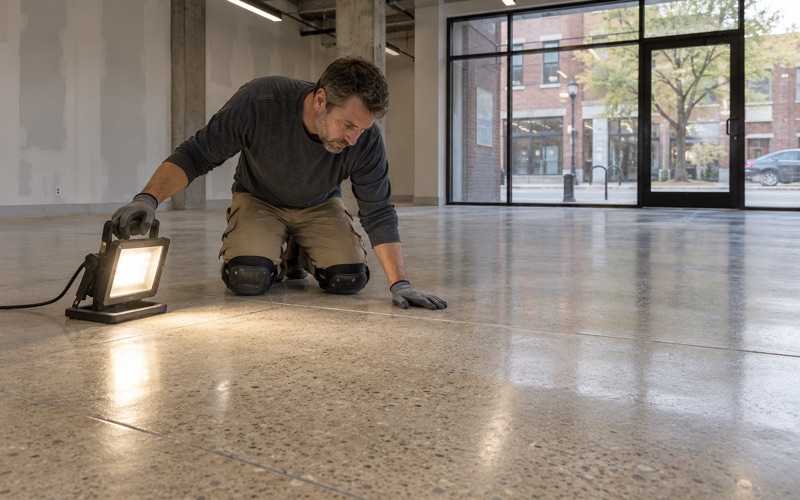
Garage slabs poured in the 2000s and 2010s were commonly finished hard and tight with a steel trowel, which is good for the concrete and poor for adhesion. Many also carry a curing compound or a penetrating sealer from the original build that will not show until a coating lifts off it. Neither condition is visible from the driveway, and neither is fixed by washing.
That is why we grind or shot blast every Western Springs slab before anything is applied, working it to an ICRI concrete surface profile the chosen system calls for, usually in the CSP 2 to 3 range for a broadcast epoxy. Acid etching cannot cut through a sealer and does little to a dense trowel finish, so we do not use it.
Testing a Younger Slab for Moisture
A house built after 1997 may well have a vapor retarder under its basement slab, since that is when ASTM E1745 set the standard for one. The garage is a different question. The model residential code, at IRC R506.2.3, exempts garage floors from the vapor retarder requirement, so a 2015 garage can sit directly on base material with nothing between it and the ground.
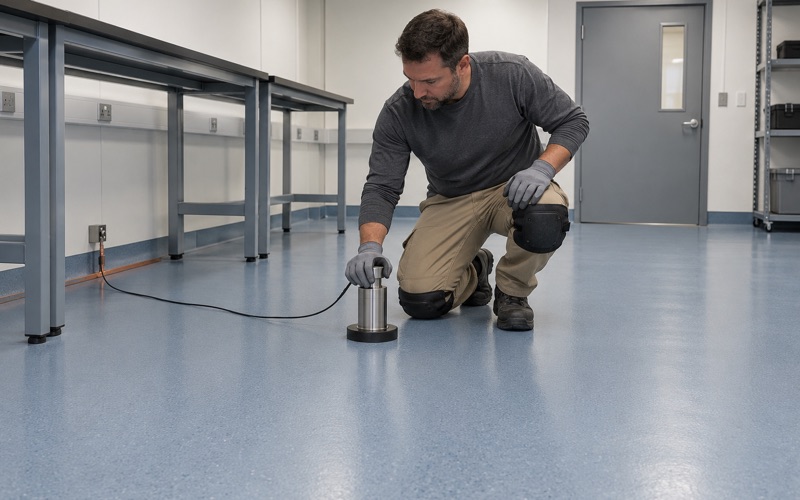
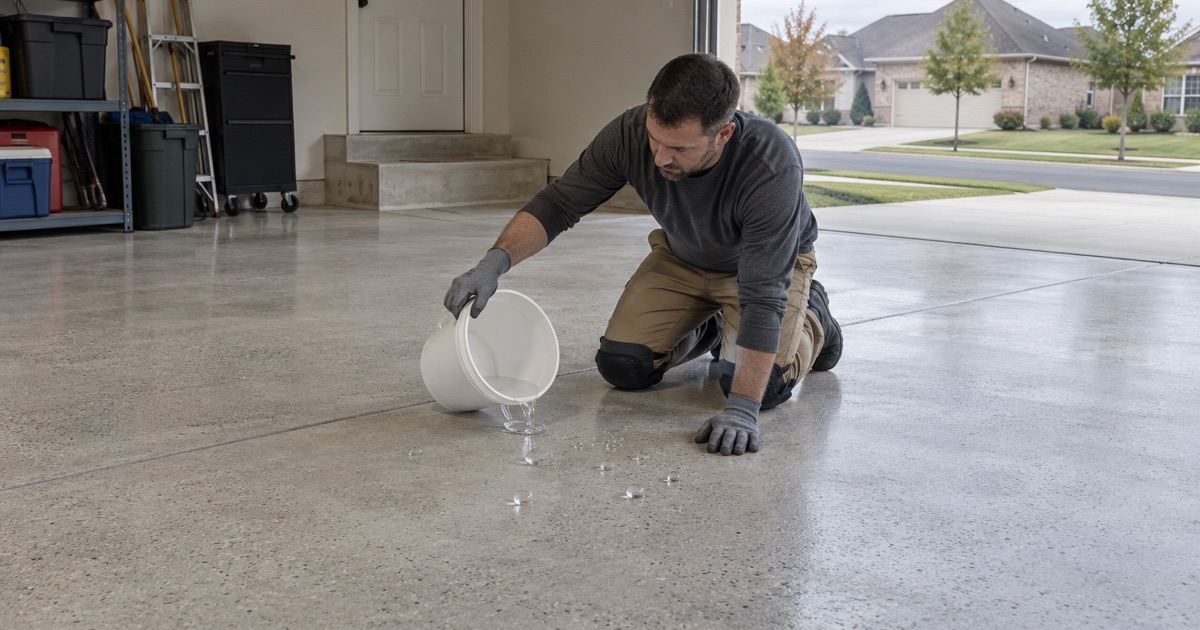
So we test both rooms. A plastic sheet test under ASTM D4263 tells us first whether moisture is moving, and where the slab and the system warrant it we follow with ASTM F1869 calcium chloride readings or ASTM F2170 in-situ relative humidity probes. The result goes on the proposal, and if it calls for a moisture-mitigation primer, that layer is priced before the job rather than after a blister.
Newer Basements Are Not Exempt
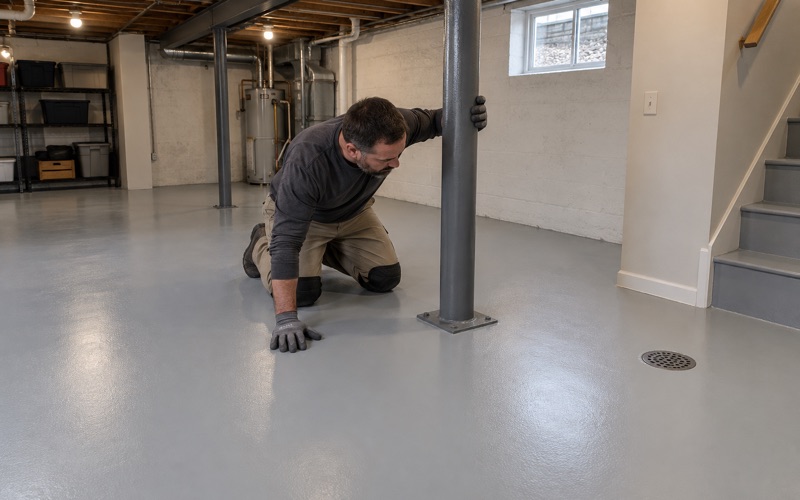
A basement poured in the 2010s with a vapor retarder under it is a better starting point than most, but it is not a guarantee. Retarders get punctured during construction, and conditions under a slab vary from one lot to the next. We treat a basement under a newer Western Springs house exactly as we treat an older one: the reading decides the primer, not the build year.
Basement jobs also bring the sump pit, floor drain and any ejector pit into the scope, and we detail the coating around each rather than run it over the lid. Where an older finish or a builder’s sealer is on a basement floor, it comes off by grinding just as it would in the garage.
What a Builder Leaves on a New Garage Floor
Control Joints, Shrinkage Cracks and Patches
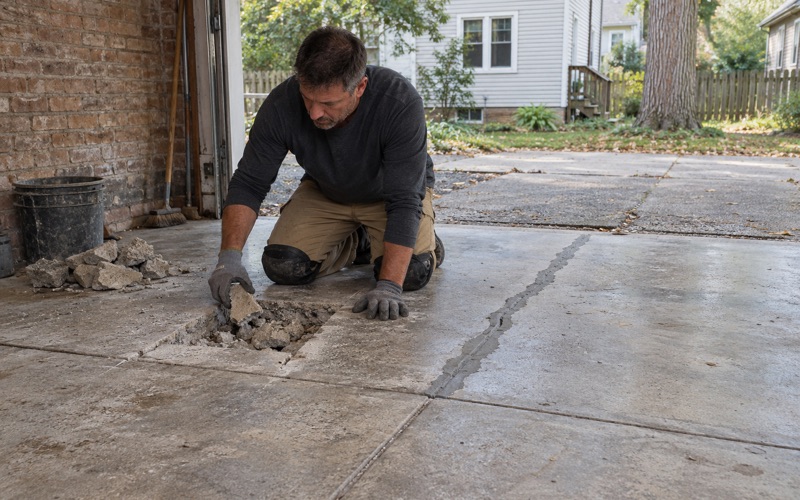
A builder-grade garage floor from the 2000s or 2010s typically arrives with saw-cut control joints, a few hairline shrinkage cracks and sometimes a patch where a drain, a post or a utility line went in. None of that is a defect in the concrete. All of it shows through a coating unless it is dealt with first.
We read every crack before quoting and say which ones get filled, which get a flexible joint treatment and which need a structural repair before any epoxy goes down. A coating is a film that follows the slab under it. If a crack is still opening, the floor will show it again, and we tell an owner that before the contract is signed, not after.
Choosing the System for a First Coat
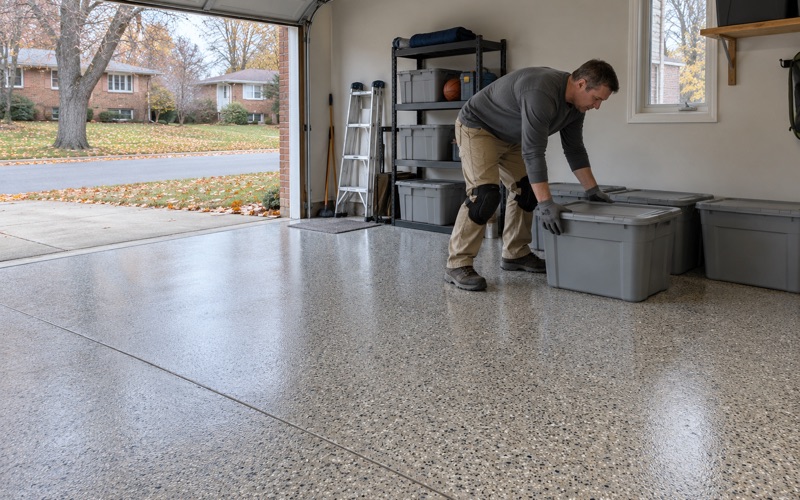
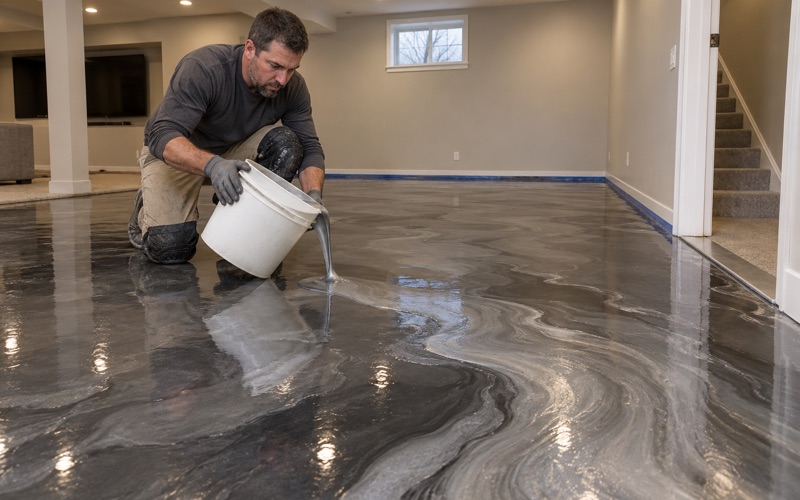
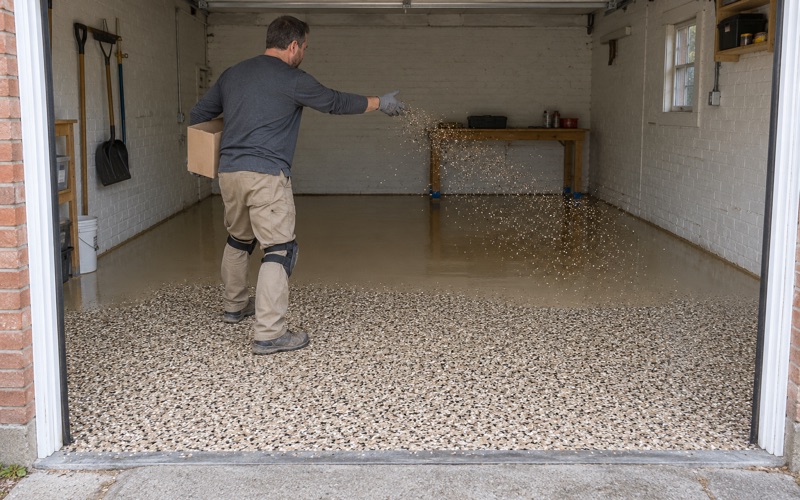
Because a newer slab has no failing finish to work around, we build a first coating as a full system rather than a single coat of paint. A typical garage build is a 100% solids epoxy base with a vinyl flake broadcast, locked down with a polyaspartic or polyurea topcoat; a busier floor or a workshop can take a quartz aggregate broadcast instead.
Every product we put down falls within the Illinois VOC limits for architectural coatings in 35 Ill. Adm. Code Part 223, which bind the installer as well as the manufacturer. In an attached garage that shares a wall and a door with the house, that limit is part of choosing the system, not a footnote.
Built for Salt and Brine
A Western Springs garage floor takes the same thing every winter: rock salt and calcium chloride brine riding in on tires and pooling under the car. On a bare young slab that brine soaks in; on a properly built system it sits on top until it is hosed out. We choose topcoats with that exposure in mind, and the flake or quartz broadcast gives the floor some grip when it is wet.
The other question on a new floor is whether hot tires will lift it. Hot tire pickup is mostly a problem of thin, single-component coatings over poorly prepared concrete, and a ground slab under a 100% solids base and a polyaspartic topcoat is built to resist it. We still explain the warranty exclusions before the sale, with moisture named first.
The Village, Lyons Township and the Paperwork
Who Has Authority Over the Job
Western Springs sits in Lyons Township, Cook County, but the township is not the office that governs a floor coating. Building matters here belong to the Village of Western Springs, with village hall at 740 Hillgrove Avenue. The township name turns up often enough, Lyons Township High School South Campus among them, that it is worth saying plainly: for a garage floor, the village is the office to call.
Illinois issues no state license for flooring or coatings work. What we show a Western Springs owner instead is whatever contractor registration, bond and insurance the village asks for, confirmed with village hall before the job is scheduled rather than assumed from another town’s rules.
The Contract and the Pamphlet
Every Western Springs home job gets a written contract and a copy of the Home Repair: Know Your Consumer Rights pamphlet before the first bag is opened, as the Illinois Home Repair and Remodeling Act requires. The contract carries the same product names, system build and thickness the proposal did. If moisture testing changed the scope, the change is written in, not agreed on the driveway.
A floor coating is also not a radon fix, and we do not sell one as that. In Illinois, radon mitigation takes a license from IEMA, and an owner worried about radon in a newer basement should hear that from us before anything is quoted.
Grinding Days and the Western Springs Fire Department
Diamond grinding and shot blasting are loud, so we plan that part of a Western Springs job inside the village’s construction hours and keep the noisy work early in the day. A one-day garage job should not run into anyone’s evening, and the grinding is the part that would. The village already lives with up to 130 trains a day on the BNSF line; it does not need a grinder at dinnertime too.
The Western Springs Fire Department, a municipal department since 1894, is the fire authority here, and on commercial work it is one of the offices whose expectations we confirm before scheduling. Inside a house, we keep the garage ventilated during application whatever the product, and a commercial job is scheduled around the hours the building has to stay open.
- 20+ Years in Business
- Moisture Testing in Every Quote
- Written Proposals