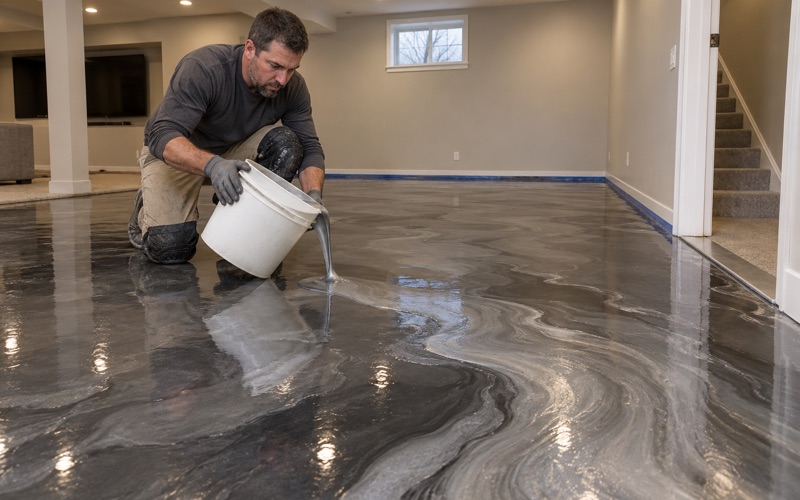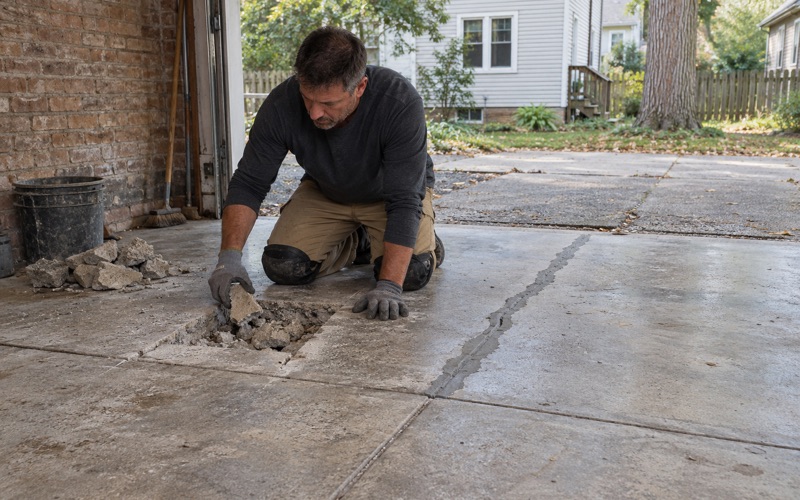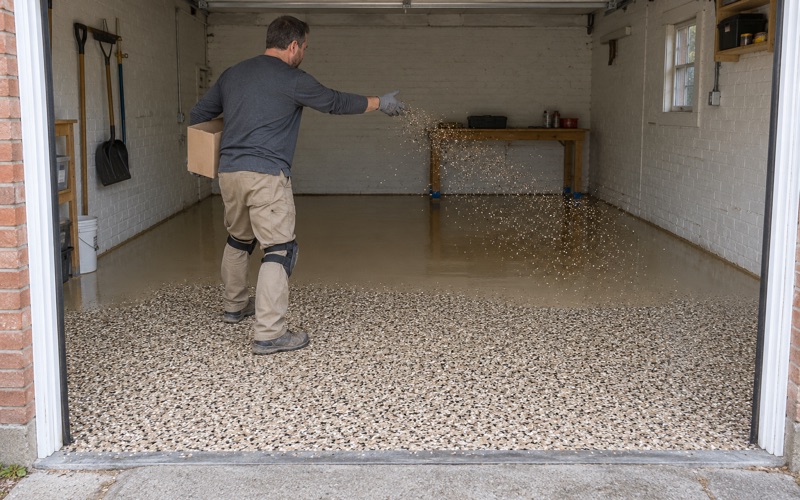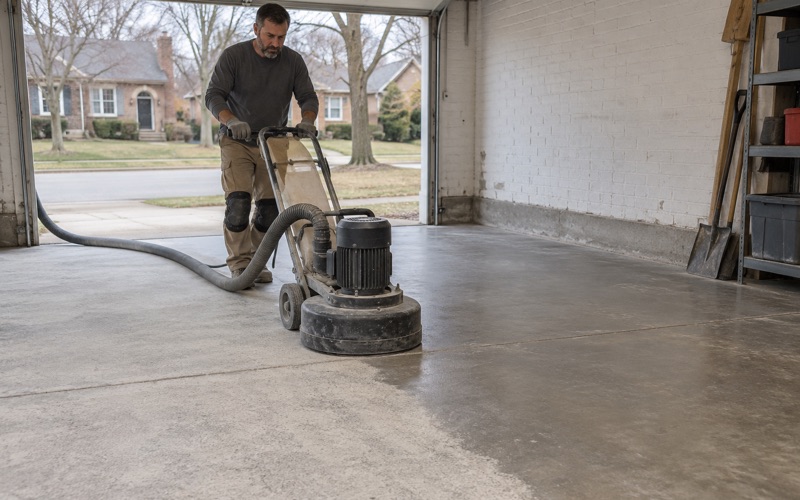
Evanston Epoxy Flooring has spent more than 20 years putting epoxy flooring in Northlake garages, basements and commercial rooms, and the part of the job a customer sees first here is the paperwork. Before we quote a floor in this city, we confirm our contractor registration is current, our bond and insurance certificate are on file, and we know whether the house was built before 1978.
None of that changes how a floor is built. Every slab we coat is opened with a diamond grinder or a shot blaster, never acid, and the proposal names the product, the system build and the finished thickness so you can hold us to it. Moisture testing sits in the scope as its own line on garage and basement slabs, rather than turning up as an extra after a coating has already lifted.
What this page covers is the local layer: the age of the housing, what lead-safe rules do and do not reach on a floor job, how the city’s single counter handles registration and floodplain questions, and where fire-code questions actually go. Each one shapes the schedule more than the coating does.
Older Homes and What Lead-Safe Rules Reach
4,009 of 4,526 Homes Built Before 1980
Census figures put the age of Northlake’s housing in plain view. Of the city’s 4,526 housing units, 4,009 were built before 1980, which is 88.6 percent of the stock, and 61.7 percent went up before 1960. The 1950s alone account for 1,799 units, more than any other decade. Only 224 units date from 2000 or later.
The city’s owner-occupied housing is mostly single-family: 2,627 owner-occupied homes are detached houses, 87.0 percent of owner-occupied units, and those houses are the usual setting for a garage or basement floor. An older slab usually means older coatings, paint and patches on and around it, and we read every one of those before we price anything, saying plainly when the concrete needs repair first.
Where the Lead-Safe Rule Applies
The City of Northlake’s Building Department points contractors to EPA lead-safe renovation certification for paid renovation work in housing built before 1978, a federal requirement in effect since April 22, 2010. With nearly nine in ten homes here older than 1980, that pointer is relevant to a large share of the residential work in the city.
What the rule follows is the disturbance of painted surfaces, not the concrete itself. Grinding a bare garage slab is a different act from scraping a painted basement wall, sanding a painted stair stringer or pulling painted trim to reach a floor edge. On a pre-1978 house we identify which painted components the job will touch before the scope is final, and we plan the work around that answer.
Old Coatings on an Old Slab
A basement floor in a house this age may carry several generations of paint or coating, and that layer has to come off mechanically before anything new can bond. Whether a given old floor paint is covered by lead-safe rules is a question for the specific house and the specific surface, and we settle it before work starts rather than assume it either way.
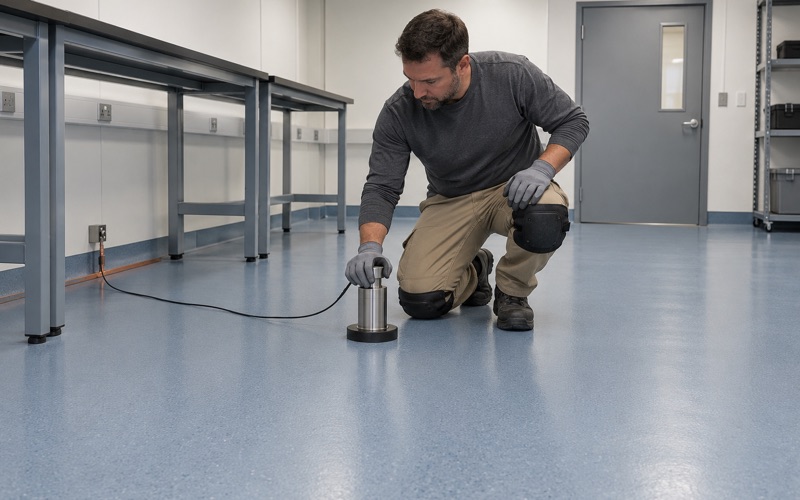
Once the old film is gone, we take the slab to a measured ICRI CSP profile with diamond grinding or shot blasting, and moisture testing follows on bare concrete. On basement slabs that usually means ASTM F2170 in-situ relative humidity probes, because hydrostatic pressure under a basement floor drives the failures a fresh coating cannot outlast.
Looking for epoxy-flooring closer to Bensenville? See Bensenville Epoxy-Flooring.
One Counter for Registration, Bonds and Floodplain Questions
Registering Before the First Job
Northlake requires every contractor and every subcontractor to register with the city before working here. The license costs $100 and runs one year from the date it is issued rather than expiring on a calendar date, so our renewal falls on our own anniversary, not on a citywide deadline. We keep the current license on hand at every Northlake estimate.
Registration also covers anyone we bring onto a job. If a floor needs an electrician to move an outlet or a plumber to reset a floor drain, that trade has to be registered with the city too, and we confirm it before the day is booked rather than discovering a gap with the slab half ground.
Bond and Insurance Certificate
Alongside the license, the city asks for a $10,000 bond and a certificate of insurance that names the City of Northlake. Illinois issues no state license for flooring or coatings work, so this local set of documents is what we show a homeowner instead of a state license number. Copies go to any homeowner or property manager who asks for them.
The paperwork continues past the city’s requirements. Every home job gets a written contract and the Home Repair: Know Your Consumer Rights pamphlet before work begins, as the Illinois Home Repair and Remodeling Act requires, and the warranty exclusions are read out at the same sitting, with moisture named first.
Floodplain Questions at the Same Desk
The Building Department is also Northlake’s floodplain administrator, working under a flood damage prevention ordinance adopted June 6, 2005, and the building code itself sits at municipal code 8-1A-1, adopted in 2003. For a floor job that means the same office answers registration, permit and floodplain questions, which keeps a residential scope from bouncing between departments.
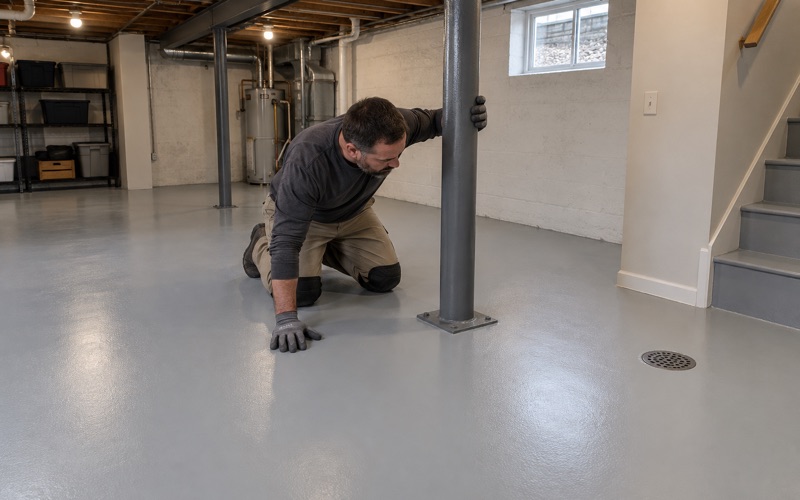
That matters most in basements. When a homeowner tells us water has come up through a floor before, we ask the Building Department whether the address carries any floodplain conditions, and we detail the sump pit and floor drain so the coating ends cleanly at each one instead of bridging them. The coating is not a fix for water entry, and we say so.
Building the Floor Itself
Garage Slabs and Winter Salt
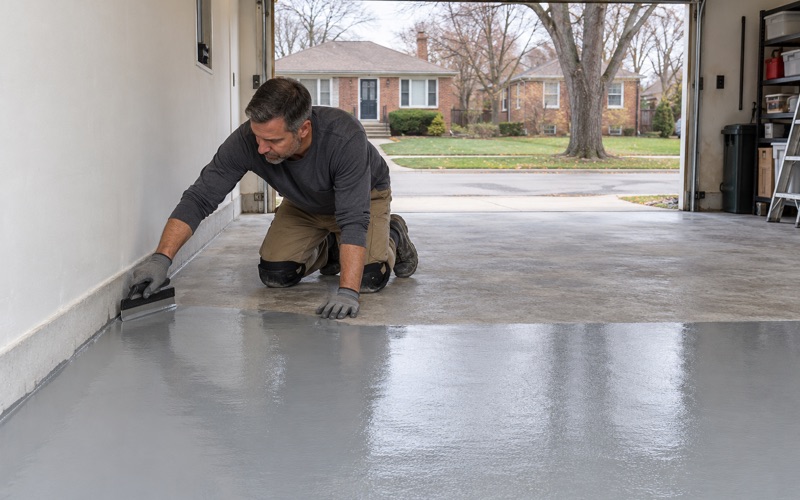
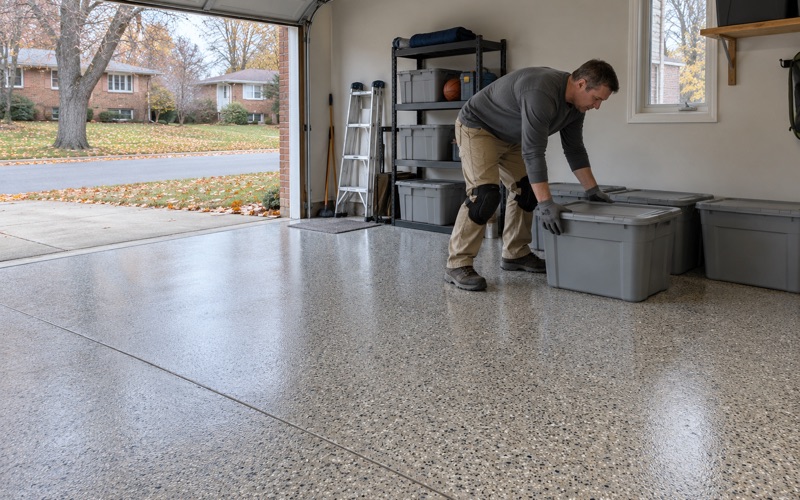
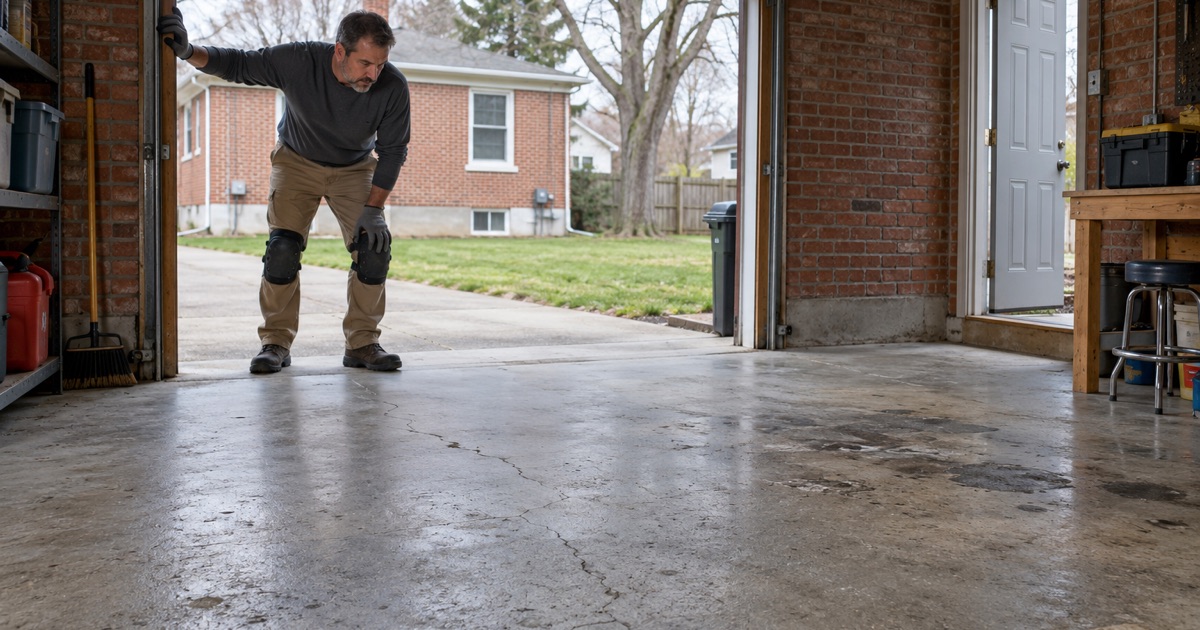
A garage floor in northern Illinois takes calcium chloride brine and rock salt off the tires every winter, so we build it for that rather than for showroom shine. Our usual garage system is a 100% solids epoxy base with a vinyl flake broadcast, locked down under a polyaspartic or polyurea topcoat that resists hot tire pickup and stands up to deicer residue.
Before the base coat, the slab is ground open, cracks are routed and filled, and the moisture reading goes on the record. A coating is a film that follows the concrete beneath it, so a crack that moves seasonally will show through in time, and we tell you that at the quote rather than after the floor is down.
Basement Slabs and Moisture
Basements are where testing earns its line in the scope. Alongside in-situ probes we may run an ASTM F1869 calcium chloride test or a quick ASTM D4263 plastic sheet check, and we compare the readings with the manufacturer’s limits before choosing a system. High readings call for a moisture-mitigation primer under the epoxy, and that primer is priced up front.
Efflorescence on a basement wall or floor tells us water vapor has been moving through the concrete, and we treat it as information rather than a cosmetic stain. We also say clearly that a floor coating is not radon reduction; in Illinois that work requires an IEMA radon mitigation license, and we do not sell it as a side benefit.
Two-Flats, Condominiums and Shared Buildings
Not every Northlake home is a detached house. Of the city’s housing units, 38 sit in two-unit buildings, 70 in three- or four-unit buildings and 1,333 in buildings of ten or more, where a basement or garage floor may answer to an association or a second owner. Those buildings change the scheduling more than the chemistry.
On those jobs we schedule with the association or the other owner before the first bag of material is opened, and we plan grinding and shot blasting inside the city’s construction hours so the loud part of the day does not spill into a neighbor’s evening. Odor and cure time get the same conversation, since a shared stairwell carries both.
Commercial Floors and Fire Questions on Parkview Drive
Fire Is a District, Not a City Department
Northlake’s city departments are Finance, Public Works, Building and Police. Fire protection comes from a separate body, the Northlake Fire Protection District, organized in 1941, which runs one station at 118 Parkview Drive and serves an estimated 7,500 residents across about four square miles. Its station on Parkview Drive is the address we keep on file for commercial projects inside its territory.
That district figure sits well below the city’s 2020 population of 12,840, so we do not assume every address falls inside it. For a commercial job we confirm which fire authority covers the specific building before we raise any fire-code question, then take that question to the right office instead of City Hall.
What a Commercial Floor Raises
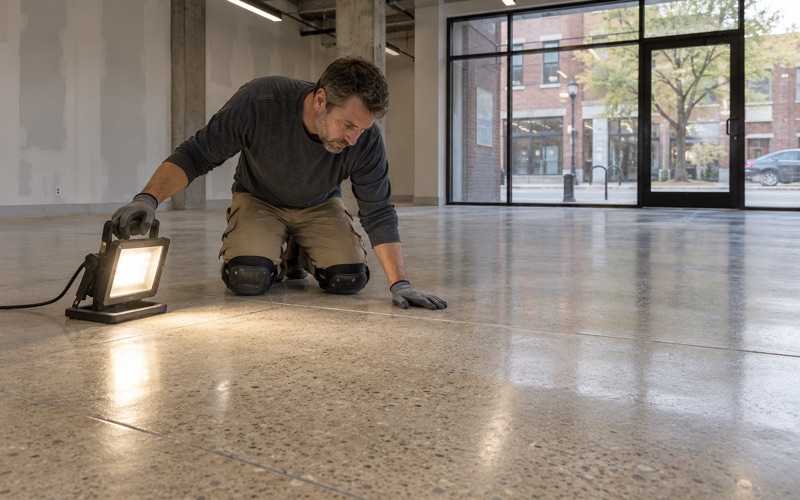
Fire questions come up on commercial floors more than on home garages: coating products stored on site, ventilation while a system cures, and exit paths kept clear in a building that stays occupied. We sort out who answers those questions while the scope is still being written, so none of them surfaces for the first time mid-job.
The city’s business page lists names such as Sun Chemical, American Bottling, Home Depot and Sam’s Club, and the Union Pacific railyard sits on the southern boundary, so industrial and retail floors are part of the local mix. For that kind of space we often specify urethane cement where heat, washdown or chemical exposure would outlast a standard epoxy, or a quartz aggregate broadcast where traction matters more than looks.
Working Around Open Hours
A commercial floor usually has to be laid while the business keeps running, so we build the schedule around the hours the building must stay open. Sections are ground, coated and cured in sequence, and a fast-cure polyaspartic topcoat can return a room to light use sooner than a full epoxy build.
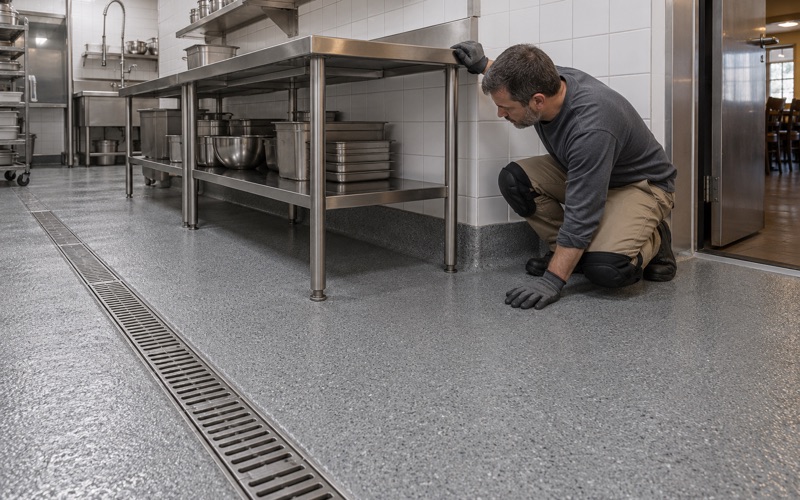
Cure timing follows slab temperature and the dew point spread at the surface rather than the calendar, because coating a slab too close to dew point invites amine blush and a weak bond. For a food-service room we also check the finish against the Illinois Food Code, including the coved floor and wall junctures it asks for.
- 20+ Years in Business
- Moisture Testing in Every Quote
- Written Proposals