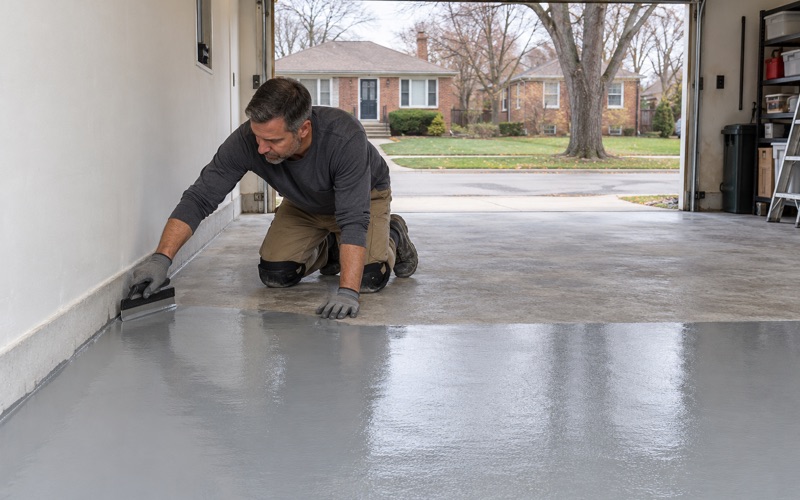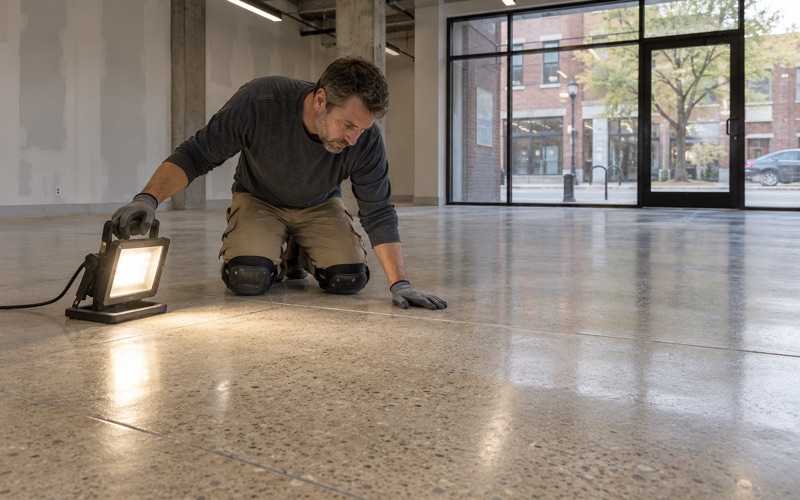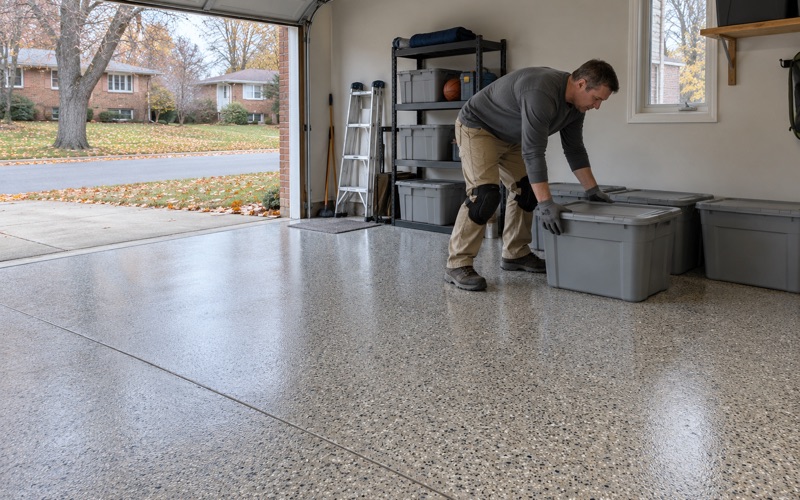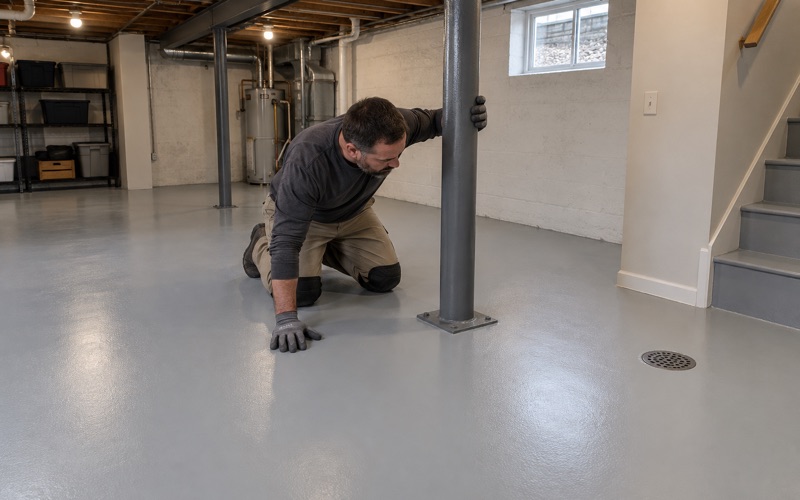
Evanston Epoxy Flooring has spent more than 20 years on epoxy flooring in Lincolnwood, and the floors we see here run from retail floors, back rooms, service areas and the occasional garage that a homeowner finally wants finished. The work starts the same way every time. We look at the slab before we price the coating, because the slab decides what the coating can do.
Our proposals list the product by name, the system build layer by layer and the finished thickness in mils. That gives a building owner, a tenant or a general contractor something to check against the floor once it is down. When a slab needs crack repair, patching or old coating removal before anything else, the proposal says so in writing rather than leaving it for a change order.
We also say early what a coating is and is not. Epoxy is a film bonded to the concrete, and it follows the concrete under it. If a slab moves, the floor moves with it, and no honest installer sells a coating as a cure for structural movement.
A mall that opened in 1990, closed in 2026, and an approved dealer site
Lincolnwood is an inner suburb of Chicago, a village in Cook County with 13,463 residents at the 2020 census, sharing its southern and eastern boundaries with Chicago and bordering Skokie to the north and west. Much of the commercial change in the village right now is happening along Touhy Avenue, and it is the kind of change that ends with new floors on old ground.
The Lincolnwood Town Center site
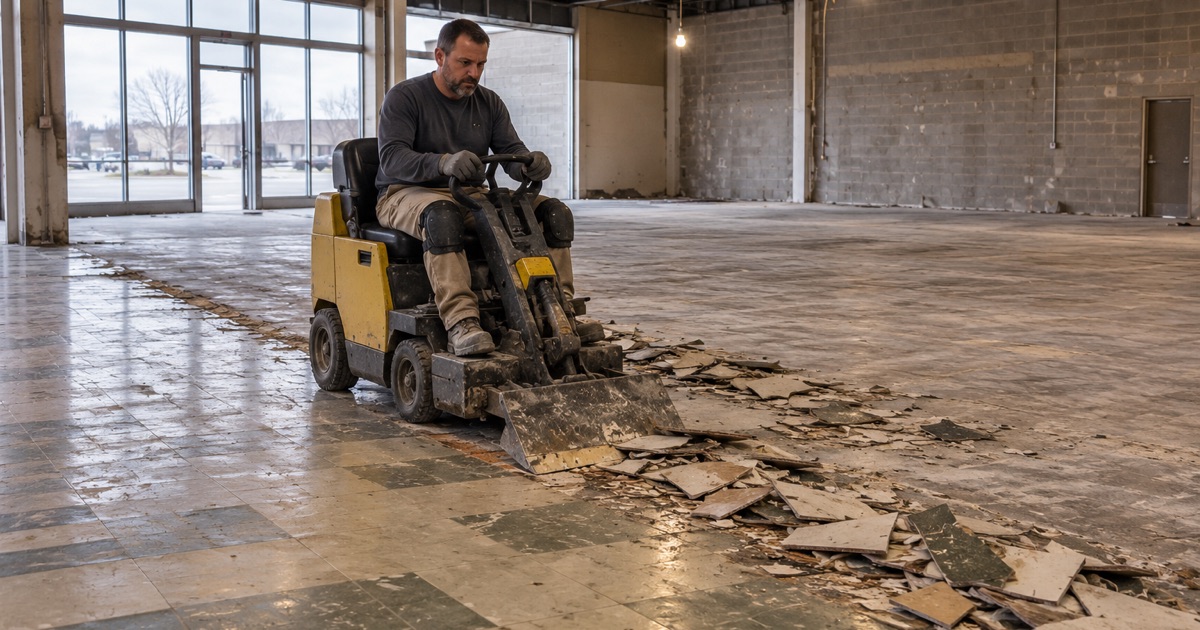
Lincolnwood Town Center at 3333 W. Touhy Avenue opened in March 1990 and closed on July 23, 2026. Prairie Ridge Development and Xroads Real Estate Advisors bought the property in December 2025 for $12.3 million, and the village approved a redevelopment with a large retail store, an automobile dealer and other commercial space. Demolition is planned in three phases.
Approval is not construction, and we write about this site only as it stands on paper. What the approval does tell a flooring contractor is the kind of floors the site is zoned to need: a big-box sales floor, a vehicle showroom, service bays and the back-of-house rooms that sit behind all of them. Each one asks something different of a slab.
What a showroom floor asks for
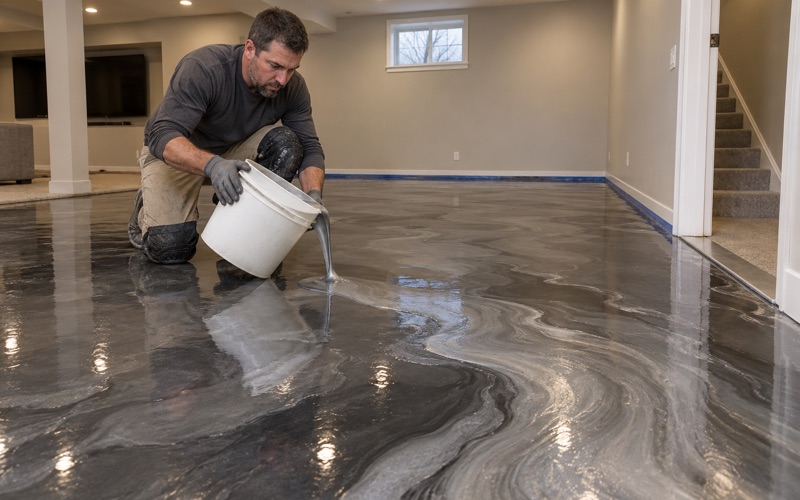
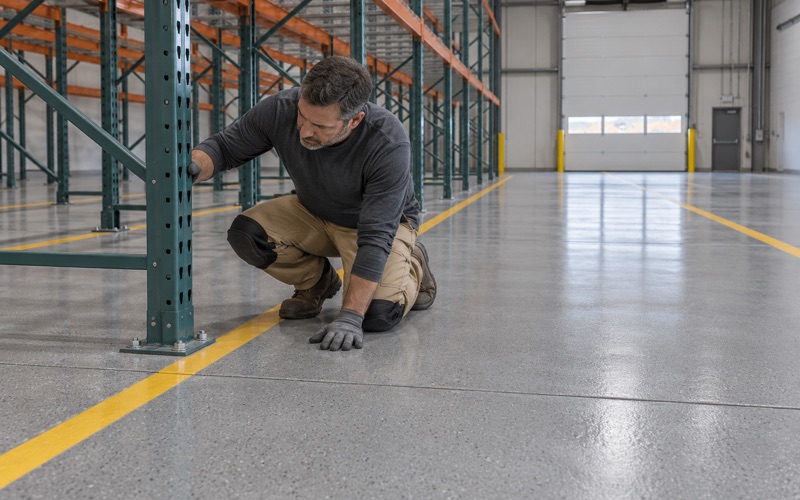
A vehicle showroom is a display floor first. Owners usually want a high-gloss or polished look that reads well under bright lighting, and they want it to stay that way under rolling traffic and the occasional tire mark. A 100% solids epoxy body coat under a polyaspartic or polyurea topcoat is one common route, with the topcoat chosen for gloss retention and resistance to hot tire pickup.
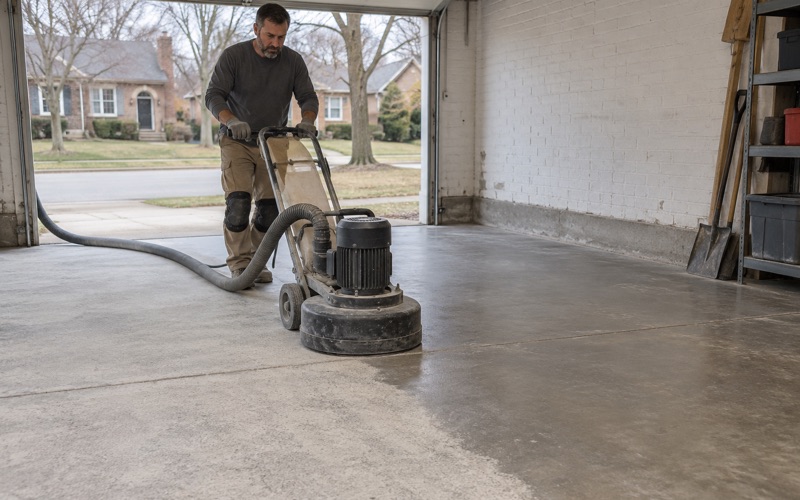
The surface matters as much as the system. We open every slab mechanically with diamond grinding or shot blasting to a measured ICRI CSP profile, and we do not acid etch. On a new pour, we also test moisture before we commit to a primer, because fresh concrete can carry more vapor than a coating will tolerate.
Service bays are a different floor
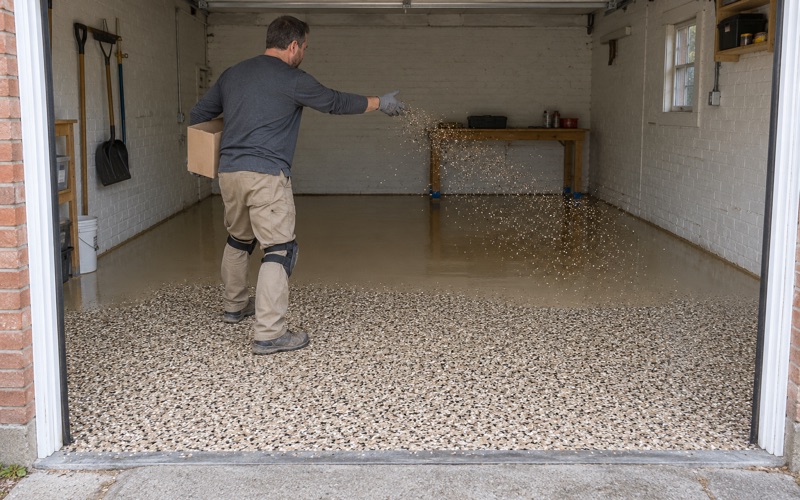
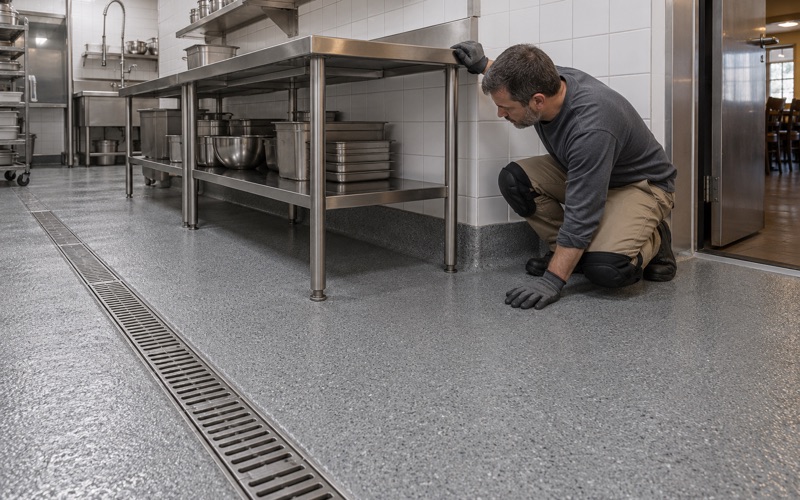
Service bays take oil, coolant, brake fluid, dropped tools and jack stands, often all in the same week. That usually points to a thicker build: a broadcast system with quartz aggregate for texture, or a urethane cement where thermal shock and chemical exposure are heavier than a standard epoxy is built to handle. Drains and trench lines need their own detailing so the coating terminates cleanly instead of peeling at the edge.
Texture is a trade-off we talk through before the job is quoted. More aggregate means better footing on a wet bay floor and a harder floor to mop. We put the chosen profile in the proposal so the technicians, the service manager and whoever cleans the floor know what was agreed.
Looking for epoxy-flooring closer to Winnetka? See Epoxy-Flooring Services in Winnetka.
District 1860: grocery and apartment floors on the Purple Hotel site
Farther west on Touhy, District 1860 is a $155 million redevelopment of the former Purple Hotel site at 4500 W. Touhy Avenue, planned with 299 apartments and an Amazon Fresh store. We have no role in that project and no confirmed opening date for it. It is worth describing because it shows the mix of floors a mixed-use block in the village tends to require.
Food retail floors and the inspection behind them
A grocery store’s sales floor, prep rooms, walk-in coolers and receiving areas are judged by food code, not just by appearance. Illinois has adopted the 2022 FDA Food Code, which expects smooth, durable, cleanable floors in food areas, allows slip-resistant surfaces under its 6-201.11 exception, and calls for coved junctures between floor and wall under 6-201.13. A coved base built in resin is a common answer where water and cleaning chemicals hit the floor every night.
Lincolnwood contracts with the Cook County Department of Public Health for food establishment inspections, so that is the office whose inspector walks a finished food floor in the village. We build cove heights, drain transitions and broadcast textures with that review in mind, and we put the details on the drawing before work starts.
Back-of-house in a residential building
A building with apartments over or beside a store carries rooms nobody sees on the leasing tour: trash rooms, loading areas, mechanical spaces and storage. Those floors take wet carts, dragged bins and spills that sit overnight. A seamless resin floor with a modest broadcast and a coved base is usually easier to keep sanitary than sealed bare concrete.
In an occupied building, the schedule is half the job. Grinding is loud, and some coatings carry odor while they cure, so we plan the noisy work inside the village’s construction hours and coordinate with property management before the first bag is opened.
Lincoln, Devon and Touhy: the storefronts in between
Not every commercial floor in Lincolnwood sits on a redevelopment site. Neighborhood retail along Lincoln, Devon and Touhy avenues includes restaurants, salons, small shops and service businesses whose floors have often been painted, sealed or tiled more than once over the years.
Reading what is already on the slab
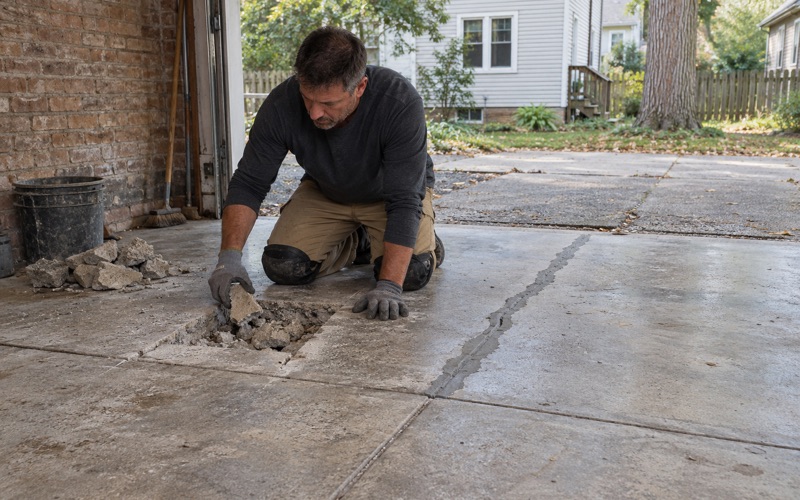
An older storefront floor rarely arrives clean. We find layers of paint, old sealer, tile adhesive and patch material, and each one affects whether a new coating will bond. We read cracks, old coatings and patch edges before we quote, and we tell the owner plainly when the slab needs repair first.
Removal is mechanical. Diamond grinding takes off coatings and adhesive and leaves a profile the primer can grip; shot blasting does the same on open floors where the equipment fits. Acid etching does neither reliably, which is why it is not part of how we work.
Moisture testing in writing
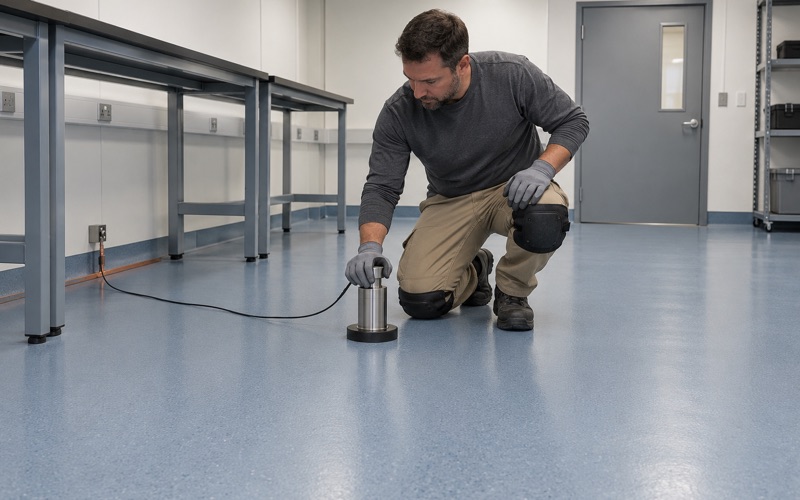
Moisture is the most common reason resin floors fail, and it does not show itself until the coating blisters or lifts. We write testing into the scope as a line item: ASTM F2170 in-situ relative humidity probes, ASTM F1869 calcium chloride tests where they suit the slab, and ASTM D4263 plastic sheet checks as a quick early read. Results are measured against ASTM F710 thresholds and the coating maker’s own limits.
When readings run high, a moisture-mitigation primer goes into the system and into the price before the job is sold. Our warranty exclusions are read out up front, moisture first, so nobody learns about them after a failure.
Working around open hours
A shop on Devon or a restaurant on Lincoln usually cannot close for a week. We sequence commercial jobs around the hours the business has to stay open, often splitting a floor into sections or working overnight and on closed days. Fast-curing polyaspartic topcoats can shorten the return-to-service window when the schedule is tight.
Cure timing still follows the slab rather than the clock. We check slab temperature and the dew point spread at the surface before each coat, because a coat laid too close to dew point can trap moisture or develop amine blush.
Permits, the village license and fire inspection from a contracted department
Illinois issues no state license for flooring or coatings work, so a contractor’s paperwork in Lincolnwood is the village’s. The Village of Lincolnwood is a council-manager government with a mayor and six trustees, with village hall at 6900 N. Lincoln Avenue, and its building department sets the terms for who may work on a permitted job.
The village contractor license
Every contractor on a permitted job must hold a current Village of Lincolnwood contractor license, valid for one year. General contractors post a $10,000 bond, a $1,000,000 certificate of insurance naming the village as additional insured and a $100 license fee, and the village does not issue a permit until every contractor is identified and registered.
We show that village paperwork, bond and insurance in place of a state license number, because that is what applies here. On home jobs we also provide a written contract and the Home Repair: Know Your Consumer Rights pamphlet before work starts, as the Illinois Home Repair and Remodeling Act requires.
Fire inspection and Paramedic Services of Illinois
The Lincolnwood Fire Department is the village’s department, and it provides fire inspection services. Of its 31 members, 28 are provided under contract by Paramedic Services of Illinois, an arrangement that began with paramedics in June 1977 and added firefighting in December 1989. For a business owner, the inspection still comes from the village’s department.
On commercial floors that matters for exit paths, storage rooms and anywhere a coating touches a fire-rated assembly. We plan installs so egress stays open during work, and we keep product data sheets on hand for anyone reviewing a space before occupancy.
Coatings within the VOC rules
Floor coatings sold and applied in Illinois fall under the VOC limits in 35 Ill. Adm. Code Part 223 Subpart C, alongside the national rule at 40 CFR 59 Subpart D. The state limit binds the installer as well as the manufacturer, so we choose compliant products and name them in the proposal.
That same proposal names the build and the thickness. A tenant fitting out a storefront or a developer comparing bids can then hold the finished floor to the document, which is how we would want our own floors judged.
- 20+ Years in Business
- Moisture Testing in Every Quote
- Written Proposals