Evanston Epoxy Flooring brings more than 20 years of experience to epoxy flooring in Lake Zurich, and most of the garage work we quote here starts with a question about what is already on the slab. Many homes in the village are old enough that the concrete may have had a previous life, whether a clear sealer, a coat of floor paint or a kit coating rolled down by an earlier owner. That history decides how we prepare the floor, so we find it out first.
Our approach does not change with the age of the house, only the amount of work it takes. We open every slab with a diamond grinder or a shot blaster, never acid, and we write moisture testing into the proposal as its own line. The proposal also names the product, the system build and the finished thickness, so you can check what went down against what you were sold.
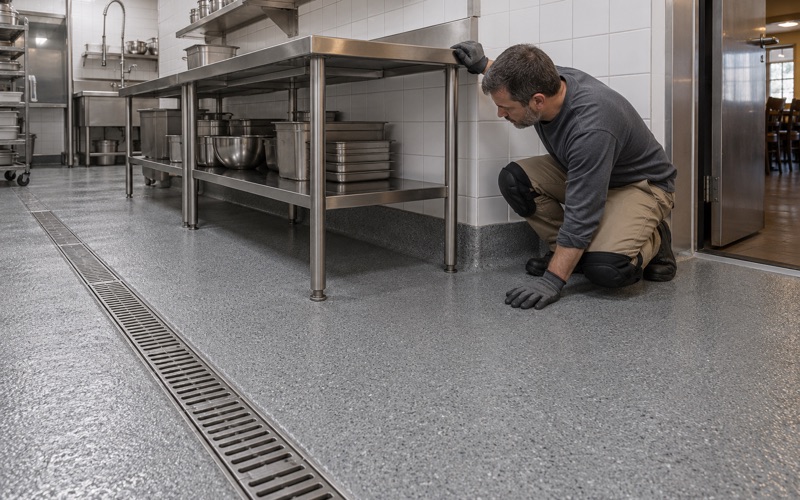
This page covers what the age of Lake Zurich’s housing means for a garage floor, who usually makes the decision, and how attached homes differ. Commercial floors in the village follow the same preparation rules but run on their own schedule, and we quote them around the hours a building has to stay open.
2,393 Homes From One Decade
Lake Zurich is a village in Ela Township, Lake County, and its housing table has a clear center of gravity. Of 7,588 housing units, 2,393 were built from 1980 through 1989, or 31.5 percent of the stock, according to the Census Bureau’s 2024 five-year American Community Survey. No other decade comes close.
The 1970s Through the 1990s
The decades on either side add to the picture. The 1970s produced 1,592 units and the 1990s another 1,269, so 5,254 units, 69.2 percent of the village, date from 1970 through 1999. Pre-1970 housing totals 1,133 units, and everything built since 2000 adds up to 1,201.
For a floor contractor, that spread sets the working age of the concrete. A typical garage slab here is thirty-five to fifty-five years old. It has had decades to cure and decades of cars parked on it, and it may have been finished at least once along the way, which is the condition we plan for when we walk a garage in the village.
From 850 Residents to a Suburb
The village is older than its houses. Lake Zurich was incorporated on September 29, 1896, yet it counted only 850 residents in 1950 and 3,458 in 1960. Housing development began in the 1950s, and the 556 units still standing from that decade and the 450 from the 1960s are the oldest sizable group in the table.
By the 2020 census the population had reached 19,759, and the bulk of that growth arrived as subdivisions in the 1970s, 1980s and 1990s. That build-out is why so many homes here share a similar age. When we quote a street of homes from the same era, we still inspect each slab on its own, because neighbors rarely made the same choices about their floors.
Looking for epoxy-flooring closer to Hickory Hills? See Epoxy-Flooring in Hickory Hills.
A Slab Old Enough to Have Been Finished Before
Whether a particular garage in the village was sealed, painted or coated before is not something any public record measures. The housing table only tells us the slabs are old enough that the question is worth asking on each visit. So our first trip is an inspection of the surface, and the quote comes after it.
Reading Old Sealer, Paint and Coatings
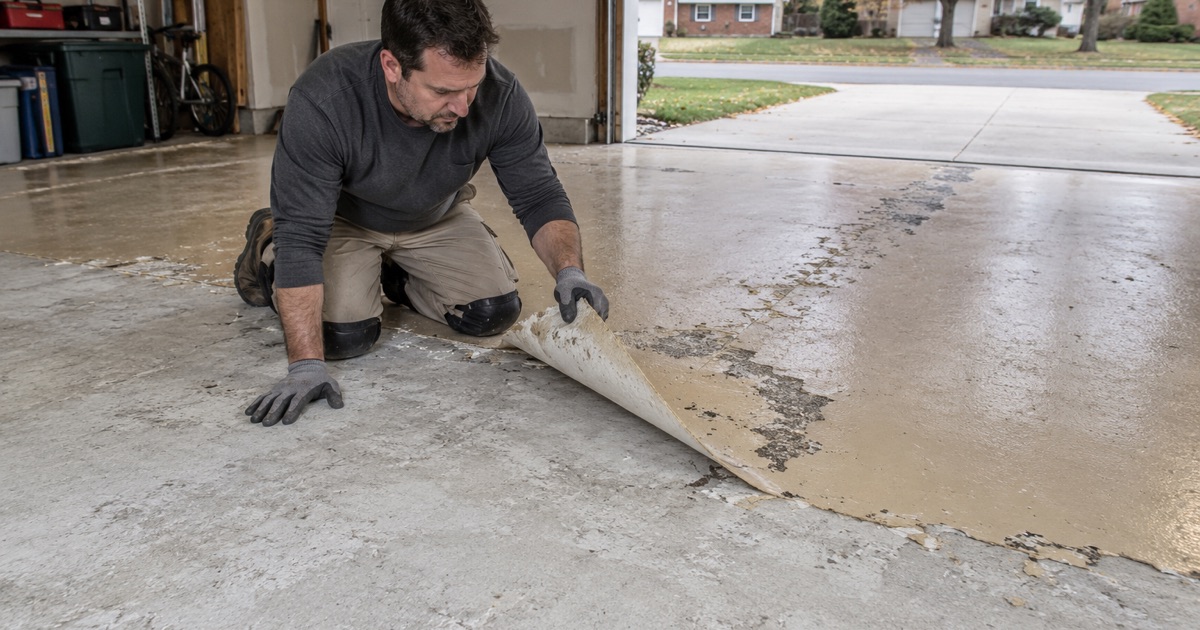
We look for the signs an earlier finish leaves: a sheen that beads water, paint lifting at the tire paths, flake chips from a kit system, or a gray film that scratches off with a key. Each one tells us something different about what is bonded and what is merely sitting on the concrete. We read the cracks at the same time, because a slab of that age has often settled or cracked somewhere.
When the old finish or the cracking means the slab needs repair before it can take a coating, we say so in the quote rather than on installation day. A coating is a film that follows the concrete beneath it. It will not stop a moving crack, and we explain that before anyone signs.
Grinding Through a Second Finish
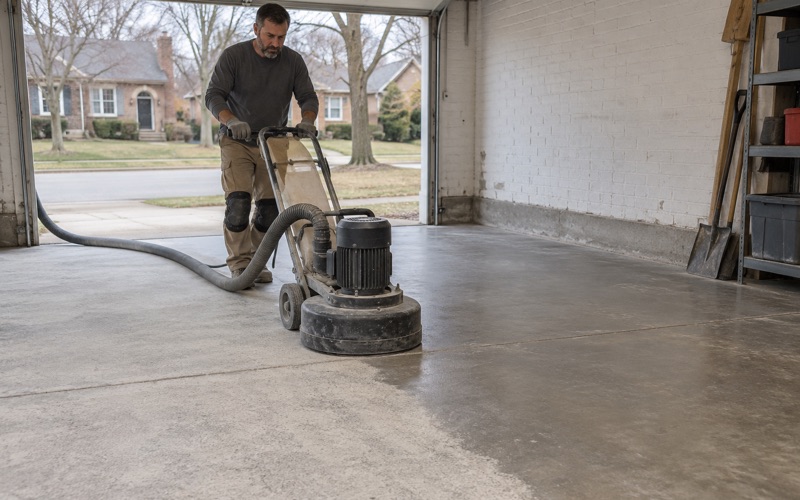
A second finish is where acid etching fails worst, since acid cannot reach concrete through paint or sealer. On these older Lake Zurich slabs we remove the earlier layer with a diamond grinder or shot blaster and keep going until the surface reaches the profile the new system needs, measured against the ICRI CSP 1-10 scale. Only bare, open concrete gets primer.
Stripping an old finish is loud work, so we plan the grinding inside the village’s construction hours and front-load the noisy part of the day. That keeps a one-day garage job in a residential subdivision from running into a neighbor’s evening.
Moisture Under an Old Coating
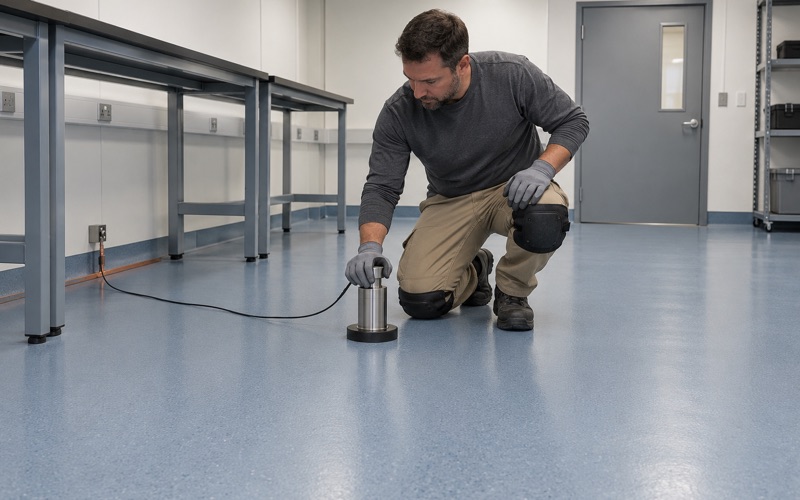
An earlier coating can hide moisture trouble, and nobody can see what lies under a slab poured decades ago. Once the old layer is off, we run ASTM F1869 calcium chloride tests or ASTM F2170 relative humidity probes, and that testing sits in the proposal as a line item from the start.
If the readings run high, a moisture-mitigation primer goes into the build and the proposal changes before work does. Our warranty exclusions are read to you before the job is sold, and moisture is the first one named.
Original Buyers and Second Owners
Lake Zurich is a village of owners. Of 7,392 occupied units, 5,752 are owner-occupied, or 77.8 percent, and 5,322 of those owner households live in single-family detached houses. That is 92.5 percent of owner-occupied homes, so the typical residential customer here owns the house and makes the floor decision without a landlord or association.
The Owner Who Remembers the Pour
Some households in a village built out in the 1980s may still be the original buyers, though no survey counts how many. When that is the case, the owner can often tell us what went on the floor and when, which saves guesswork at the inspection. We still verify it, because a sealer remembered as clear epoxy is sometimes something else.
A long-tenured owner is also often thinking in decades, not seasons. For that customer we tend to quote a full build, such as a 100% solids epoxy base with a vinyl flake or quartz aggregate broadcast and a polyaspartic topcoat, and we put the finished thickness in writing so the floor can be checked against the quote years later.
A Second Owner Inheriting Someone Else’s Floor
A buyer who moved in later inherits whatever the previous owner chose, often with no record of the product. That is where peeling paint at the tire paths or hot tire pickup on a thin coating can turn up, and it is why our inspection does not take the existing surface at face value.
First or second owner, every home job starts the same legal way. Illinois’ Home Repair and Remodeling Act requires a written contract and the Home Repair: Know Your Consumer Rights pamphlet before work begins, and we hand over both. Because the state issues no flooring license, we show whatever contractor license, bond and insurance the village asks for instead.
Detached Houses That Are Rented
The village also has 269 renter-occupied detached houses, and those homes bring a landlord into the conversation. We quote to whoever owns the property, and we schedule the work so a tenant knows when the garage will be out of use and when cars can return.
A rental floor is often judged on durability and easy cleanup more than color. Depending on the slab, a lighter polyaspartic system or a lithium silicate densifier on ground concrete may suit it, and the proposal states the finished thickness so the owner can weigh wear against cost with the numbers in front of them.
Attached Homes: 499 Units With Their Own Questions
Not every Lake Zurich home stands alone. The village counts 499 single-family attached units, and 287 of them are owner-occupied. For a floor coating, an attached home changes who has to agree before we start more than how the concrete is prepared.
Association Approval Comes First
Townhouse and rowhouse garages can sit under an owners’ association with rules about exterior work, noise and colors. We schedule those jobs with the association before the first bag of material is opened, and we can supply the product data and system build an architectural committee may want to see.
Shared walls also put a neighbor close to the work. We choose coatings within the Illinois VOC limits in 35 Ill. Adm. Code Part 223, which bind the installer as well as the manufacturer, and we explain that choice to both households when a garage backs onto someone else’s living space.
Smaller Slabs, Same Preparation
An attached-home garage can be a narrower slab, but the preparation does not shrink with it. It still gets mechanical grinding, a moisture test written into the proposal, and a crack assessment before we price the coating. A smaller floor simply means the crew finishes the loud work sooner.
Curing follows the same rule as any other garage we coat. We time each coat against slab temperature and the dew point spread at the surface rather than a date on the calendar, so the floor is not opened to cars before it is ready. On a slab of this age we would rather wait a day than see amine blush or a soft topcoat.
Permits and Who Signs Off
Where a floor job needs a permit, the application goes by e-mail to the Building and Zoning Division in the village’s Community Services Department. The village notes that most applications take up to 15 business days to process. We build that lead time into the schedule rather than promising a start date the paperwork cannot meet.
A Lake Zurich mailing address does not always settle which village issues the permit, so we check the parcel before naming the authority on a commercial quote. For a home floor, the decision usually rests with the owner, the association where there is one, and the written contract between us.
- 20+ Years in Business
- Moisture Testing in Every Quote
- Written Proposals