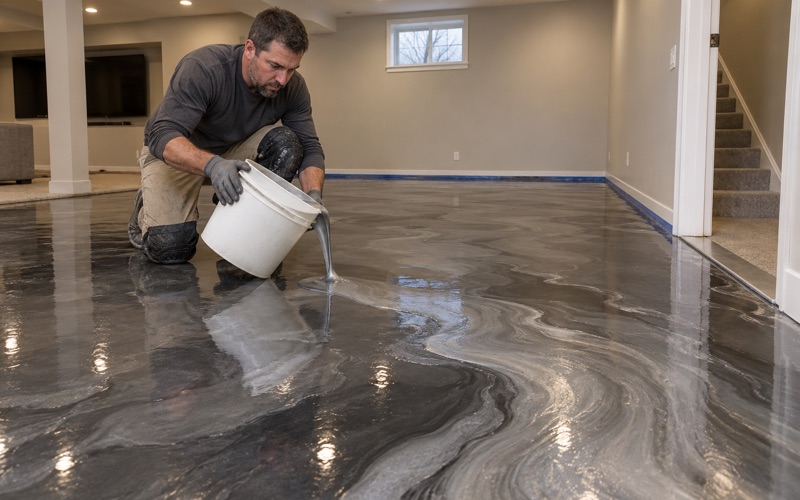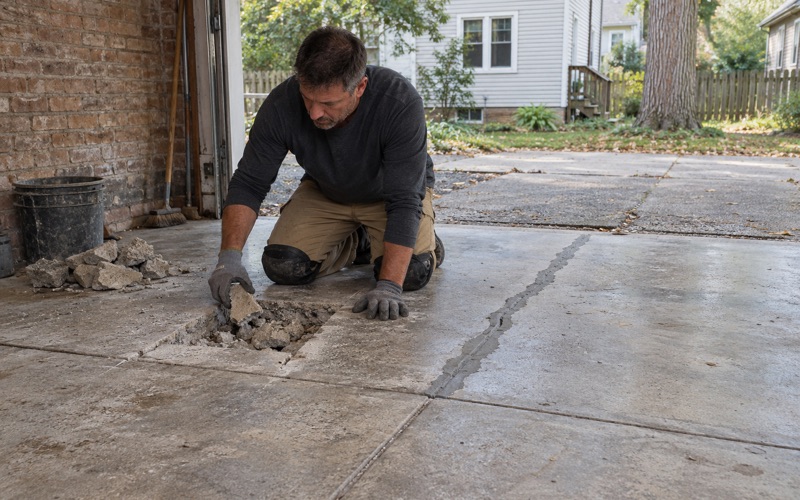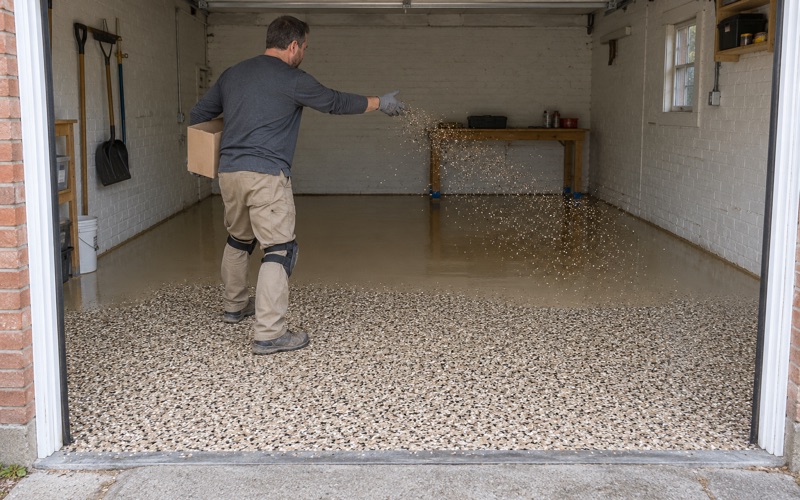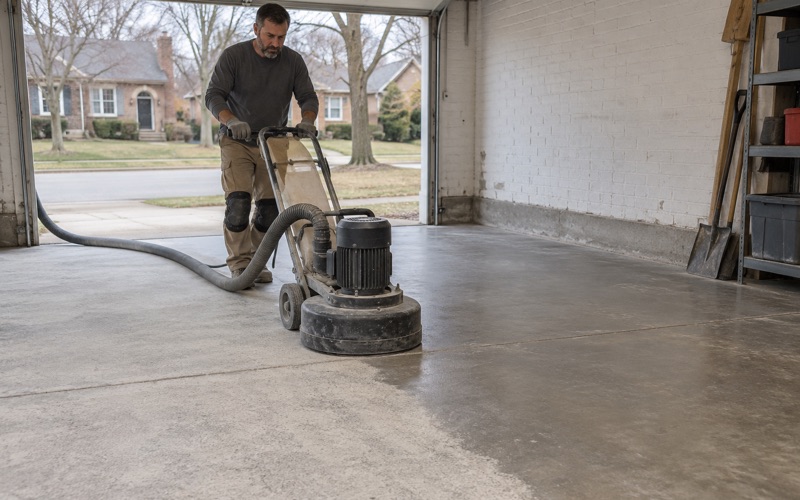
Evanston Epoxy Flooring has brought more than 20 years of slab work to epoxy-flooring in La Grange Park, and the floors we price here tend to belong to people who live in the house above them. That shapes the whole job: the person reading our proposal is the same person who will park on the finished floor every winter morning.
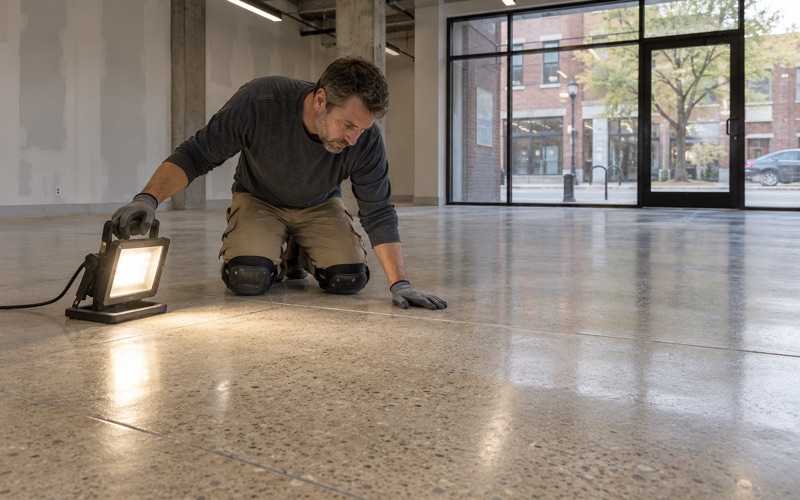
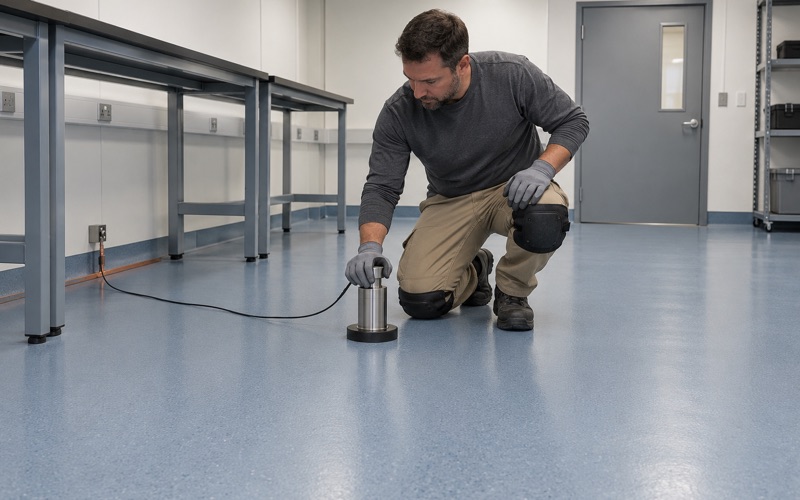
Before any coating goes down, the concrete is opened with a diamond grinder or a shot blaster to a measured ICRI surface profile. We do not acid etch, because acid leaves a profile nobody can verify and residue that has to be rinsed into a slab we would rather keep dry.
What follows is specific to this village: how its housing was built, what that age means for the concrete, who decides on the floor, and which offices a coating job touches. Every system we recommend comes from that reading of the slab, not from a package price.
A Village That Went Up in One Decade
Nearly Half the Homes Date From the 1950s
La Grange Park is a Cook County village about 13 miles west-southwest of Chicago, home to 13,475 people at the 2020 census, and its housing tells a compressed story. Of 5,629 housing units, 2,547 were built between 1950 and 1959, which is 45.2 percent of everything standing today. That one decade outweighs any other period in the count by a wide margin.
For a floor contractor, that concentration matters more than any landmark. It means that on a typical street we are looking at garage slabs poured within a few years of one another and now carrying roughly seventy years of use.
The Older Houses That Came First
The 1950s were not the beginning. The American Community Survey places 791 units in 1939 or earlier and another 520 in the 1940s, so a share of the village predates the 1950s build-out. Where those houses have a garage, its slab can be thinner, rougher and more patched than the 1950s concrete around it.
We price those older floors on their own evidence rather than on the age of the street. A prewar slab sometimes needs more grinding and repair before it can take a coating, and we say so in the quote instead of finding it on install day. On a block of 1950s houses, the older house beside them is the one that catches out an installer who skipped the inspection.
Reading the Age Before the First Visit
Because the age profile is so lopsided, we can usually guess the era of a La Grange Park garage before we see it, and we plan the visit around that guess. We bring the grinder for a test patch, the moisture kit and a crack gauge, so the first appointment produces evidence instead of a sales pitch.
The guess is only a starting point. The ICRI surface profile we grind to, somewhere in the CSP range the chosen system calls for, is confirmed on the slab itself, and a floor that looks like every other 1950s garage on the block can still read differently once the old surface comes off.
Looking for epoxy-flooring closer to Lyons? See Epoxy-Flooring in Lyons.
What Seventy Years Does to a Garage Slab
Old Paint, Old Coatings and Oil
A garage floor that has carried cars since the Eisenhower years has often been painted, sealed or patched at least once. We read that history before quoting: a peeling one-part paint, a worn sealer and a patch of a different mix each change how much grinding the job needs. None of it can stay under a new system, because a coating bonds only as well as the layer beneath it.
That is why every La Grange Park slab is ground back to sound concrete before anything is applied. Seventy years of oil drips can soak into the surface, and grinding shows us where the contamination ends; where it goes deeper than grinding can reach, we tell the owner before the quote is final.
Cracks, Settlement and What a Coating Can Do
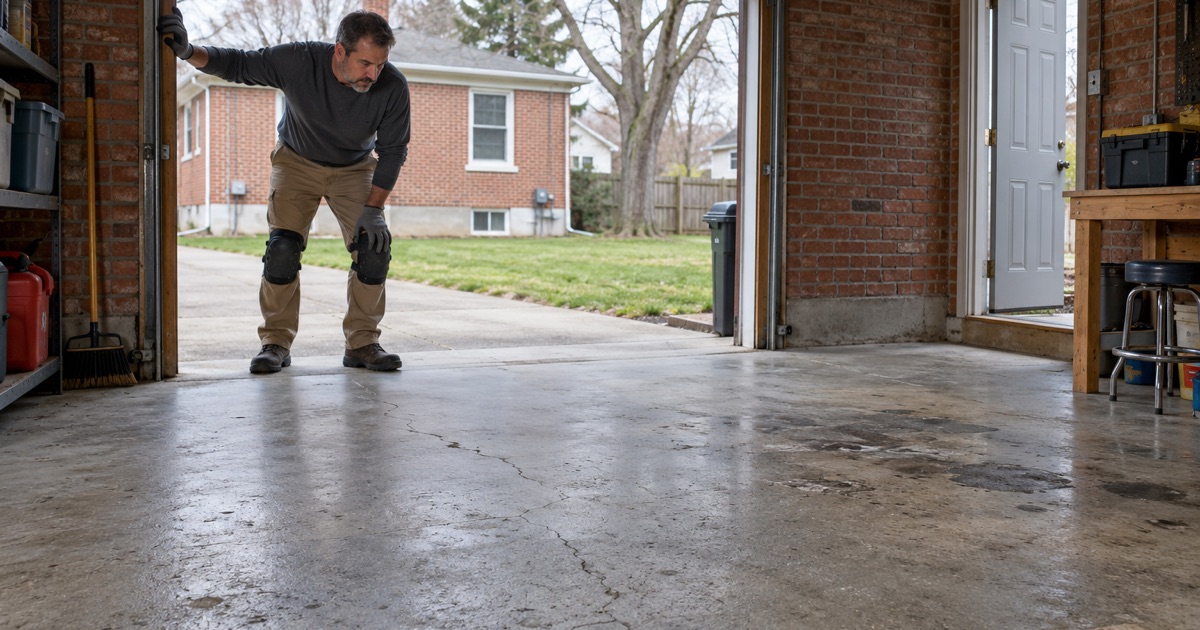
A 1950s La Grange Park slab has had seventy years to crack, settle and curl at its joints. We map those cracks on the first visit and separate the ones that have stopped moving from the ones still opening, because the second kind needs repair, and sometimes a different plan, before any coating.
Where a crack is dormant, we route and fill it with a rigid repair material flush to the ground surface before the base coat, so the finished floor reads as one surface. Where a joint is a control joint, we honor it through the coating rather than bury it, because the slab will keep using it.
We are also plain about the limits. On a slab this old, a coating is still a film that follows the concrete under it, so a crack that keeps moving will eventually show through any system we install. We would rather say that at the kitchen table than have a homeowner discover it next spring.
Moisture Testing on Concrete This Old
Concrete poured in the 1950s often went down without the under-slab vapor retarder that ASTM E1745 now describes, so we never assume a dry floor. Moisture testing is written into every garage and basement scope as its own line item, using an ASTM F1869 calcium chloride test, ASTM F2170 relative humidity probes, or both.
If the numbers come back high, the system changes before the price is signed: a moisture-mitigation primer goes into the build, or the warranty terms change with it. Moisture is the first exclusion we read out, because on a seventy-year-old slab it is the condition most likely to matter.
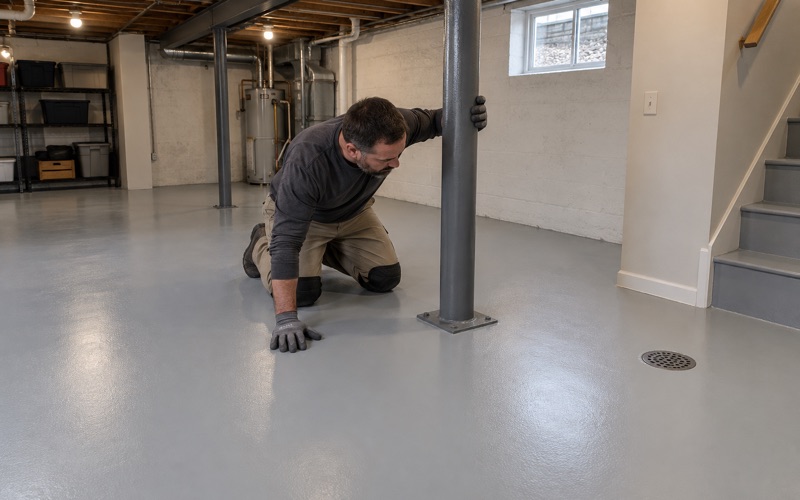
The same caution applies below grade. A basement under a 1950s house can show efflorescence or a damp patch near a floor drain or sump pit, and we test those floors before choosing between an epoxy system and a urethane cement build that tolerates more vapor.
The Owner Who Lives There Decides the Floor
A Village of Owner-Occupied Detached Houses
Of La Grange Park’s 5,285 occupied homes, 3,816 are owner-occupied, and 3,452 of those owners live in single-family detached houses. That is 90.5 percent of the owner-occupied stock, so the person approving a garage floor here is usually the person who owns the slab and lives beside it.
On a detached house there is usually no association board to consult and no landlord standing between us and the decision. That speeds things up, but it also puts the whole judgment on one household, which is why we spend our time explaining the slab rather than pitching a finish.
The exceptions are worth naming. The village also counts 174 units in two-unit buildings, and on a shared two-flat floor we schedule with the other owner before the first bag is opened. Condominium floors get the same treatment with the association, agreed in writing before grinding starts.
A Proposal You Can Check Against the Floor
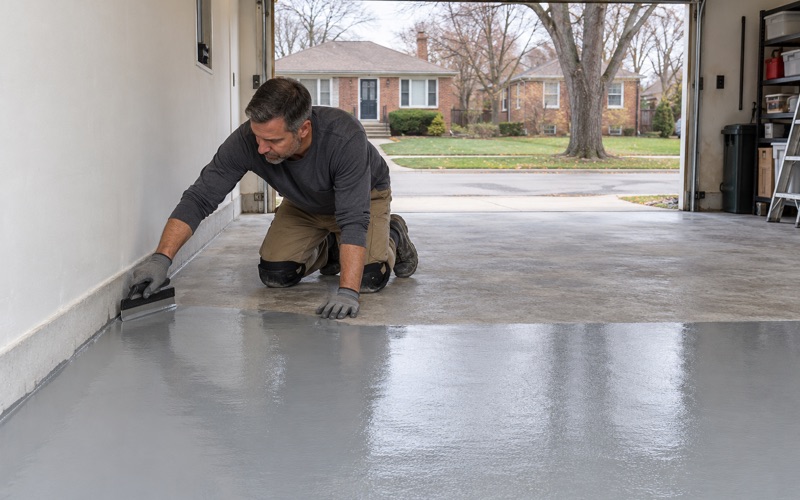
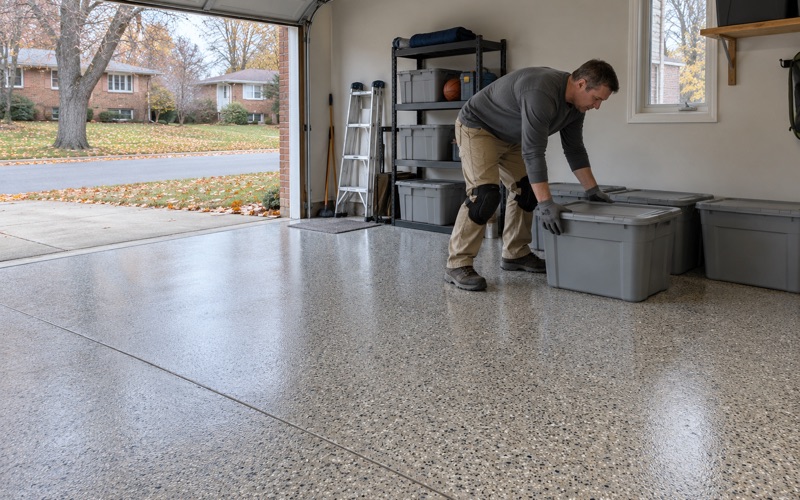
Because the homeowner is the one who will live with the result, our proposal names the product, the system build and the finished thickness. A 100% solids epoxy base with a vinyl flake broadcast and a polyaspartic topcoat reads differently on paper than a thin roll-on kit, and the owner of a 1950s garage deserves to see which one is being bought.
Every home job here also gets a written contract and the Home Repair: Know Your Consumer Rights pamphlet before work starts, as the Illinois Home Repair and Remodeling Act requires. Illinois issues no state license for coatings work, so we show the contractor license, bond and insurance the village asks for instead.
Built for Salt and Cold Garages
A garage floor in this village takes the calcium chloride brine and rock salt that every northern Illinois winter tracks in on the tires. We build garage systems with that in mind, choosing topcoats that resist hot tire pickup and salt etching and finishing with a broadcast texture that stays usable when it is wet.
Curing is scheduled against slab temperature and dew point, not the calendar. When a detached house’s garage is unheated and its slab cannot hold a safe dew point spread at the surface, we tell the owner the job waits for spring rather than risk amine blush on a floor they paid for.
The 1960s and 1970s Houses, and the Village Offices
Infill After the Boom
Once the 1950s build-out slowed, La Grange Park kept adding homes on a smaller scale: 707 units date from the 1960s and 454 from the 1970s. Those houses fill in between the older blocks, and their slabs are a decade or two younger than the ones beside them.
Younger does not mean easier. A 1970s garage may carry a sealer or coating applied in a later decade, and we read that layer the same way we read the old paint on a 1950s floor, with a test patch of grinding before we commit to a price.
Where a 1960s or 1970s slab tests dry and sound, it may need less repair than its 1950s neighbor before the same 100% solids epoxy body coat, vinyl flake or quartz aggregate broadcast, and polyaspartic or polyurea topcoat go down. Where it does not, the system follows the test results, not the decade on the deed.
Who Signs Off in the Village
La Grange Park is a non-home-rule village in Proviso Township, Cook County, run under a council-manager government. Building questions go to its Department of Building and Inspectional Services, headed by a Building Director, and we ask that office what a coating scope requires before we promise a schedule.
Floor coatings are also chosen inside the Illinois VOC limits in 35 Ill. Adm. Code Part 223, which bind the installer as well as the manufacturer. On a 1950s house here, we never sell a basement or garage coating as radon reduction; in Illinois that work requires an IEMA radon mitigation license.
Two Fire Stations, One Village
The village keeps Village Hall, the Police Department and Fire Station 1 together at 447 N. Catherine Avenue, with Fire Station 2 at 1010 E. 31st Street and Public Works at 937 N. Barnsdale Road. The whole village covers 2.233 square miles of land, which lets us group a moisture-test return and a neighbor’s quote visit into one trip.
Grinding and shot blasting are loud, so we plan that work inside the village’s construction hours and keep a one-day garage job from running into a neighbor’s evening. On a street of owner-occupied houses, that courtesy is part of finishing well, alongside the cleanup and the cure instructions we leave behind.
- 20+ Years in Business
- Moisture Testing in Every Quote
- Written Proposals