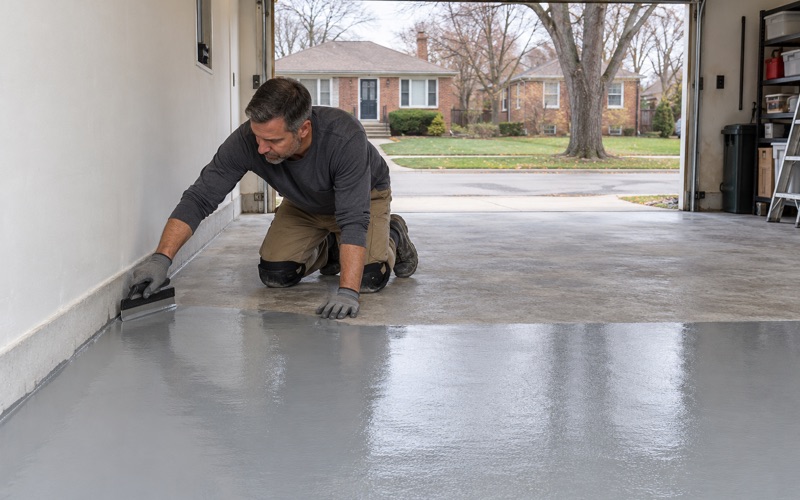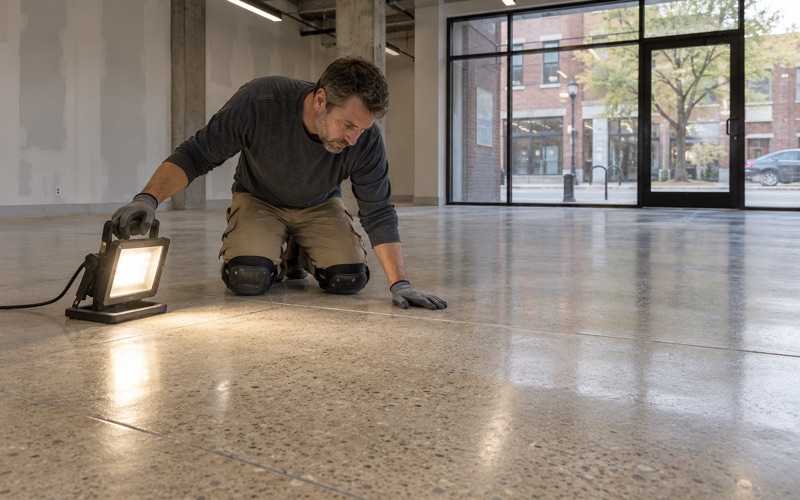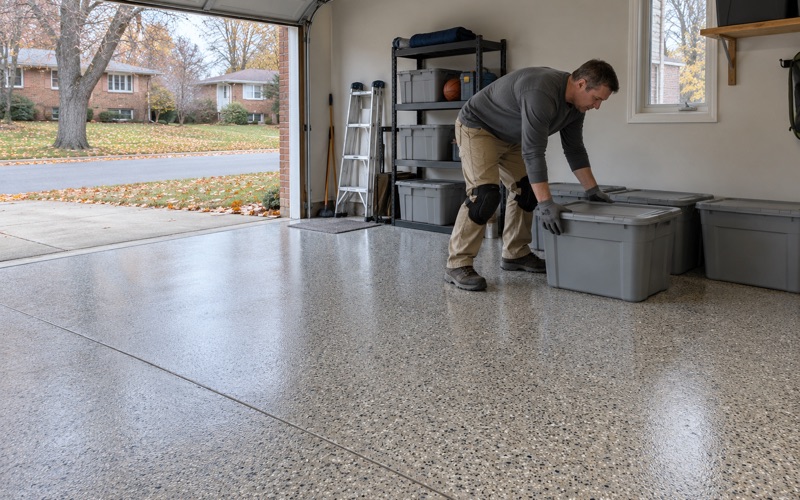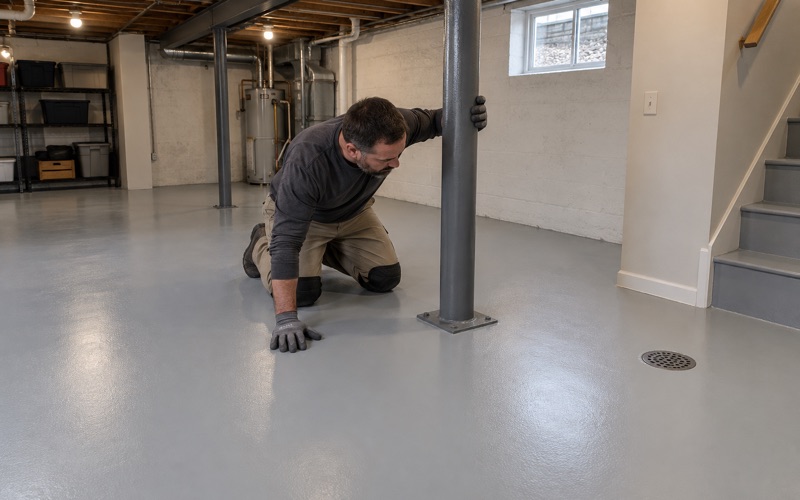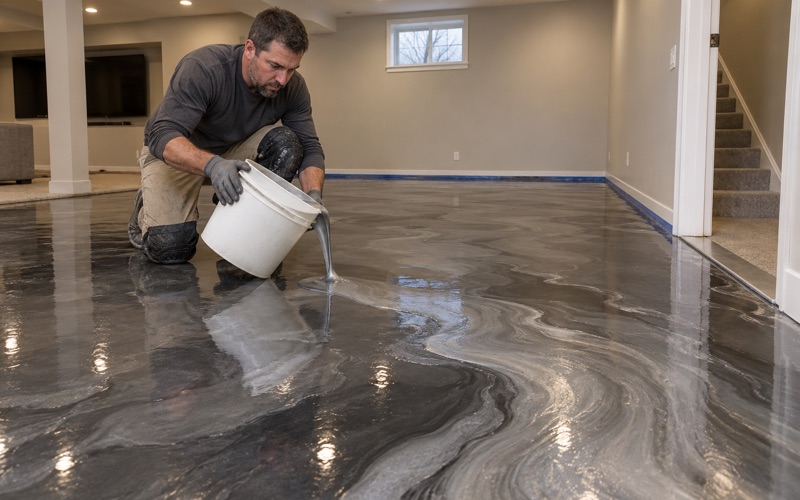
Evanston Epoxy Flooring brings more than 20 years of epoxy-flooring in La Grange to two very different buyers. One is the household that owns a detached house and wants its basement or garage slab coated. The other is a condominium board or a building manager deciding on a floor that every resident shares, and that decision runs on a different clock.
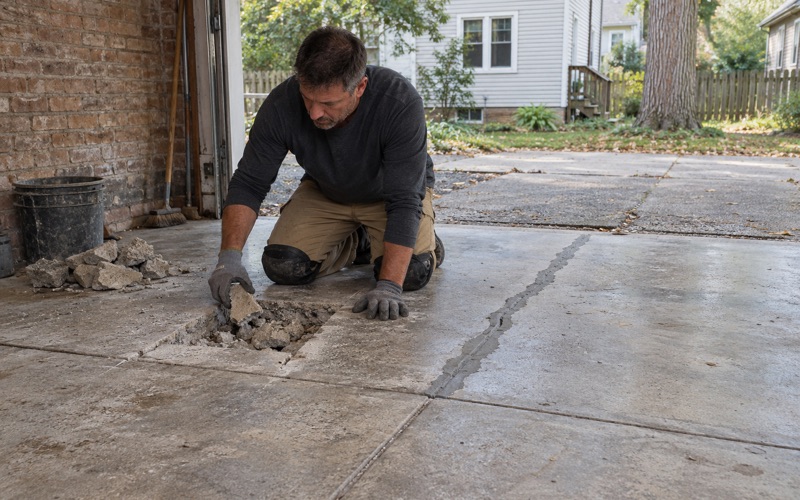
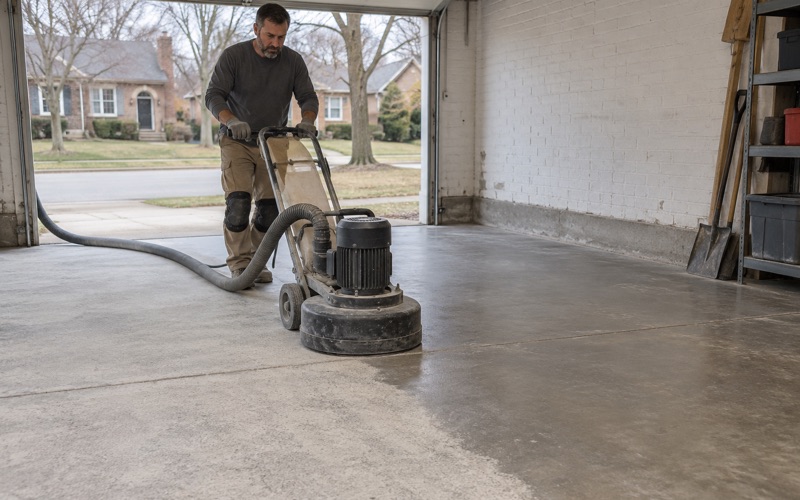
Both jobs start the same way at the slab. We open every slab with a diamond grinder or a shot blaster instead of acid etching it, and we read the cracks, the old paint and any previous coating before we put a number on paper. When a slab needs repair before it can take a coating, we say so in the quote rather than discovering it halfway through.
What changes is who approves the work, who has to be told, and when the crew can actually get into the room. Most of what follows concerns that second kind of job, because a real share of La Grange’s floors sit under shared roofs.
1,814 Homes Under Shared Roofs in La Grange
What the Census Count Shows
Of La Grange’s 6,196 housing units, 1,814 are in buildings of two or more units, which works out to 29.3 percent of the village’s housing. The breakdown runs from 342 units in two-unit buildings and 227 in three- and four-unit buildings up through 277 in buildings of five to nine. Those figures come from the Census Bureau’s 2024 five-year American Community Survey.
The larger buildings matter more for floor work. There are 538 units in buildings of 10 to 19 units, another 186 in buildings of 20 to 49, and 244 in buildings of 50 or more. A 10-to-19-unit building is big enough to have shared rooms that nobody owns individually, and small enough that the people deciding on those rooms often live in the building themselves.
Owners, Renters and the Shared Floor
La Grange is mostly owner-occupied: 4,740 of its 5,816 occupied units are owned and 1,076 are rented, or 81.5 percent owners. Only 121 detached houses are rented, so the renter side of the village lives largely in the attached and multi-unit stock. That means a rented apartment’s floor is a decision for whoever owns or manages the building, not the tenant.
Inside a condominium, the line falls differently. A unit owner usually controls the floor inside the unit, while the hallway outside the door, a shared storage room and any common mechanical space are typically the association’s. We ask early which floor a call is about, because the answer decides who has to approve the proposal.
Two-Flats and Small Buildings
The 342 units in two-unit buildings are a smaller version of the same question. A two-flat with two owners often has a shared basement or a shared garage slab that neither owner can coat alone. We schedule those jobs with both owners, or with the association if one exists, before the first bag of material is opened.
Three- and four-unit buildings work the same way, just with more people to reach. In each case we want one named contact who can confirm the date, the access and the color choice, so that the crew is not fielding three different instructions on the morning of the grind.
Looking for epoxy-flooring closer to Western Springs? See Epoxy-Flooring in Western Springs.
Who Signs Off on a La Grange Building Floor
The Board, the Manager or the Owner
In a condominium, the association board usually approves work on a common floor, sometimes after a vote and sometimes on a manager’s recommendation. In a rental building, the owner or a management company makes the call. In a detached house, the decision rests with the household that lives there, which in La Grange is nearly always the owner.
We write the proposal so it survives that process. It names the product, the system build and the finished thickness, so a board member who was not at the walkthrough can read it and check later that what went down matches what was approved. A proposal that a board has to decode tends to sit on the agenda for another month.
Moisture and Warranty Terms in Writing
Moisture testing is a line item in our scope, not an upsell offered after a common floor has already blistered. With 64.0 percent of the village’s housing built before 1960, decades before ASTM E1745 defined a modern under-slab vapor retarder, we test a slab rather than assume it is dry. On a shared floor that usually means ASTM F2170 in-situ relative humidity probes.
Warranty exclusions get the same treatment. We read them out before the job is sold, and moisture is the first one named, so a board can record in its minutes that it understood what the warranty does and does not cover. We also say plainly that a coating is a film that follows the slab, so it will not stop a moving crack from reappearing.
Licensing, Permits and Paperwork
Illinois issues no state license for flooring or coating work, so a board asking for a license number will not find one from any installer. What we show instead is whatever contractor license, bond and insurance the Village of La Grange asks for, since the village runs its own building permit process. Managers usually want those documents on file before a date is set.
A unit owner hiring us for a floor inside their own unit is a home job, and that brings in the Illinois Home Repair and Remodeling Act. They get a written contract and the state’s Home Repair: Know Your Consumer Rights pamphlet before work starts. Any approval the association requires sits alongside that contract rather than replacing it.
Common Floors and Residents Who Still Need Access
Storage Rooms, Corridors and Utility Spaces
The common floors we are asked about in multi-unit buildings tend to be working rooms: resident storage areas, laundry rooms, back corridors and the utility spaces around boilers and water heaters. They take carts, bikes, boxes and occasional water, and the bare concrete in them dusts and stains. A 100% solids epoxy with a quartz aggregate broadcast gives those rooms a sealed, textured surface that cleans with a mop.
In a building of 10 to 19 units, those rooms are usually shared by every household above them. That makes the floor a common expense and a common inconvenience while the work is underway. We plan the system around how many people need to pass through, not just around the square footage.
Where a Building Has a Parking Area
Some buildings have a parking area or garage floor that residents share, and that slab sees the hardest use of any common floor. Before we quote one, we check whether it is a slab on grade or a structural deck, because that changes what can be ground, how deep, and what system belongs on it. We do not assume a layout we have not walked.
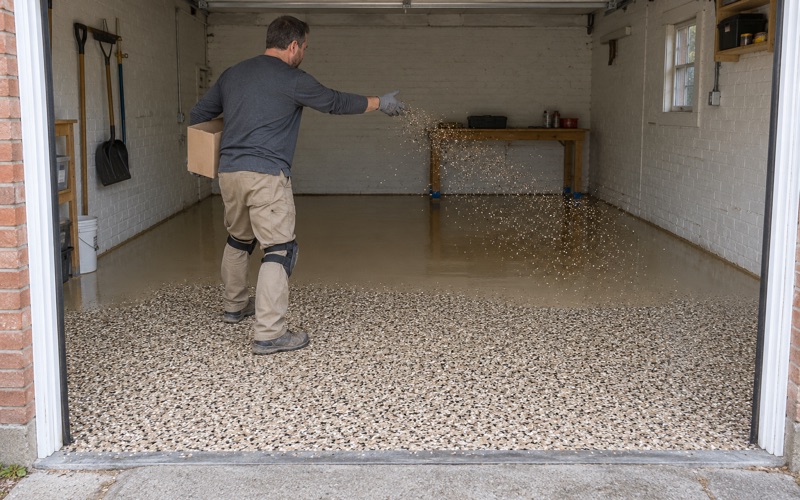
On a shared garage slab we favor a ground surface, a 100% solids epoxy base coat and a polyaspartic topcoat, which resists hot tire pickup and returns to service quickly. Vinyl flake broadcast hides tire marks and the scuffs that come with many cars instead of one. Any stall striping is repainted on the topcoat once it has cured.
Scheduling Around Residents
Residents of a shared building cannot be told to stay away for a week. We split a common floor into sections where the layout allows, so one half of a storage room or corridor stays open while the other is ground and coated. The manager posts the dates, and we keep to them.
Grinding and shot blasting are loud, so we plan them inside the village’s construction hours and early enough in the day that the noise is finished before residents come home. A fast-curing topcoat shortens the window in which a hallway is closed. Where a building also has ground-floor commercial tenants, we fit the work around the hours those businesses must stay open.
Downtown La Grange, the Metra Stops and Lyons Township
Near La Grange Road and Stone Avenue
La Grange’s downtown centers on La Grange Road, which is US 45, and the BNSF rail line, with Metra stations at La Grange Road and Stone Avenue. Amtrak’s Illinois Zephyr and Carl Sandburg stop at La Grange Road as well. For our scheduling, a downtown job near either station is planned like commercial work, whether the client is a storefront or a condominium association.
Near the stations, staging is the first practical question. Parking and loading for a grinder, a dust collector and material pallets have to be arranged in advance, and we confirm with the manager where the crew can stage without blocking residents or customers. Material deliveries are timed so equipment is inside before the morning rush builds.
The 112 E. Burlington Proposal
In February 2019, Landmarks Illinois issued an advocacy alert about the Jackson Moving and Storage building at 112 E. Burlington Avenue, built in 1903 and altered in 1923. It was a contributing building in the downtown district and was slated for demolition to make way for 50 condominiums. Landmarks Illinois stated that La Grange had no local historic preservation ordinance that could protect it.
We have not checked whether those condominiums were built, so we make no claim about them. What it does show is a 50-unit condominium building planned for a downtown lot. Any building of that size eventually needs decisions about its storage, service and common floors, and those decisions come from a board.
Lyons Township and the Paperwork Around It
La Grange sits in Lyons Township in Cook County, and a 60525 mailing address is not always proof of which municipality a property is in. Before we assume a permit path for a commercial or association job, we confirm that the building is inside the Village of La Grange rather than a neighboring Lyons Township community that shares the ZIP code.
We also do not sell a floor coating as radon reduction; in Illinois that work requires an IEMA radon mitigation license, and a board weighing basement work should hear that from us first. Our coatings are chosen within the Illinois VOC limits in 35 Ill. Adm. Code Part 223, which bind the installer as well as the manufacturer and matter in a building where residents share the air in the corridors.
When a La Grange board or manager calls, we start with a walkthrough of the common floor, a moisture test plan and a proposal written for the people who will vote on it. A homeowner with a basement or garage slab gets the same walkthrough, with fewer signatures at the end.
- 20+ Years in Business
- Moisture Testing in Every Quote
- Written Proposals