Evanston Epoxy Flooring brings more than 20 years of slab preparation and coating work to epoxy flooring in Justice, and most of the floors we quote here are decided by someone who does not walk on them every day. That changes how a proposal has to read. It has to hold up when a property manager forwards it to an owner who has never seen the garage.
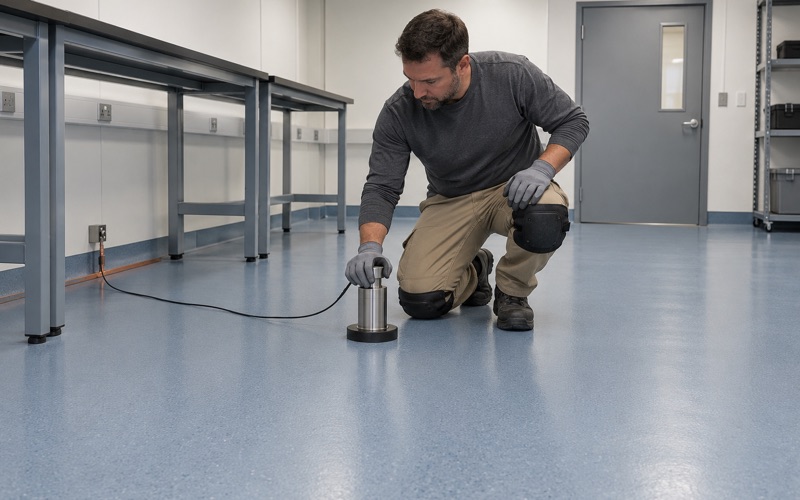
So every proposal names the product, the system build and the finished thickness, which gives the person approving the spend something to check against the floor once it is down. Moisture testing sits in the scope as its own line, priced before the job rather than offered after a blister appears. If the cracks, an old paint layer or a failing coating mean the slab needs repair first, the proposal says that too.
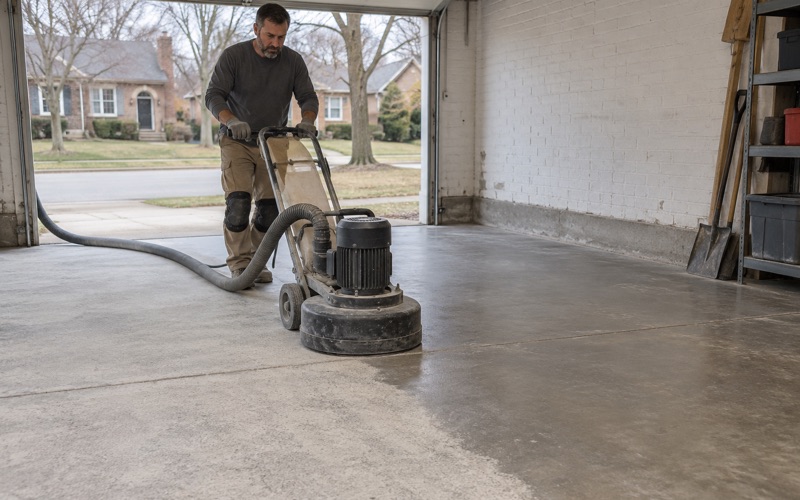
Preparation is mechanical on every slab. We open the concrete with a diamond grinder or a shot blaster to a measured ICRI surface profile, and we do not acid etch. The rest of this page covers what is particular about the work here: who owns the decision, what the village requires of us before a permit issues, and how the shop floors and owner-occupied homes differ from the apartment stock.
Apartment Buildings From the 1960s Through the 1990s
Where the Floor Decision Sits
Justice is, at its core, a village of apartment buildings. The ACS 2024 five-year estimates count 2,290 of the village’s 5,302 housing units, or 43.2 percent, in structures of five or more units. Of 2,241 renter households, 1,669 live in those buildings, which is 74.5 percent, or roughly three in four.
For us that means the person who calls about a garage, laundry room or hallway floor is usually a landlord or a property manager, not a resident. The work lands on a turnover calendar or a capital plan, and the floor competes with roofs and boilers for the same budget line. We write scopes that can be approved in phases, one building or one room type at a time.
Slabs Poured in the 1970s
The village’s single largest building decade is the 1970s, when 1,409 of its housing units, 26.6 percent, went up. Another 712 date to the 1960s, 762 to the 1980s and 689 to the 1990s. Floors of that age have often been painted, sealed or patched along the way, and the record of what went on them may have left with a previous owner.
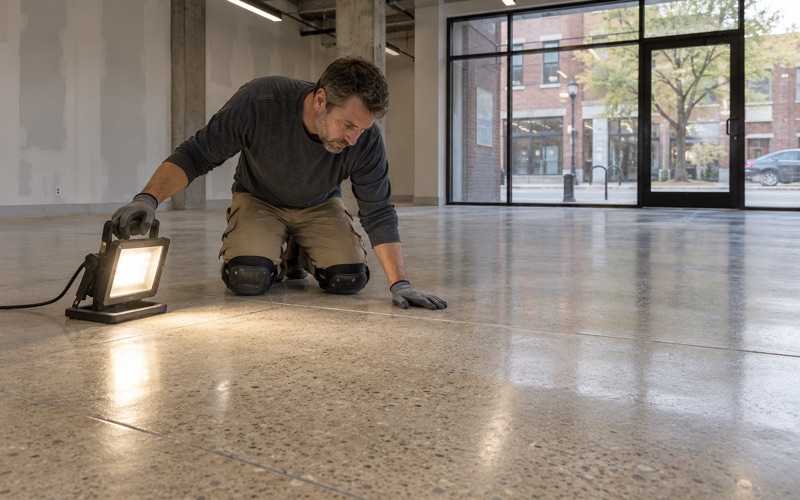
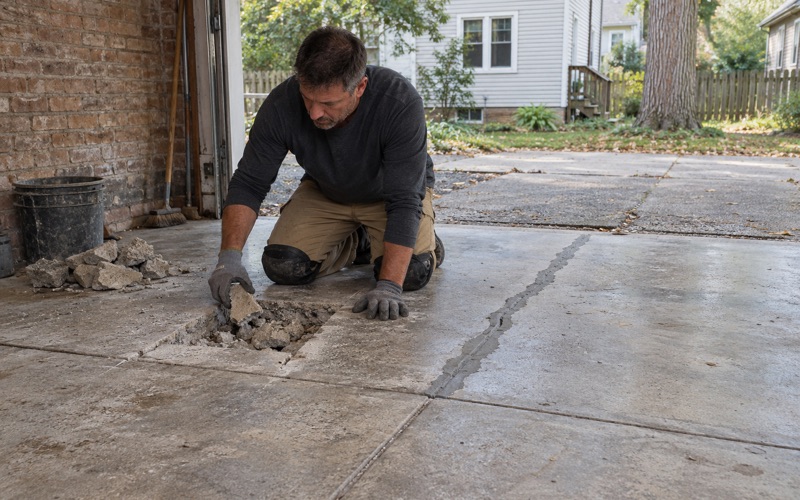
So we read the slab before we price it. We look at the cracks, test how the old coating is holding and note where it has already let go, then say plainly whether the concrete needs repair before anything goes over it. A coating is a film that follows the slab underneath, and we tell a manager that up front rather than promising it will hold a moving crack together.
Garages, Laundry Rooms and Common Areas
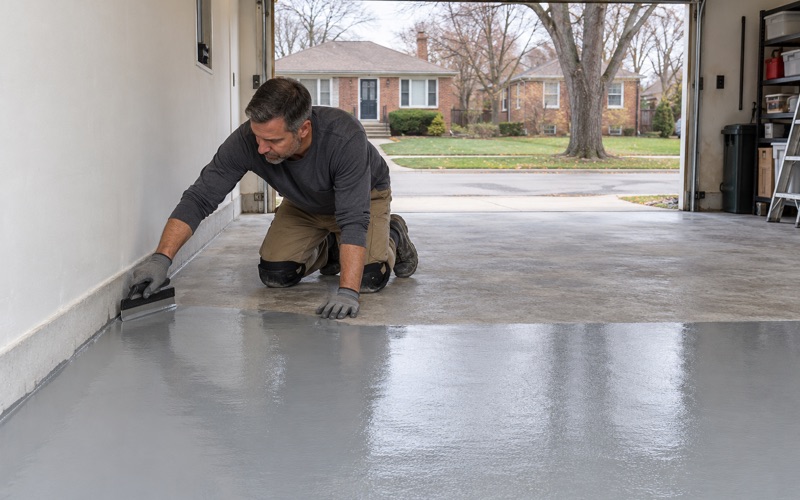
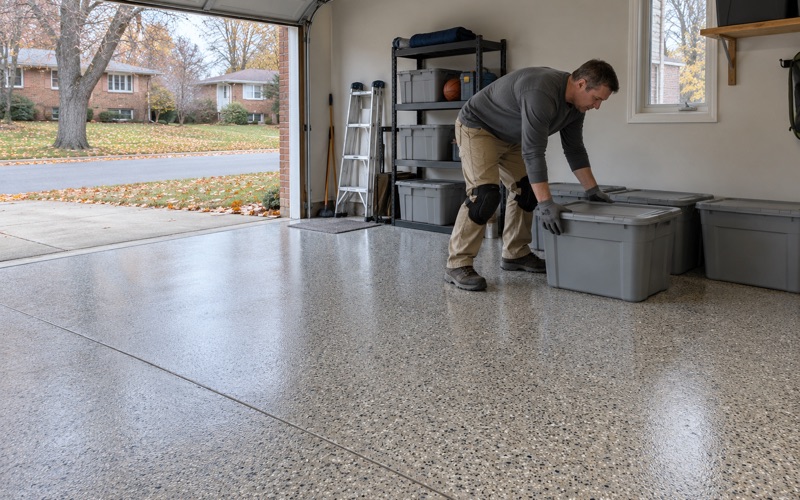
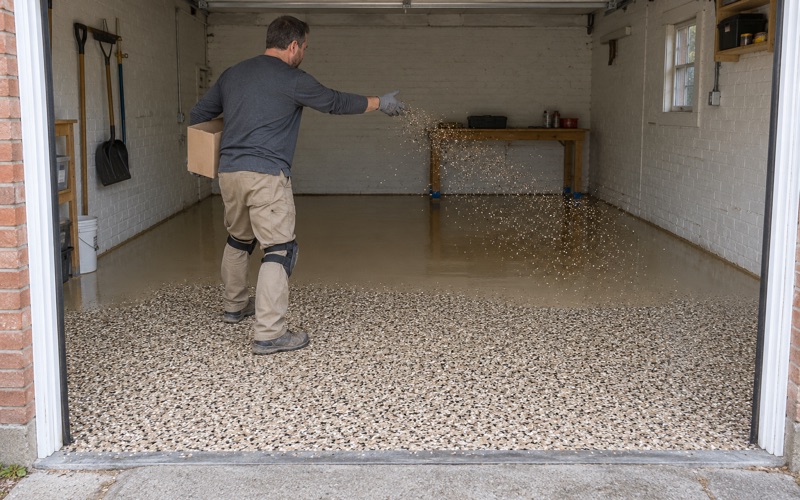
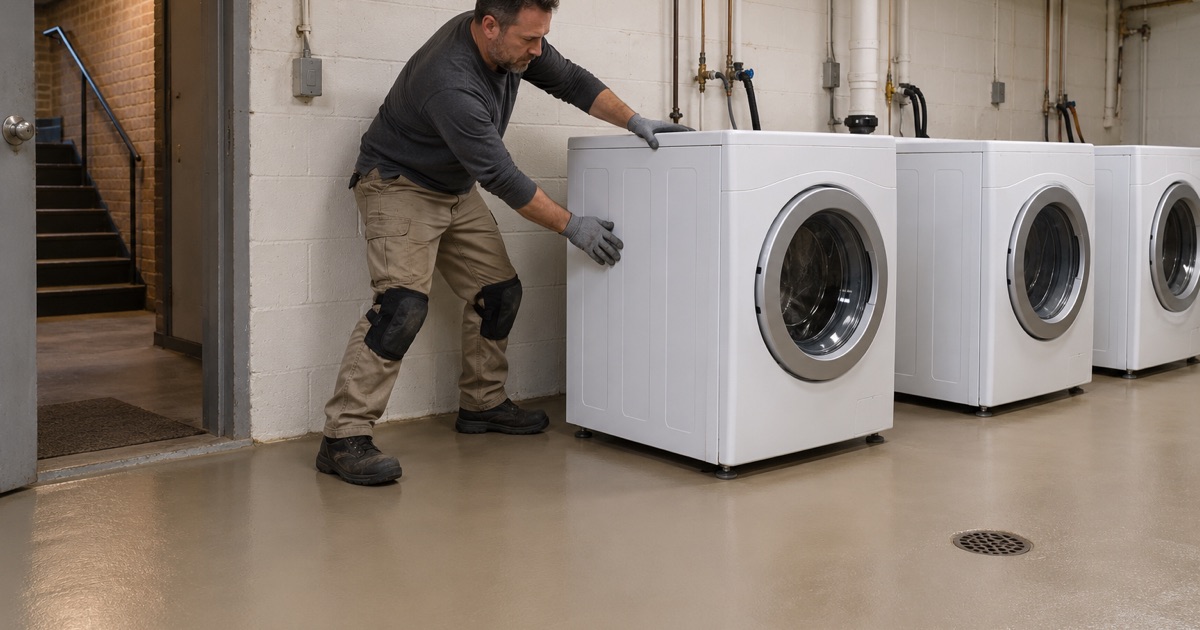
The rental floors a manager along the 79th Street and Roberts Road corridors is most likely to call about fall into three kinds: garage bays, laundry rooms, and the entries and corridors every tenant crosses. Each takes a different build. A laundry room wants a seamless, cleanable surface that tolerates water at the machines, while a garage bay wants a vinyl flake or quartz broadcast for grip.
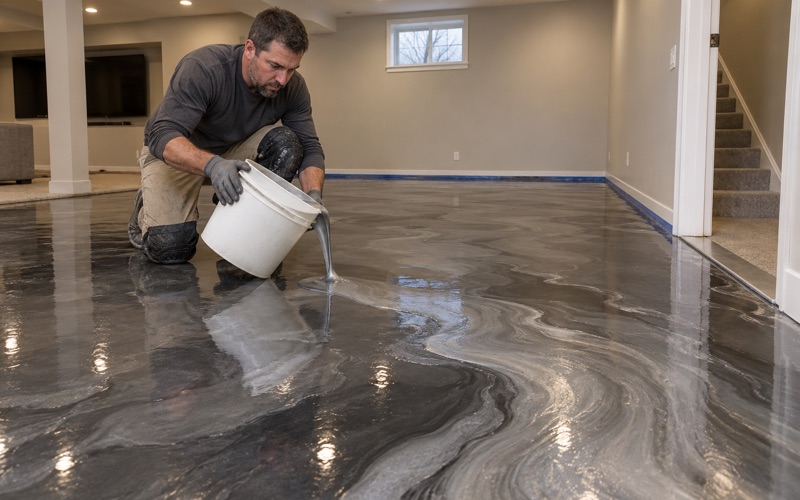
Occupied buildings set the schedule. A common-area floor has to stay passable, so we split corridors into halves or work a laundry room in a window the manager has posted to tenants in advance. Fast-return polyaspartic topcoats over a 100% solids epoxy base help shorten the time a room stays closed to tenants.
Looking for epoxy-flooring closer to Bridgeview? See Epoxy-Flooring in Bridgeview.
Registered and Bonded Before the Permit
How the Building Department Screens Contractors
The Village of Justice Building Department, at 8748 W. 82nd Place, runs a Contractor’s Work Permit Program meant to ensure that every contractor working in the village is insured, licensed and registered. Contractors under a permit must be registered and bonded, and no building permit issues until all of them are. Concrete work is a listed permit item, and it also calls for a plat of survey.
Illinois issues no state license for flooring or coating contractors, so the village registration is the credential that actually binds here. We show a manager our registration, bond and insurance before the permit application goes in rather than after. The village uses a 3-part application that lists every contractor on a job, and permits typically issue within 72 hours once the paperwork is complete.
The Bond and the Licensing Year
The permit bond is $10,000 for every contractor other than a sewer contractor, whose bond is $20,000. It runs on a licensing year from February 1 through January 31 and carries a 30-day cancellation clause. For a property manager planning work across that date line, it is worth asking whether a contractor’s bond is current for the year the work will actually happen.
A capital project approved in December and started in March crosses that line, and the paperwork has to follow it. We keep our village filing current on that calendar, so a manager does not learn at permit time that a slab repair is held up by a lapsed bond. The 2021 IBC and IRC, with village amendments, are the codes the department works from.
Fire Protection and Occupied Buildings
Justice has no fire department of its own. The Roberts Park Fire Protection District covers the village, so a question about a building’s fire protection goes to the district rather than to village hall. In an occupied apartment building, we ask the manager before work starts whether anything about the job, such as a closed corridor or stored materials, needs to be cleared with the district.
Our own practice keeps exit paths open. We stage material outside the building where the manager allows it, ventilate while coating, and choose products within the Illinois VOC limits for architectural coatings, which bind the installer as well as the manufacturer. Tenants get a posted notice of which rooms close, for how long and when they reopen to foot traffic.
Truck Repair and Body Shop Floors in the Industrial Park
The village describes itself as home to more than 400 small businesses and no major industries. Its industrial park is small-shop territory, with several truck repair shops and body shops rather than plants or warehouses. Those floors take a different beating than an apartment garage, and we build them for it.
Fluids, Jacks and Creepers
A truck bay or body shop floor sees oil, coolant, brake fluid and solvent, plus point loads from floor jacks and jack stands and the steady roll of creepers. It does not usually see forklift traffic. That points us toward a thicker 100% solids epoxy body with a quartz aggregate broadcast, or urethane cement where hot fluids and heavy cleaning are routine.
Old shop slabs are often saturated with years of oil, and a coating will not bond to contaminated concrete. We grind or shot blast to an ICRI CSP profile that suits the system, test for remaining contamination, and tell the owner when a section needs to be cut out and patched. Moisture is tested here too, since a dense shop coating can trap vapor rising through the slab.
Coatings That Hold Up to Shop Work
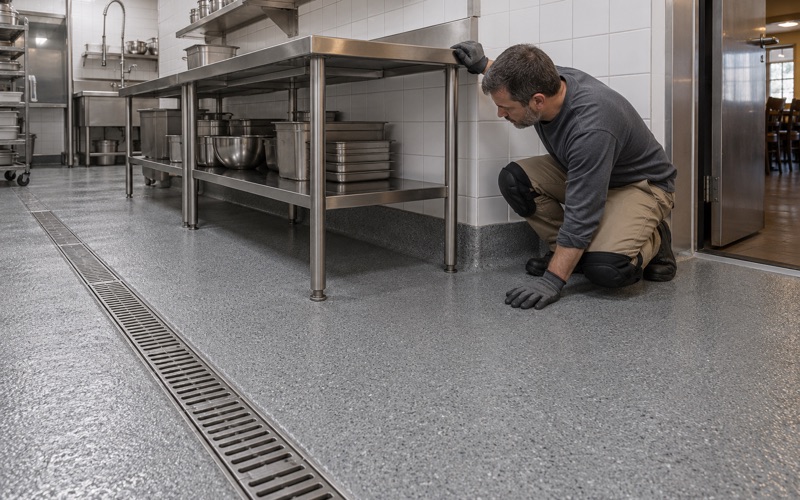
Bare concrete in a body shop absorbs every spill, and a cheap roll-on paint lifts under hot tires and solvent. A properly bonded system gives a surface that wipes clean, and a lithium silicate densifier is an option for a lighter-duty storage area where a full coating is not justified. We say which one fits each room rather than coating everything the same way.
Keeping the Bays Working
Commercial jobs are scheduled around the hours a building has to stay open, and a repair shop cannot simply close for a week. We usually split a shop into bays and coat them in sequence, so trucks keep moving through the half that is open. Fast-cure topcoats can return a bay to light traffic sooner, though full chemical resistance takes longer.
Grinding and shot blasting are loud, so we plan them inside the village’s construction hours even in an industrial setting. A shop with apartments or houses nearby gets the same consideration as a residential job. We confirm the work window with the owner in writing before the first day, along with the exact cure time each bay needs before a jack goes back on it.
Townhomes and Detached Houses: The Owner-Occupied Half
Townhouse Garages
Not every floor in Justice belongs to a landlord. Of the village’s 2,659 owner households, 579 live in single-family attached homes, the townhouse stock, and 1,581 live in detached houses. Those owners hire us directly, and the Illinois Home Repair and Remodeling Act shapes the paperwork: a written contract and the state’s consumer-rights pamphlet before any work starts.
A townhouse garage shares a wall with the unit next door and often sits right against living space, so odor and noise travel. We favor low-odor systems and give the owner a written schedule to pass along, so the neighbor on the other side of the wall knows which day the diamond grinder runs. We also agree with the owner on where the car lives for the length of the cure.
Detached Houses and Moisture
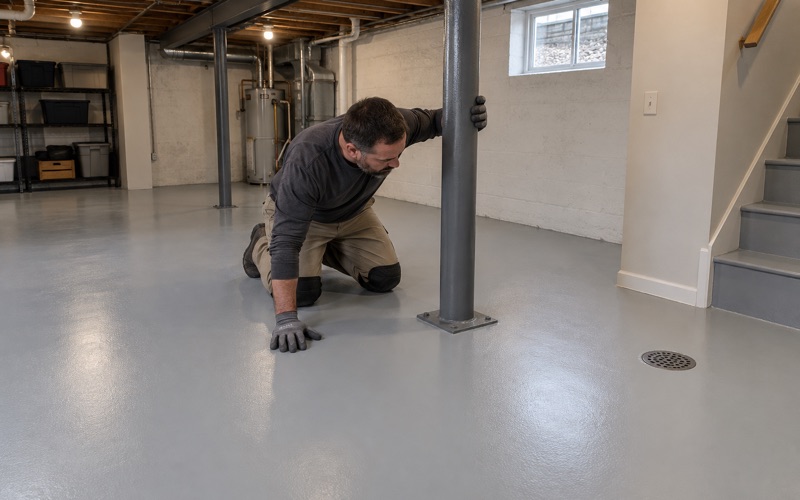
Owner-occupied houses here sit alongside an older layer of housing: 840 of the village’s units date to the 1950s. A garage or basement slab poured in that era may have gone in without an under-slab vapor retarder, and moisture moving up through it is a leading reason a coating lets go. That is why the test comes before the price.
Depending on the slab, we run ASTM F1869 calcium chloride tests, ASTM F2170 in-situ relative humidity probes, or a quick ASTM D4263 plastic sheet check as a first read. High readings call for a moisture-mitigation primer under the system. Warranty exclusions are read aloud before the contract is signed, and moisture is the first one named.
Curing on the Slab’s Schedule
We schedule each coat against slab temperature and the dew point spread at the surface, not against a date on the calendar. An unheated detached garage can sit too cold or too close to dew point for a proper cure, and when it does we say the job has to wait rather than trap amine blush under a topcoat. Owners get the realistic return-to-service time in writing.
Archer Road, home to village hall at 7800 Archer Road and to Resurrection Cemetery, is one of the village’s arterials along with 79th Street, Roberts Road and 87th and 88th avenues. We plan equipment drop-off around those roads so a crew is not idling a trailer on a residential street. One more point owners ask about: we do not sell a coating as radon reduction, because in Illinois that work takes an IEMA radon mitigation license.
- 20+ Years in Business
- Moisture Testing in Every Quote
- Written Proposals