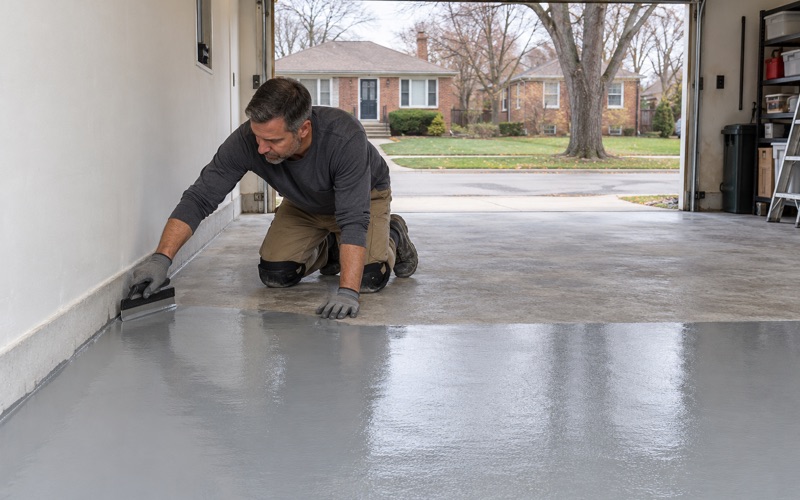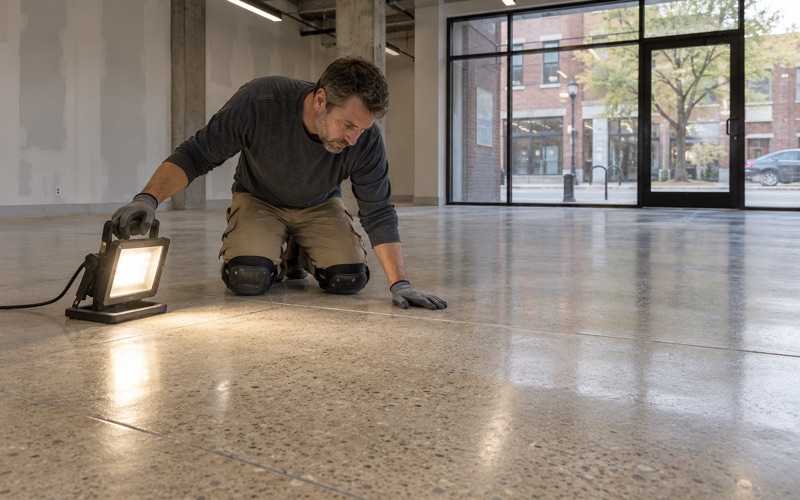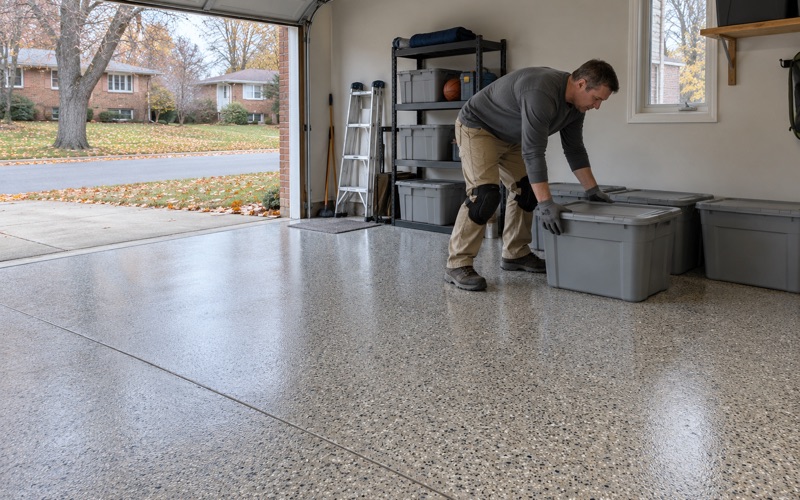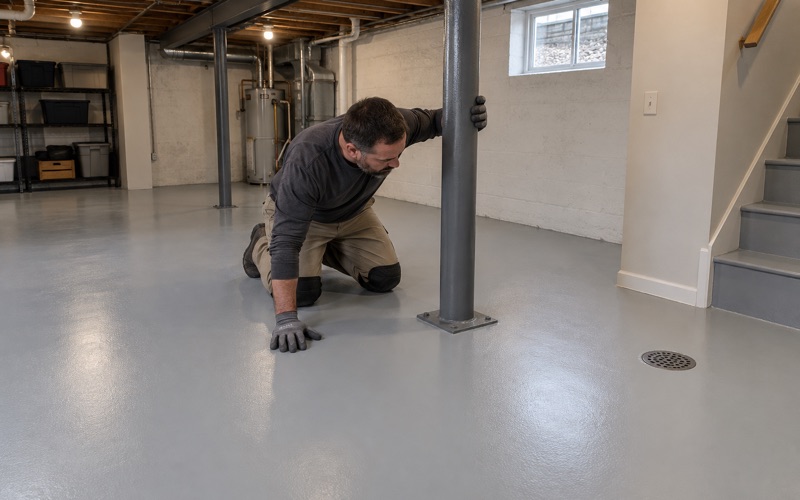
Evanston Epoxy Flooring brings more than 20 years of floor coating work to epoxy flooring in Hickory Hills, and the first question we ask about a basement or garage is whether it has ever taken water. That answer shapes the moisture test, the primer and the warranty conversation long before we talk about flake color or topcoat sheen.
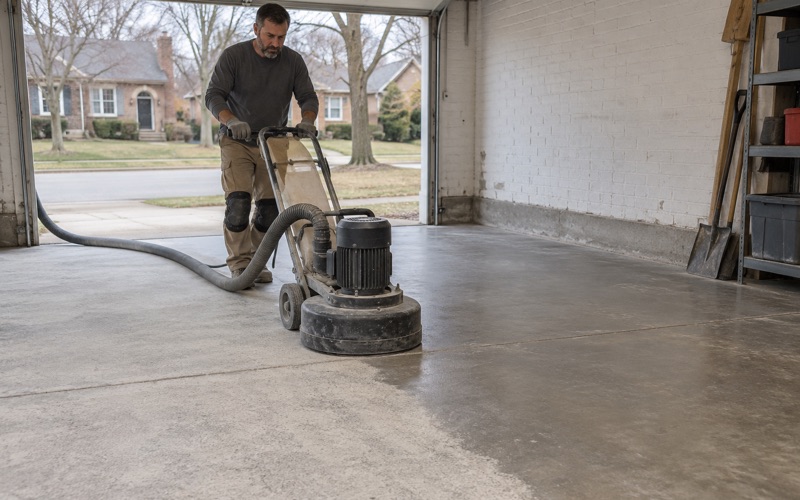
Our approach is built around the slab rather than the brochure. We open the concrete with a diamond grinder or a shot blaster, never acid, so the coating has a real profile to grip. Moisture testing sits in the written scope as its own line, and the proposal names the product, the system build and the finished thickness so you can check what went down against what we quoted.
This page covers what that means on a slab that may already have been wet: the blocks where water has been a problem, how we prepare an older basement floor, what a coating can and cannot do about drainage, and the paperwork the city asks of us before work begins.
Where Hickory Hills Says the Water Gets In
Storm Sewers the City Calls Too Old
Hickory Hills, a Cook County city of 14,505 people in 2020 that sits principally in Palos Township, has been unusually direct about its drainage. Its annex to the 2024 Cook County hazard mitigation plan states that several miles of storm sewers inside city limits need replacement because of age. The same annex rates the city’s current flood vulnerability as increased.
For a floor coating contractor, that document is more useful than any general rule of thumb. It names streets and complexes rather than describing a vague risk, so when we quote a basement or garage here we can ask a homeowner a specific question instead of a generic one. If the address is on a list the city wrote itself, we plan the moisture work accordingly.
Blueridge, Flamingo Terrace and Great Oaks
The Blueridge subdivision is the location the annex lists for repeated basement flooding, along with ponding and basin overtops. A basement floor there may well have taken water before, whether or not the current owner was living in the house at the time. We treat that history as a condition of the slab, not a footnote.
The Flamingo Terrace complex and Great Oaks Condos appear for a different pattern: overbank flooding, structure flooding, ponding and bank erosion. Garage and storage floors in buildings like these often answer to an association as well as an owner. We schedule those jobs with the association first, and we ask what the building has recorded about past water before we test.
The 7700 Blocks of 98th Street and 96th Place
The annex also singles out the 7700 block of 98th Street and the 7700 block of 96th Place, where it says insufficient sewer capacity results in structure flooding. That is a block-level statement about the pipe in the street, not about any one house. Even a homeowner who has kept a basement dry may be on a stretch where the system runs short of capacity.
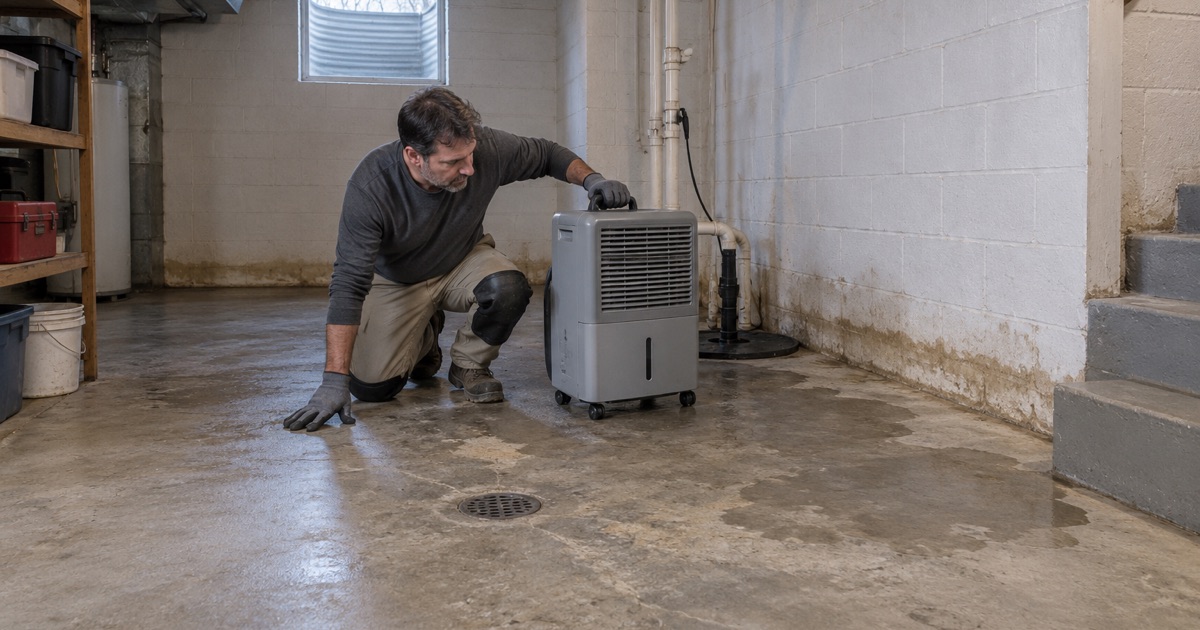
On those blocks we ask about floor drains, the sump pit and any history of water at the walls before we price anything. The answers decide whether the scope needs a moisture-mitigation primer, crack repair at the drain or simply a standard build. We would rather add a line to the proposal than leave it off and explain a blister later.
Looking for epoxy-flooring closer to Barrington? See Epoxy-Flooring Services in Barrington.
Coating a 1960s Basement Slab After Water Has Reached It
Why the Decade Matters
Of the city’s 5,748 housing units, 1,888 were built in the 1960s, about 32.8 percent, and another 1,217 date from the 1970s. A basement or garage slab poured in that era generally predates under-slab vapor retarder practice, so it may have no vapor retarder beneath it. That matters on any lot, and more so on one the city lists as flooding.
Hickory Hills grew from 2,707 residents in 1960 to 13,176 in 1970, which explains the concentration. Over six decades, a basement floor can collect layers of history. We ask what was on the floor before, because old carpet glue, paint or a previous coating changes how much grinding the slab needs.
Garages raise a related question. The IRC R506.2.3 exception still allows a garage floor to be poured without a vapor retarder, so a garage of any age can lack one. A garage that has taken water from a flooded street deserves the same moisture test as the basement.
Testing a Slab That Has Been Wet
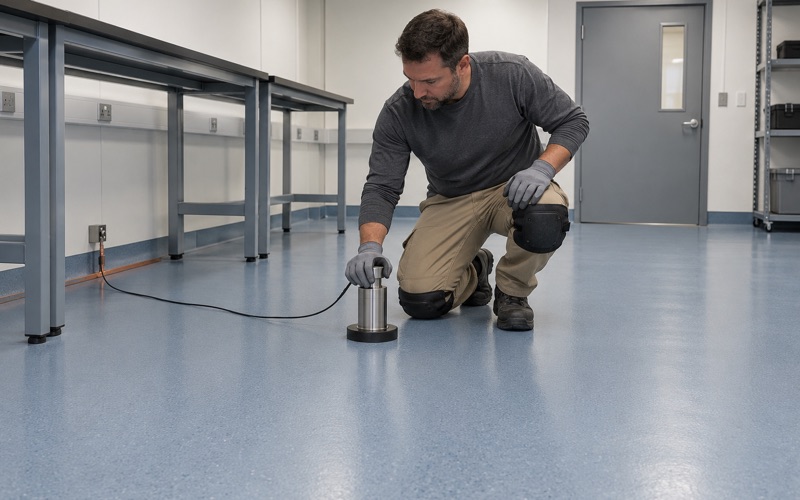
On a slab with a flooding history we do not rely on a single reading. A plastic sheet test under ASTM D4263 gives a quick first look, and ASTM F2170 in-situ relative humidity probes tell us what is happening inside the concrete rather than at its surface. Where a calcium chloride test under ASTM F1869 suits the job, we run that as well.
On a block the city names for flooding, that testing line is the most important one in the proposal. If the numbers come back high, the system changes to include a moisture-mitigation primer under the epoxy, and the proposal says so. If they come back too high for any primer we would stand behind, we tell you that before you sign.
Efflorescence, Old Repairs and Cracks
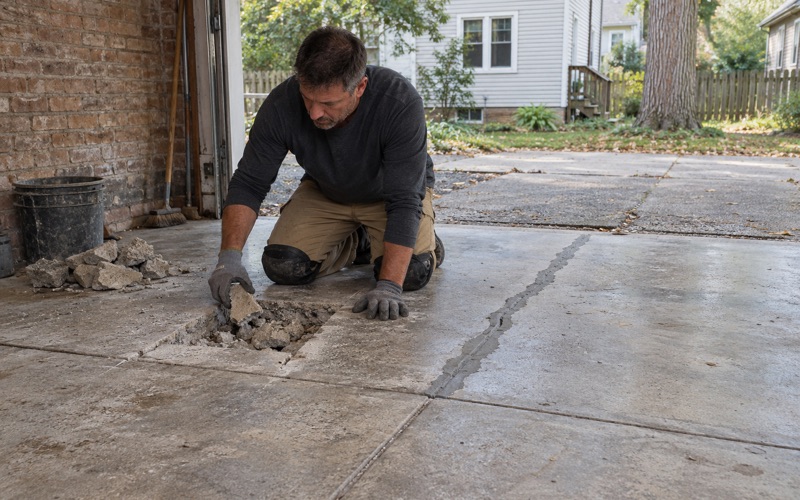
A slab that has taken water often shows it. White efflorescence at the walls or around the floor drain, a patched crack near the sump pit, or a gray tide line on old paint all tell us where moisture has moved. We read those marks before quoting and say plainly when a section needs repair before it can be coated.
Grinding to an ICRI CSP 2 or 3 profile removes the weak, contaminated top layer that a flood tends to leave behind, which acid etching would not reliably remove. On a 1960s slab we expect cracks that have moved over the years, and a coating will follow them rather than stop them. We say that before the job, not after.
Detention Basins and Undersized Sewers: What a Floor Coating Cannot Fix
Roberts Road and the Hill Creek Basin
The city’s own list goes beyond individual blocks. It says the Roberts Road storm sewers are undersized, and that the Hill Creek shopping center detention basin is undersized as well, causing residential flooding downstream. Public Works has been setting up detention areas throughout the city to help alleviate flooding, which is the kind of fix that happens in the street, not in a basement.
We mention this because homeowners sometimes hope a new floor will solve a water problem. It will not. An epoxy or polyaspartic system is a film bonded to the concrete; it does not stop floodwater, sewer backup or hydrostatic pressure pushing up from below, and we will not sell it as if it did.
If your property is downstream of the Hill Creek basin or along Roberts Road, the honest order of work is drainage first: a working sump pit, an overhead sewer conversation with a licensed plumber, and only then a floor. We coat the slab once that work is done, and we will say so if the drain detailing has to wait for it.
What a Coating Does Well on a Wet-History Slab
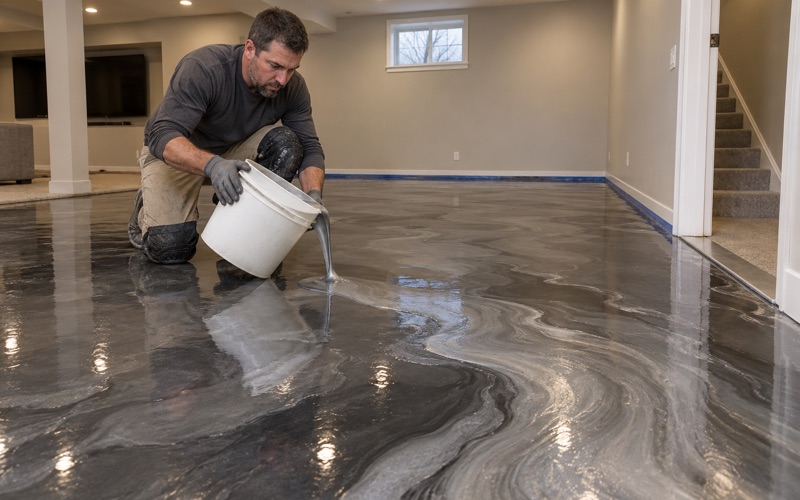
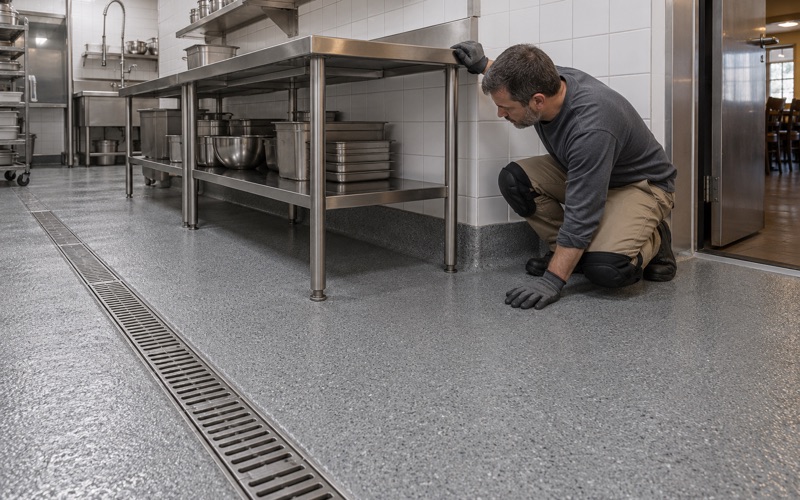
What a properly built floor does offer is easier recovery. A 100% solids epoxy base with a polyaspartic topcoat leaves no carpet pad to rot and no wood subfloor to swell, and the surface can be squeegeed toward the floor drain and cleaned. We detail the coating at the drain and the sump pit so the edges are finished cleanly.
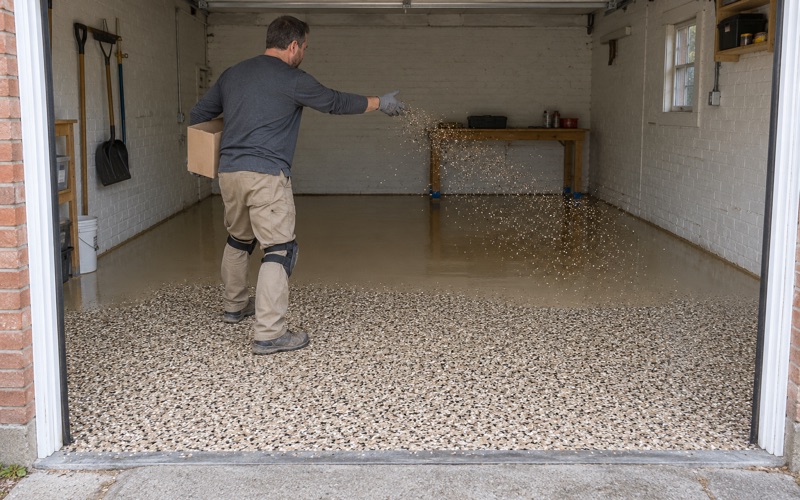
In a Blueridge basement that might mean a quartz aggregate broadcast for traction near the stairs and a vinyl flake broadcast across the open floor. In a garage elsewhere in town, a flake system with a polyaspartic topcoat resists hot tire pickup. Either way, the proposal states the build and finished thickness so you know what you bought.
Warranty Exclusions, Read Out First
Because water history is the main risk here, moisture is the first exclusion we read aloud before a job is sold. If a slab tests acceptably today and the street floods again later, the warranty conversation should not be a surprise. We would rather you hear the limits at the kitchen table than in a dispute.
We also schedule curing against slab temperature and the dew point spread at the surface, not a date on the calendar. A basement that has recently been pumped out or dehumidified needs time and a fresh reading before primer goes down, and we will move the start date rather than coat a damp slab.
The City of Hickory Hills Contractor License and Insurance Certificate
What the Building Department Asks For
Illinois issues no state license for flooring or coatings work, so the City of Hickory Hills contractor license is the credential that binds us here. It is issued through the Building Department at 8652 W. 95th Street, costs $100 per calendar year, and runs January 1 to December 31 with no half-year option.
Each application must be accompanied by a certificate of insurance naming the city as certificate holder, with bodily injury coverage of not less than $100,000 per person and $300,000 per accident, and $25,000 for property damage. The city requires no bond, so we do not claim one; what we show you is the current license and the insurance certificate.
A Certificate in Your Hands Before Work Starts
The city also requires that a certificate of insurance be given to the homeowner or business owner before work begins. We hand it over at or before the walkthrough, alongside the written contract and the Home Repair: Know Your Consumer Rights pamphlet that the Illinois Home Repair and Remodeling Act requires on home jobs.
If you are comparing quotes, ask each contractor whether a certificate naming the city is on file and when you will receive your copy. A contractor who cannot produce one before the start date has not met the city’s requirement, whatever else the quote promises. It is a simple check that takes one phone call.
Debris, Noise and the Neighbors
The city’s hauler does not collect contractor debris, so grinding dust, old coating and used containers leave with our crew rather than going out at the curb. Our grinders run with dust collection attached, which keeps most of the dust contained.
Loud grinding is planned inside the construction hours the city allows, so a one-day garage job does not carry into a neighbor’s evening. Of the 4,005 owner households in Hickory Hills, 3,275 live in detached houses, so a typical job here means a driveway, a garage door and a neighbor close by.
- 20+ Years in Business
- Moisture Testing in Every Quote
- Written Proposals