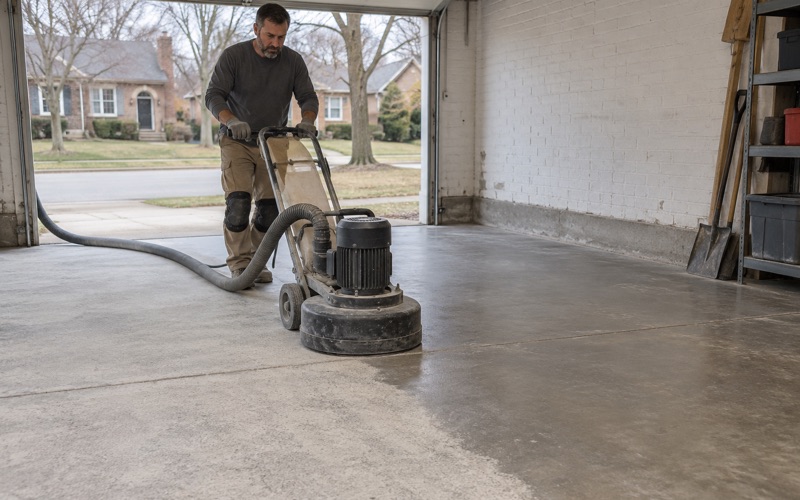
Evanston Epoxy Flooring brings more than 20 years to epoxy-flooring in Franklin Park, and every garage, basement and shop floor we take on here begins the same way. We open the slab mechanically with a diamond grinder or a shot blaster before anything is applied. We do not acid etch, because a floor that was only etched or wiped clean gives the resin nothing reliable to grip.
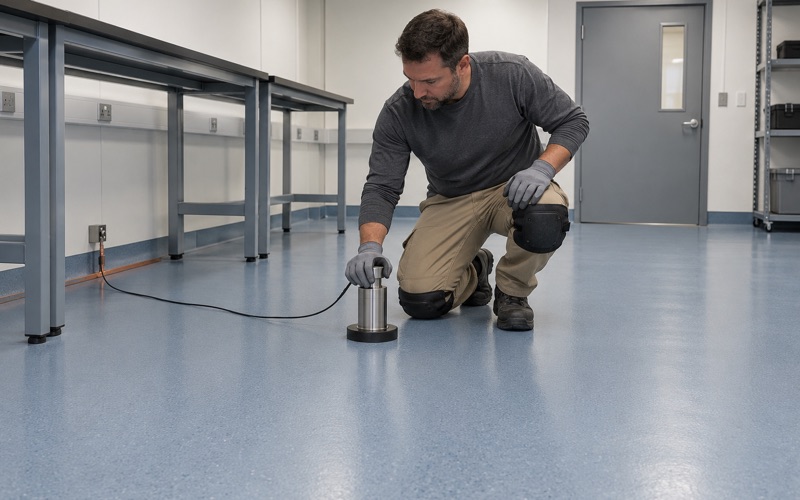
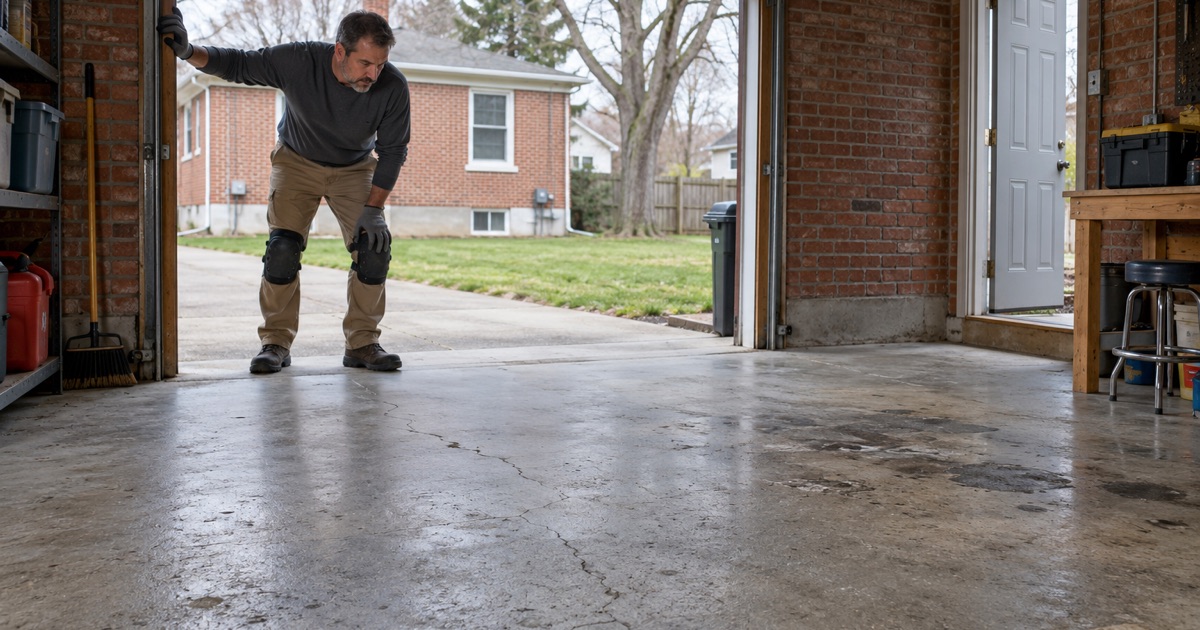
Before a price goes on paper, we read the slab itself: the cracks, the old paint, any coating a previous owner rolled on. If the concrete needs repair before it can be coated, we say so plainly. Moisture testing is a line item in the scope from the start, so it is never something sold after a floor has already blistered.
The proposal you sign names the product, the system build and the finished thickness. That gives you a document to hold against the floor once it cures, and it gives us a standard we have to meet in writing rather than in conversation. If a line on it changes during the job, the change is written down too.
Nearly Every Owner Here Owns a Detached House
A Housing Stock of Single-Family Houses
Franklin Park’s homeownership runs almost entirely through detached houses. Census estimates count 4,304 owner-occupied single-family detached units in the village, which is 95.4 percent of every owner-occupied home, while only 14 owners live in attached units. For a floor coating contractor, that means the decision about the garage or basement almost always rests with one household rather than a board.
The rental side barely touches this house type. Only 165 detached houses are renter-occupied, out of 1,496 renter households in the village, so most tenants here live in something other than a detached house. When we get a call about a detached-house garage in Franklin Park, the person asking is usually the owner who will live with the finished floor.
What a Single-Owner Job Changes
Every home job we take gets a written contract and the Home Repair: Know Your Consumer Rights pamphlet before any work starts, as the Illinois Home Repair and Remodeling Act requires. Warranty exclusions are read aloud before the job is sold, and moisture is the first one we name, because it is the condition most likely to lift a coating from below.
We also explain what a coating cannot do. Epoxy is a film that follows the slab beneath it, so a crack that moves will keep moving and can telegraph through the new surface. We would rather say that before the contract than after the first winter. Where the condition calls for repair first, the repair is quoted as its own line.
The Few Shared Buildings
Not every owner is in a detached house. The village counts 126 units in two-unit buildings and 280 in three- or four-unit buildings, and a garage or basement there may be shared ground. On a two-flat or a condominium, we schedule with the other owner or the association before the first bag of material is opened, so nobody comes home to a closed garage.
Shared slabs raise a practical question about consistency. We write one scope for the whole floor and grind and coat it as a single job, so the finish matches across the line where one parking space ends and the next begins, and no owner is left with a seam down the middle of the garage.
Looking for epoxy-flooring closer to River Forest? See Epoxy-Flooring Services in River Forest.
The 1940s Layer, Older Than the 1950s Boom
Where the Housing Started
Franklin Park was incorporated in 1892 and named for Lesser Franklin, a real estate broker who bought land here when most of it was farm fields. The houses that matter for floor work came later. Of 6,201 housing units, 1,056 were built in the 1940s and 517 in 1939 or earlier, ahead of the 2,272 units of the 1950s.
Together with the 1950s houses, that early layer means 62.0 percent of the village’s homes predate 1960, and recent construction is thin: only 28 units date from 2020 or later. A garage slab here is far more likely to be seventy or eighty years old than five. That age shapes almost everything about how we prepare it.
Old Slabs, Old Coatings
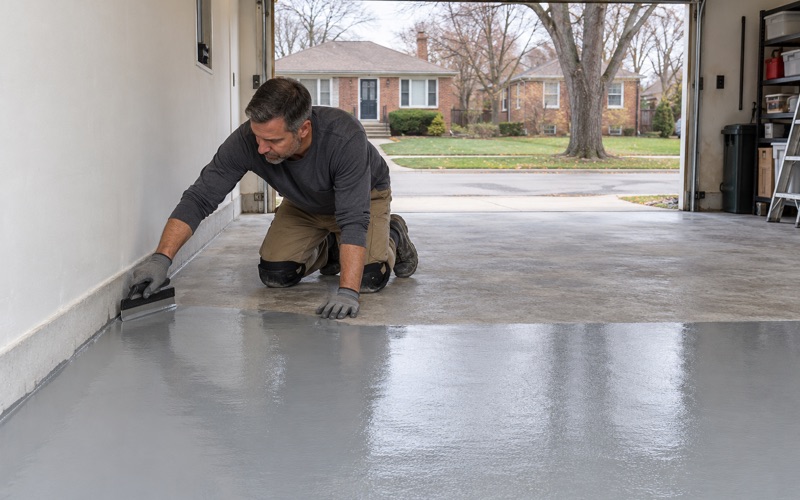
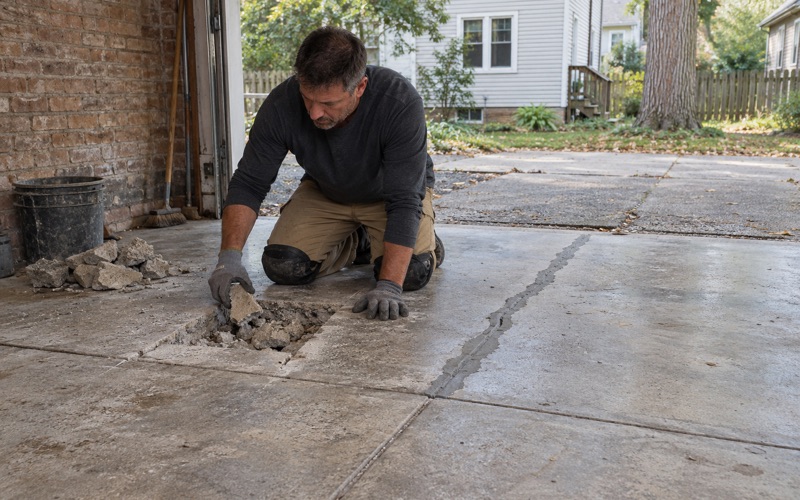
A pre-1960 garage floor has usually had a life before we arrive. It is common to find paint rolled on decades ago, a big-box epoxy kit peeling at the tire lines, oil soaked into the surface and patches that never bonded. Each of those has to come off or be judged sound before a new system goes down, and we decide that on site, not from a photo.
Grinding is how we get there. A diamond grinder or shot blaster removes the failed film and opens the concrete to an ICRI CSP profile the primer can lock into. Acid etching cannot remove an old coating at all, and on an older slab it leaves residue that weakens the bond it was supposed to help.
Moisture Under a Slab This Age
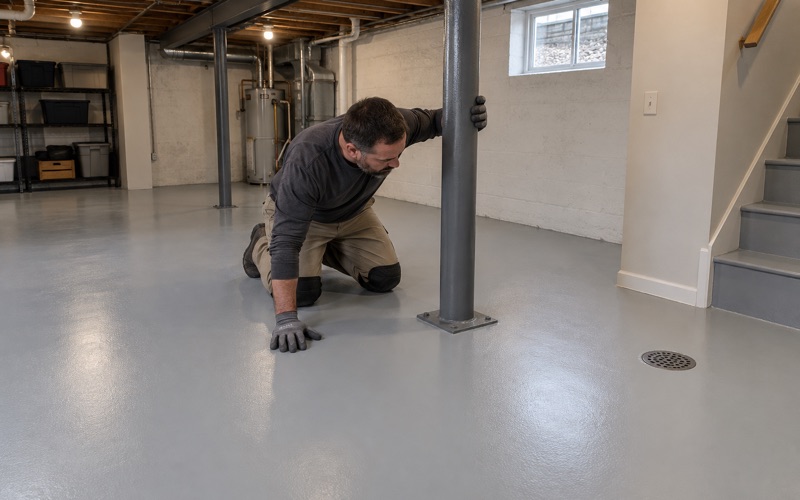
Houses from the 1940s and 1950s were poured long before an under-slab vapor retarder meeting ASTM E1745 was common practice, and many of these floors may have none. That is why we test before we quote a system. We use the ASTM F1869 calcium chloride test, ASTM F2170 in-situ relative humidity probes, or a quick ASTM D4263 plastic sheet test where it fits.
When readings come back above the ASTM F710 thresholds or the product’s own limit, a moisture-mitigation primer goes into the build and onto the proposal. When a slab shows efflorescence or active seepage that a primer cannot answer, we tell you the floor is not ready, and we do not take the job on hope.
75 Miles of Streets, 19.2 Miles of Alleys
What the Roads Bring Home
The village maintained 75.0 miles of streets and 19.2 miles of alleys in 2024, according to its own FY2025 audit report. In a northern Illinois winter, calcium chloride brine and rock salt from those roads ride home on tires and drip onto the garage floor, whichever way a garage faces.
On bare concrete that brine works into the surface and, over winters, scales it. On a thin coating it finds every pinhole and edge. We build garage floors here expecting that salt every year, with a sealed film thick enough and a topcoat hard enough to be squeegeed clean in March without losing its finish.
The System We Put Down
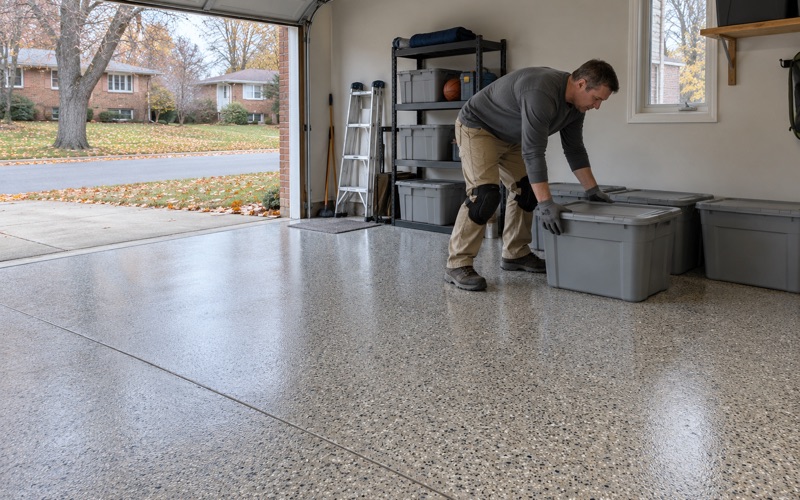
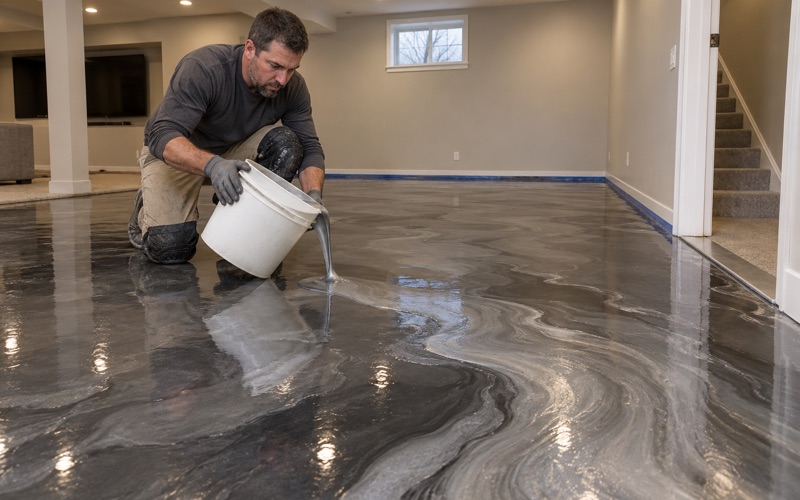
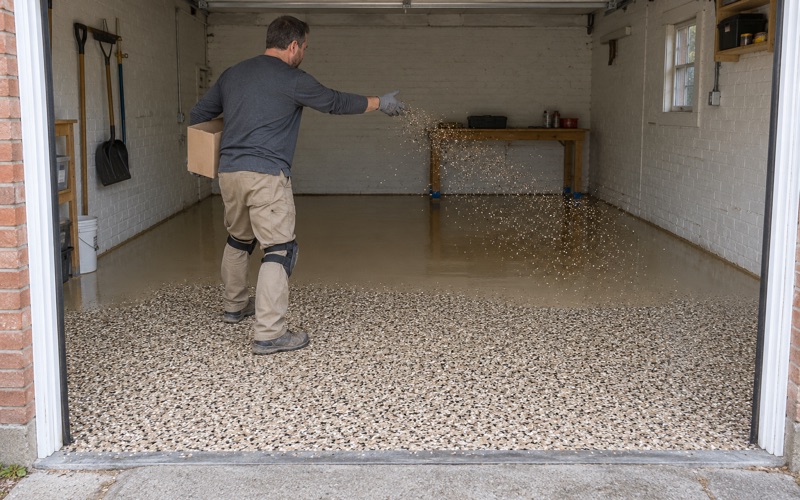
A typical garage build starts with a ground slab, then a 100% solids epoxy base coat, a full vinyl flake broadcast and a polyaspartic or polyurea topcoat. Where a floor needs more grip or more wear, a quartz aggregate broadcast replaces the flake. Flake hides dust and small marks well, while quartz gives a rougher, harder-wearing texture. Each layer is named on the proposal.
That build matters because of hot tire pickup, the failure where warm tires soften a weak coating and lift it off in patches. A properly profiled slab and a cured, full-thickness system resist it. Amine blush on the epoxy surface is cleaned off before the next coat, or the layers above it will not bond.
Curing Against the Slab, Not the Calendar
Resin cures on the slab’s terms. We schedule against slab temperature and the dew point spread at the slab surface, and in an unheated garage that sometimes means telling you the job has to wait for spring. A coating laid on cold, damp concrete to hit a date is the one most likely to fail by the next winter.
Grinding is loud, so we plan it inside the village’s construction hours. On a street of detached houses, that keeps a one-day garage job from running into a neighbor’s evening, and it means the noisiest part of the work is finished early in the day. Coating, by contrast, is quiet work, and the cure that follows needs only a closed door and time.
Downtown Franklin Avenue and Getting the Paperwork Right
The Storefront Side of the Village
Franklin Park’s owner market is residential, but the village also has a storefront side along Franklin Avenue. Its FY2025 audit report carries a Downtown Franklin Avenue TIF as a major special revenue fund, so the downtown is a district the village accounts for separately. Floors there serve customers walking in from the street rather than cars rolling in from it.
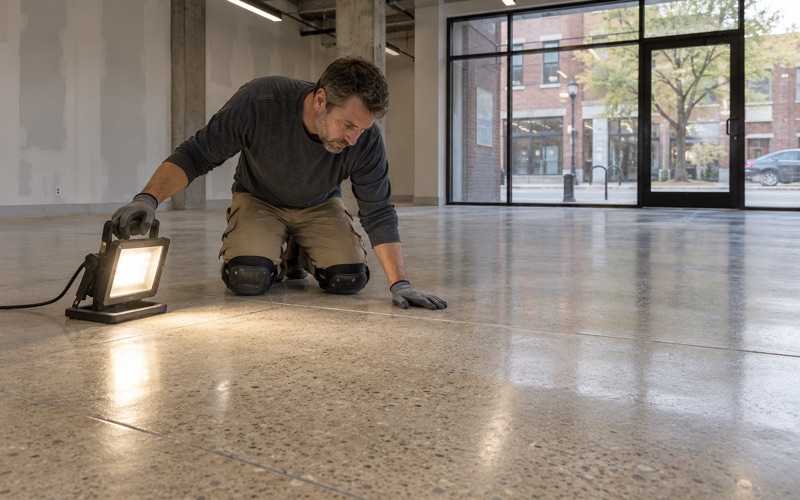
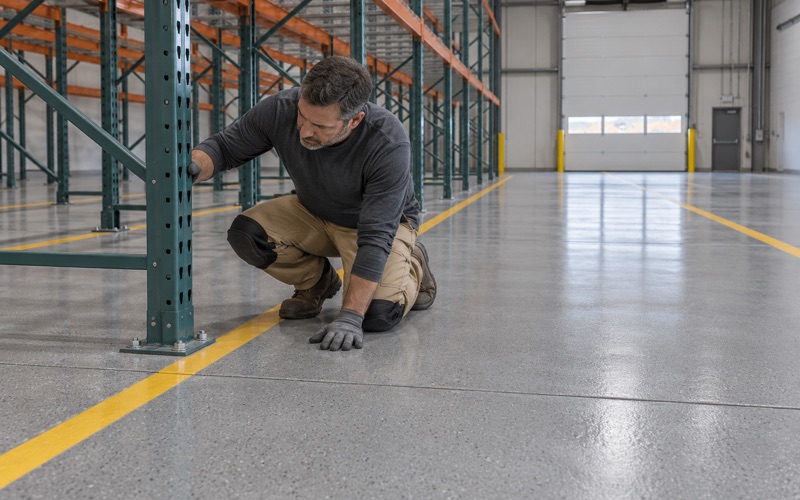
Storefront floors in a downtown like that take a different build than a garage: a showroom might want a clear or flake epoxy, a back room a heavier troweled system. Commercial jobs are scheduled around the hours a building has to stay open, which often means working before opening, after closing or across a weekend.
Food and Kitchen Floors
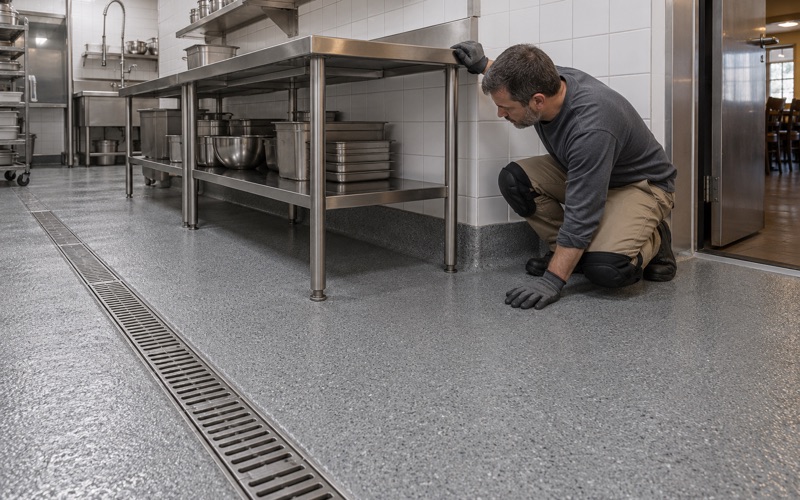
A restaurant or food shop in the village answers to the Cook County Department of Public Health and the Illinois Food Code, which adopts the 2022 FDA Food Code. Section 6-201.13 calls for coved junctures where floor meets wall, and 6-201.11 allows a slip-resistant finish, so we detail a cove base and choose a broadcast texture with both in mind.
Kitchen floors also take hot water, grease and daily washdown, which is where urethane cement earns its place over a standard epoxy. We coordinate the cure window with the owner so the space reopens on a fully hardened floor, not one that only looks dry. Floor drains are detailed so the coating turns down into them instead of stopping short at the rim.
Licensed, Bonded and Within the Limits
Illinois issues no state license for flooring or coatings work, so the credential that counts here is the village’s. Franklin Park requires every contractor working in the village to be licensed, insured and bonded: a license year of May 1 to April 30 with no half-year licenses, a $10,000 trade-specific license and permit bond, and at least $1,000,000 in liability insurance. We show you those documents rather than a state number.
Before work starts we also confirm whether the job needs a permit from the Village of Franklin Park Building Department at 9500 Belmont Avenue. A coatings contractor without a current village license cannot pull one, so we check that the license year covers the job date, especially for work booked in late April.
Two more limits shape what goes down. Coatings are chosen within the Illinois limit on VOC content, which binds the installer as well as the manufacturer. And we do not sell a floor coating as radon reduction, because in Illinois that work requires an IEMA radon mitigation license.
- 20+ Years in Business
- Moisture Testing in Every Quote
- Written Proposals