Evanston Epoxy Flooring handles epoxy flooring in Forest Park with more than 20 years in the trade behind each scope, and the floors we are asked about here tend to be ones that get hosed down at night. Kitchen lines, prep rooms, walk-in cooler aisles and loading areas all need a coating that stays cleanable, stays bonded and stays safe underfoot.
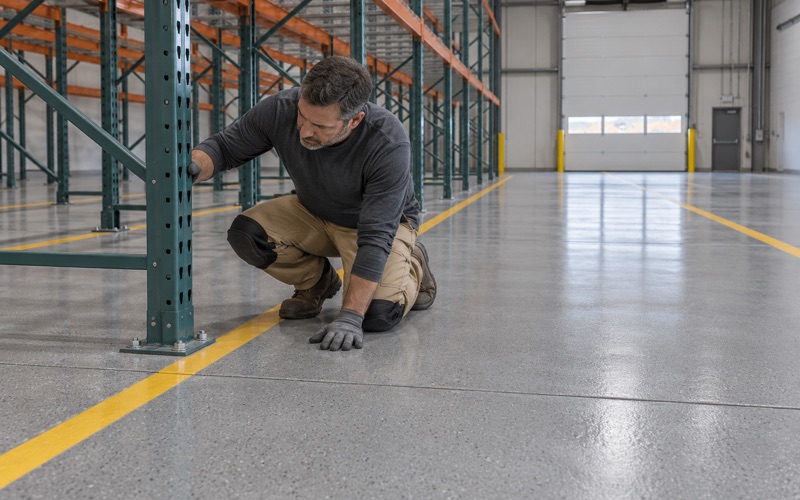
That is a different job from a garage floor. A food-service floor is judged on how it drains, how its edges meet the wall and how it behaves wet, so we start every commercial scope by asking what gets spilled, what gets sprayed and how often the room is scrubbed. The answers decide the resin, the texture and the finished thickness.
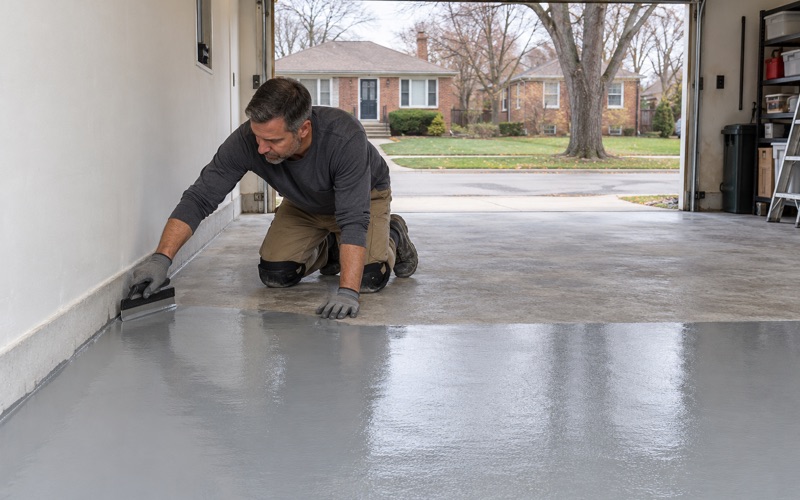
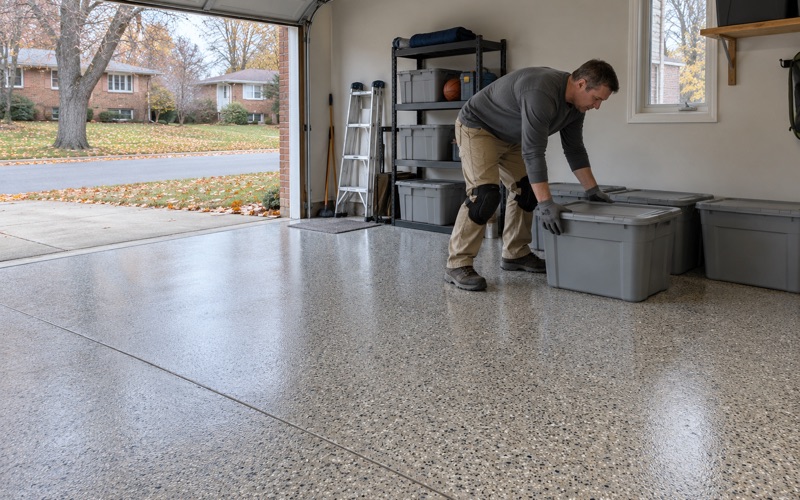
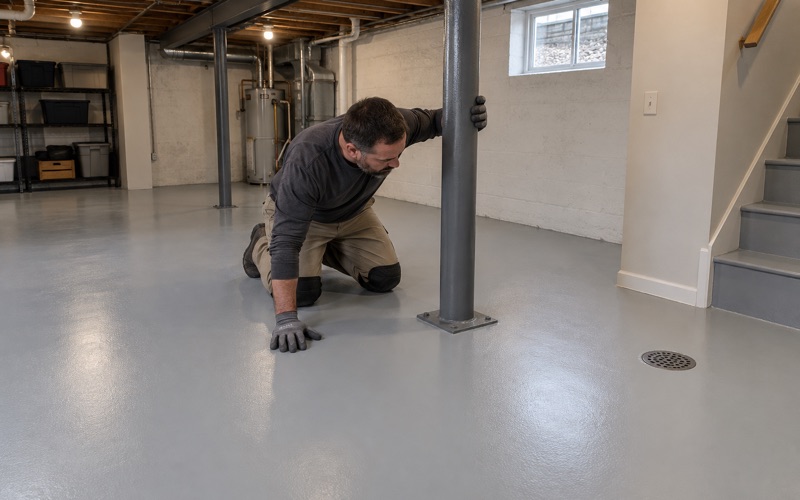
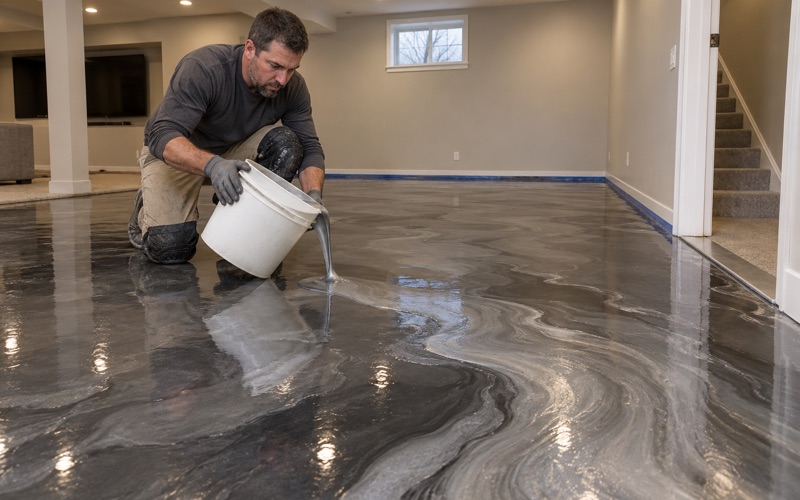
Homeowners call us too, and a basement or garage gets the same opening question about moisture before any color chart comes out. Whatever the room, the proposal names the product, the system build and the finished thickness, so what we quoted can be checked against what went down.
A Candy Plant on Harrison Street and the Food-Plant Floor
Ferrara Candy Inside the Village
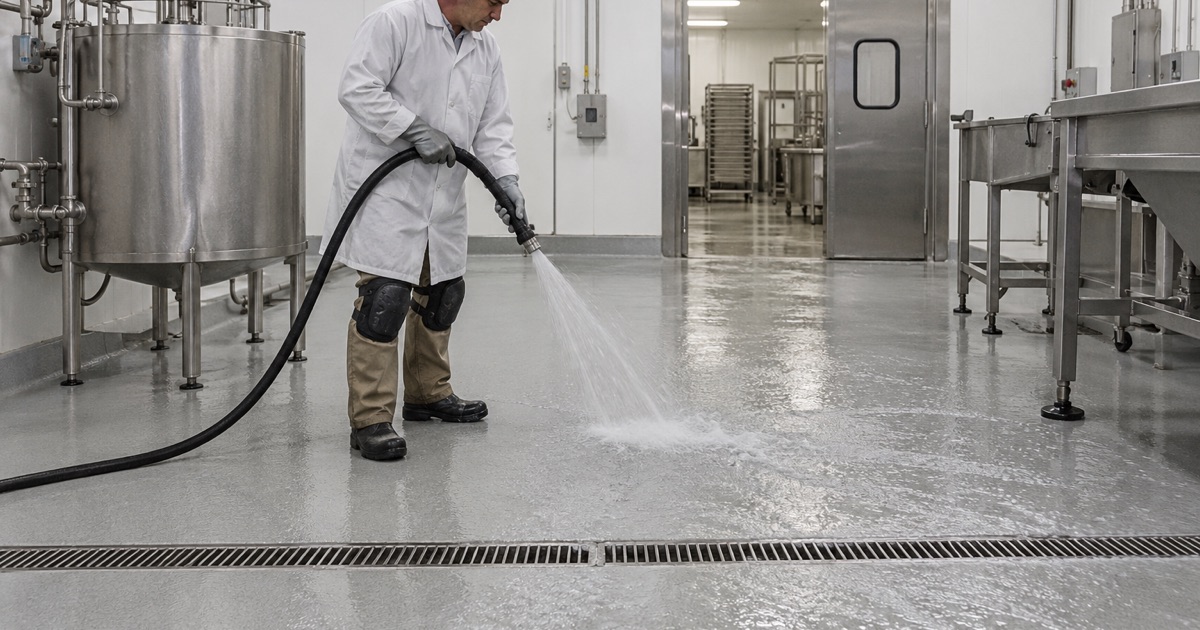
Forest Park is a village in Cook County with a working food plant inside its limits. The Ferrara Candy Company plant at 7301 W. Harrison Street geocodes to Forest Park, in Proviso Township, and the company traces back to Ferrara Pan, founded in 1908. We name it here as a neighborhood landmark, not as a customer, because it shows that food processing is part of the village’s working economy.
That matters to smaller operators nearby. A bakery, caterer, commissary kitchen or packaging room in the same village is held to the same basic expectation as a large plant: floors that can be cleaned completely, that do not trap residue in seams, and that survive the chemicals used to sanitize them every shift.
What a Wash-Down Floor Has to Survive
Hot water, caustic cleaners, sugar syrups and fryer oil attack a weak floor from different directions. Sugar and grease work into porous concrete and feed bacteria, while hot water cycling against a cold slab can break a thin coating’s bond. For wet rooms we usually look at urethane cement, which tolerates thermal shock better than a standard epoxy build.
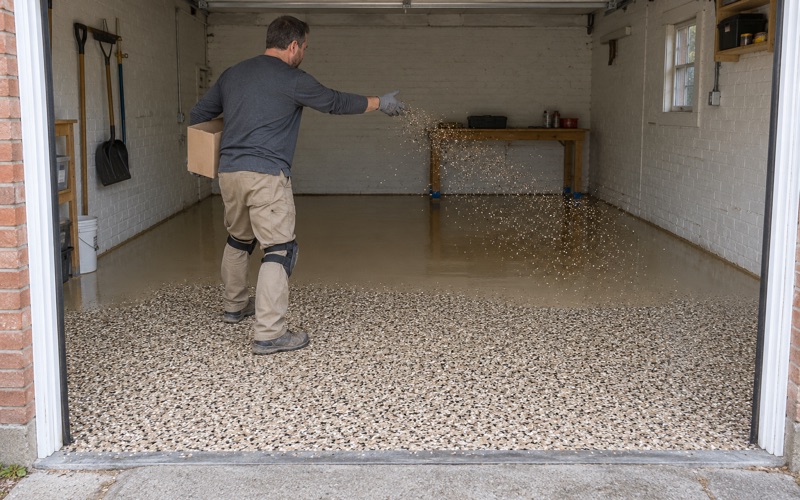
Where a room stays dry, a 100% solids epoxy with a quartz aggregate broadcast gives a dense, textured surface at a lower cost. Either system is only as good as the drain detailing around it, so we plan how the coating terminates at every floor drain and trench before we order material.
Opening the Slab Before Anything Goes Down
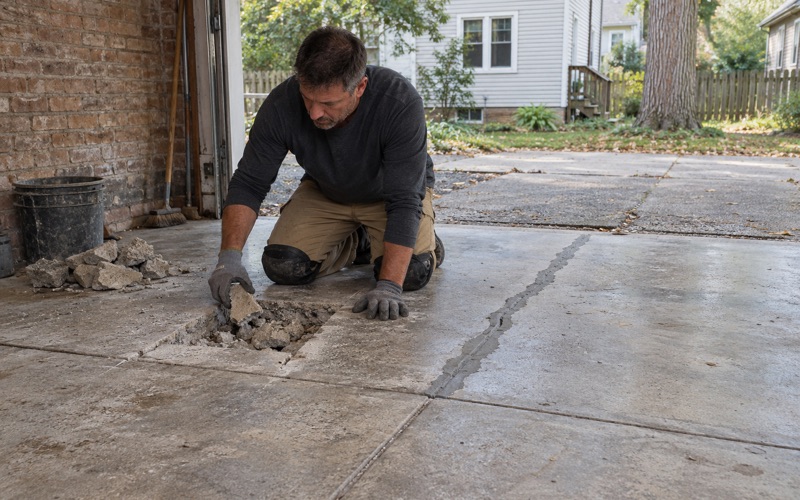
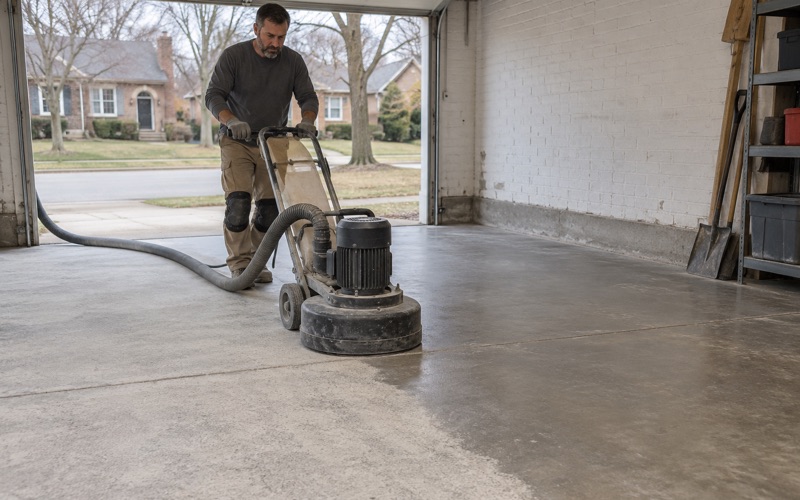
A food floor that peels usually lets go at the bond line. We open every slab mechanically with diamond grinding or shot blasting to an ICRI CSP profile matched to the system, and we do not acid etch. Old sealers, grease-soaked patches and failed paint come off first, because a new coating over them inherits their weakness.
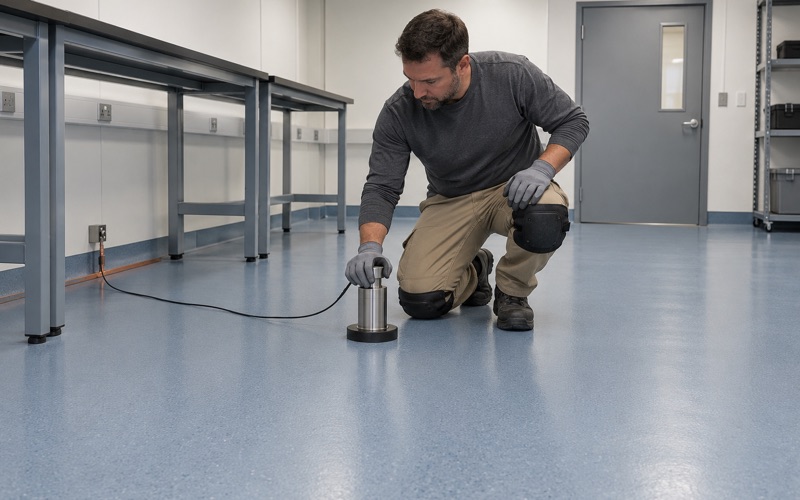
Moisture testing is a written line item, not an upsell. On a slab-on-grade kitchen we run ASTM F2170 in-situ relative humidity probes or ASTM F1869 calcium chloride tests, and when the readings run high we specify a moisture-mitigation primer rather than hoping the topcoat holds. Warranty exclusions get read aloud before signing, with moisture named first.
Looking for epoxy-flooring closer to Northlake? See Epoxy-Flooring Services in Northlake.
Madison Street’s Dining District, From the Kitchen Door Back
Madison Street is the village’s main commercial corridor, a business district of antique merchants, boutiques and eating establishments that Chicago Tribune readers voted Best Neighborhood Dining. Diners see the front of house. We spend our time behind the swinging door, where the real floor problems sit.
Coved Bases and Sealed Edges
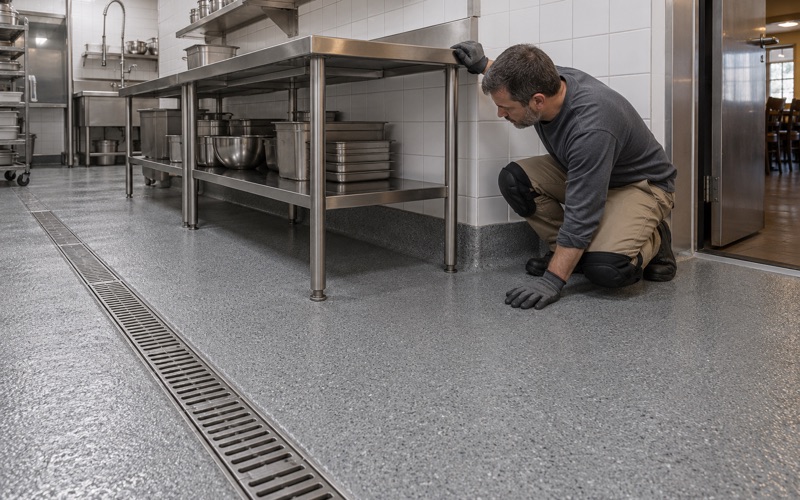
The Illinois Food Code adopts the 2022 FDA Food Code, and section 6-201.13 calls for floor and wall junctures to be coved and closed, with drains provided where floors are flushed with water. An integral cove base in the same resin system carries the floor a few inches up the wall, leaving no seam for grease to settle into.
Many older kitchens on a commercial strip have quarry tile with failing grout, or a painted slab patched more times than anyone remembers. We read the cracks, the old coating and the drain sumps before quoting, and if the slab needs repair before it can be coated, the proposal says so in plain terms.
Wet Floors and Slip Resistance
Food Code 6-201.11 asks for floors that are smooth, durable and easily cleanable, and it allows antislip floor coverings or applications for safety. That exception is the space a kitchen floor lives in: enough texture to hold a cook’s footing, not so much that a mop drags and leaves residue in the profile.
We tune that texture by broadcast size and topcoat thickness, and a sample piece is worth testing wet before anyone commits. A dish pit may want coarser grip than a dry storage room, and the line under the fryers usually wants the most.
Working Around Service Hours
A restaurant cannot close for a week. Commercial jobs are scheduled around the hours the business has to stay open, which on a dining strip often means starting after the last seating and phasing the kitchen in sections. Fast-return systems such as polyaspartic topcoats can shorten the time before foot traffic returns.
Grinding and shot blasting are loud, and a storefront on a busy commercial street rarely stands alone. We plan that prep inside the village’s construction hours and save quieter steps, such as rolling primer and topcoat, for after close. Cure timing follows slab temperature and dew point spread, not a promised reopening date.
Two Health Desks: Cook County and the Village
A food business in Forest Park answers to two public health offices, and it helps to know which one does what before a floor project is scheduled. We hold no health department approval of any coating or contractor, and we never imply one; what an inspector looks at is the finished floor.
Cook County Department of Public Health
The Cook County Department of Public Health is the health authority for suburban Cook County, and the Illinois Food Code treats floor construction as part of a sanitary facility. A remodel that changes a kitchen floor can bring coving, drains and cleanability into focus at the next inspection.
Our part is to build a floor that meets the code’s wording and to document what went down. The proposal lists the resin system, cove height and finished thickness, which gives an owner something concrete to show an inspector instead of a sales sheet.
The Village Health and Safety Department
Forest Park also runs its own Health and Safety Department, which administers the village’s local public health and safety code, recorded at 4-1-1 of the village code. That office sits alongside the village Building Department, so a commercial floor project can involve both local desks as well as the county.
We do not guess at which permits a given job needs. Before scheduling, we ask the owner to confirm with the village what applies to their space, and we supply whatever contractor license, bond and insurance the village requires. Illinois issues no state license for coatings work, so that local paperwork is what we show.
Coatings Within the State VOC Limit
Indoor food spaces raise a fair question about fumes. We choose floor coatings within the Illinois VOC limits at 35 Ill. Adm. Code Part 223 Subpart C, which bind the installer as well as the manufacturer, alongside the national architectural coatings rule at 40 CFR 59 Subpart D.
Low-VOC chemistry does not remove the need for ventilation in a closed kitchen. We plan air movement, keep food and packaging out of the room until the coating cures, and check fresh epoxy for amine blush before any recoat, since that waxy film weakens the bond between layers.
New Ground Floors on Madison and Circle
The village’s commercial stock is not only older buildings. Redevelopment at 7201 Madison, 7228 Circle Avenue and 7652 Madison is adding new ground-floor space, and new concrete brings its own floor questions, starting with how much water is still in the slab.
A Retail Strip Center at 7201 Madison
A retail strip center turns over tenants, and each new tenant may want a different floor: a coffee bar, a salon, a fitness studio, a takeout kitchen. When a space becomes food service, the floor moves from a decorative choice to a sanitation one, and the coving and drain rules above suddenly apply.
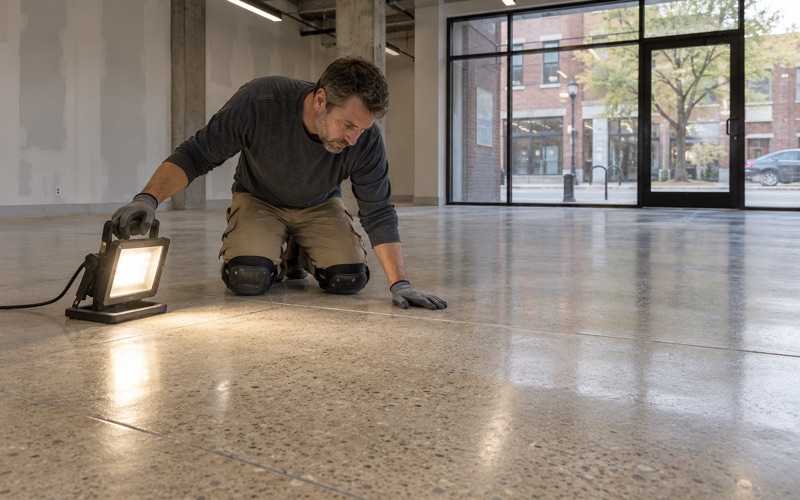
For a dry retail unit, a vinyl flake broadcast under a polyaspartic topcoat gives a durable finish that hides scuffs between cleanings. For a polished look without a film, a ground and densified slab with lithium silicate is another route. We explain both, with what each costs to maintain, before the tenant picks.
Mixed-Use Buildings on Circle Avenue and Madison
The five-story mixed-use building at 7228 Circle Avenue and the four-story one at 7652 Madison stack homes over commercial space. Their ground floors can include retail, lobbies, trash rooms and parking areas, and each of those surfaces wears differently under the same roof.
New slabs often need time before any resin goes down. We test rather than assume: ASTM F2170 probes give a reading from inside the slab, and the result is compared against the coating maker’s limit and the ASTM F710 thresholds before we set a date. A fresh pour that reads wet gets a moisture-mitigation primer or a later start.
Shared buildings also mean shared decisions. Where a ground floor serves residents above, we schedule with the association or the building owner before the first bag is opened, and we agree on staging, access and quiet hours with them in writing.
What a Proposal Here Looks Like
Whether the job is a bakery back room, a Madison Street kitchen or a new lobby, our written scope follows one structure: test results, prep method, repair items, resin system, cove and drain details, and cure schedule. Each line can be checked on the floor after the crew leaves.
We also say plainly what a coating cannot do. It is a film that follows the slab under it, so a moving crack can telegraph through, and we treat that as a repair decision rather than a promise. Home jobs get a written contract and the state’s consumer-rights pamphlet before work starts, as the Illinois Home Repair and Remodeling Act requires.
- 20+ Years in Business
- Moisture Testing in Every Quote
- Written Proposals