Evanston Epoxy Flooring brings more than 20 years of work to epoxy-flooring in Evergreen Park, and most of the slabs we are asked to coat here have been in service for decades. That age shapes the whole job, from how we open the surface to what we will and will not promise in writing.
Before we quote a basement floor in this village, we come and look at it. We read the cracks, the old coatings and the patches, and when a slab needs repair before it can hold a coating, the proposal says so in plain terms rather than surfacing it as an add-on halfway through.
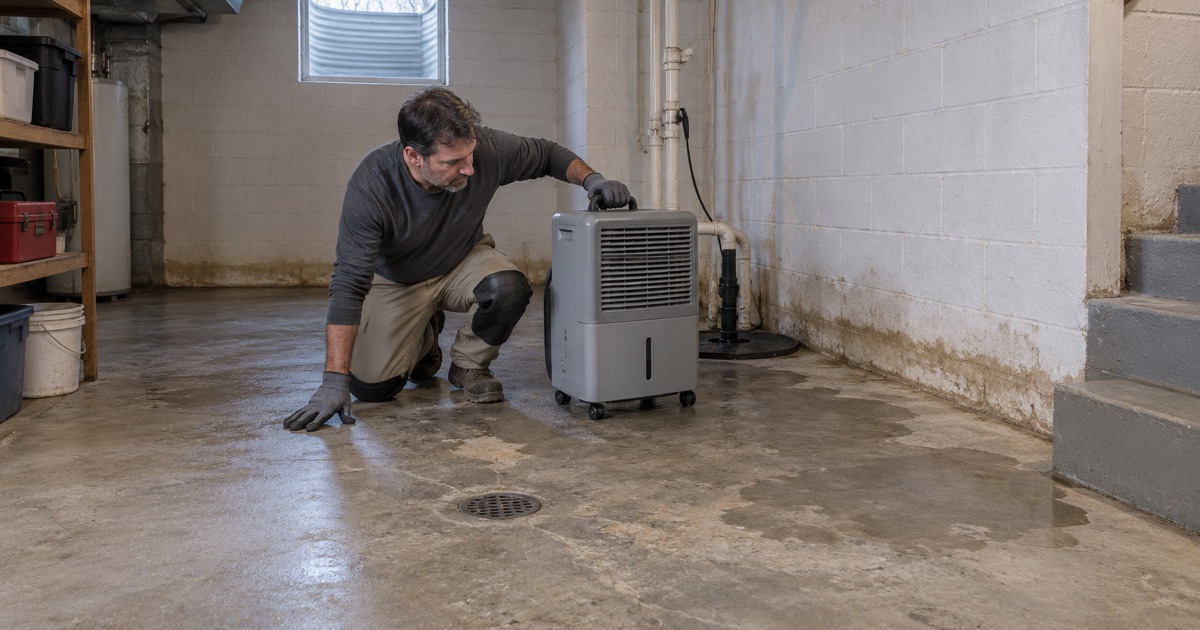
The second thing that shapes a floor here is water that can come back up through a floor drain. Before we talk about color or flake, we ask whether the house has an overhead sewer yet, because that answer changes the order of the work more than any product choice does. An owner who already has one is a step ahead; one who is planning one should hear about sequence from us before the grinder arrives.
A Village of 1940s and 1950s Basements
What the census counts in Evergreen Park
Evergreen Park is a village of 19,943 people at the 2020 census in Cook County, bordered by Chicago on the north, east and south and by Oak Lawn on the west. The ACS 2024 five-year estimates count 7,538 housing units, and 6,536 of them, or 86.7 percent, were built before 1970. The largest single block is the 1950s, with 3,171 units.
Ownership is just as concentrated. Of 7,215 occupied homes, 6,121 are owner-occupied, and 5,863 of those owners live in a detached house. For us that means the call we expect most often here is an owner who wants a long-used basement or garage slab finished properly rather than patched again.
What a 70-year-old slab brings to the job
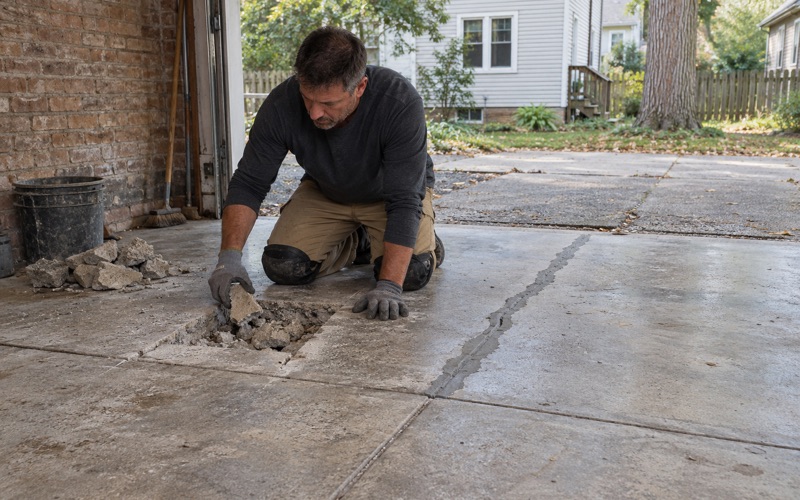
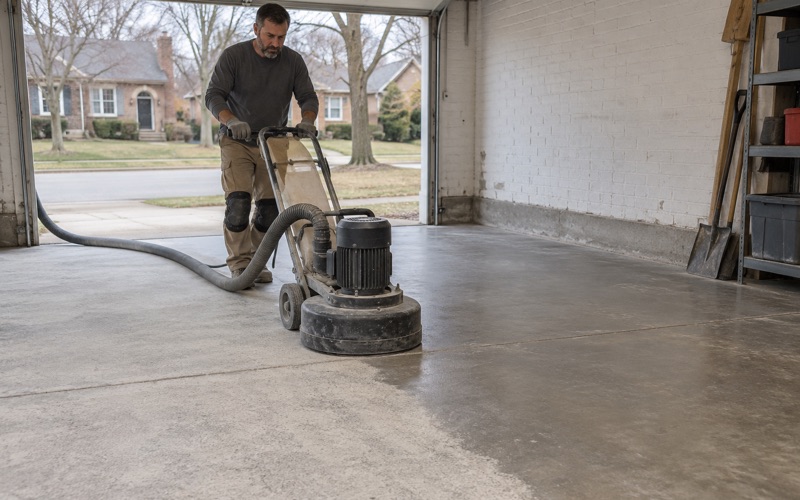
A slab poured in the 1940s or 1950s has often been painted, sealed or patched at least once, and those layers are the first thing a new coating has to get past. We take every one of them off mechanically with a diamond grinder or a shot blaster, down to sound concrete with a measurable ICRI CSP profile. We do not acid etch, because acid cannot remove a coating and only cleans the surface around it.
Older slabs also carry decades of cracks, and some have been filled more than once. A coating is a film that follows the concrete beneath it, so we tell owners before the job that it will not hold a moving crack still. Where a crack is still active, we would rather say so now than explain a reflected line in the topcoat next year.
Garages from the same decades
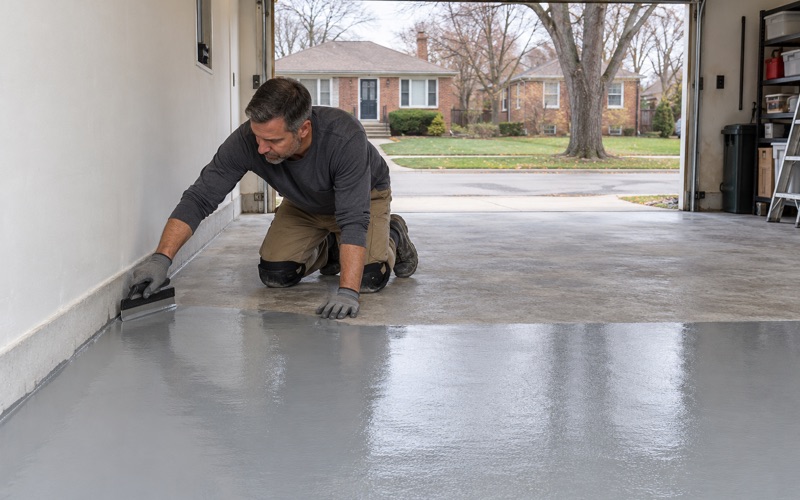
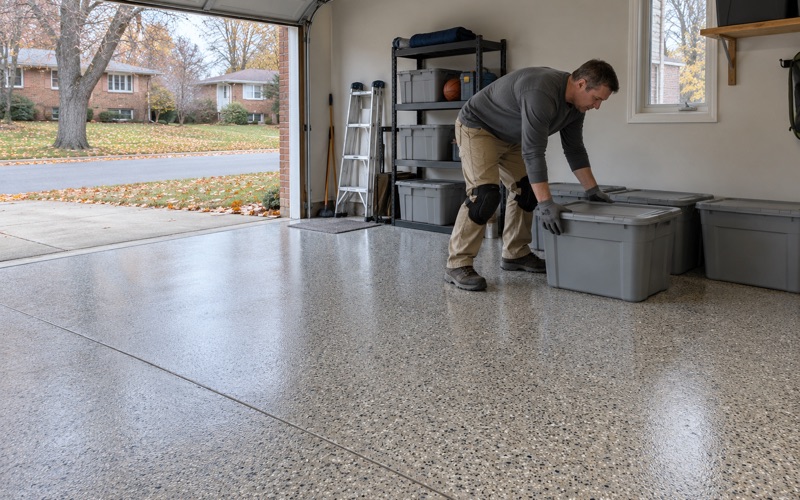
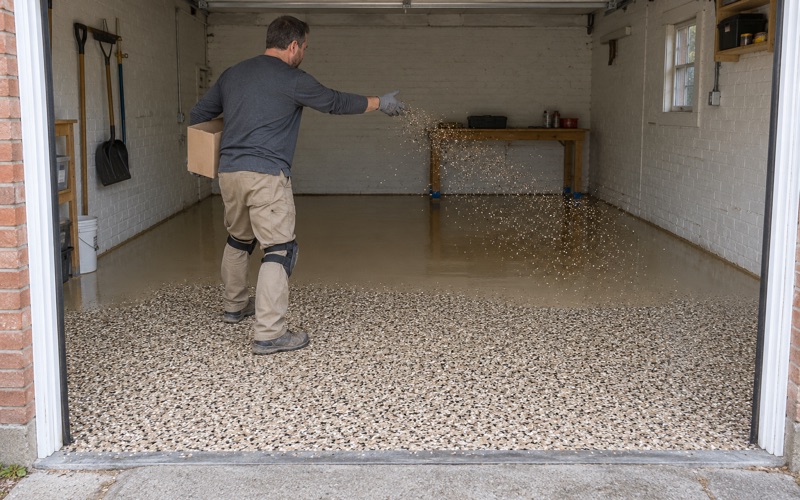
Where a house of this era has a garage, its slab is often as old as the basement floor and has seen the same rounds of paint and patching. Our garage builds are usually 100% solids epoxy with a vinyl flake broadcast and a polyaspartic topcoat, and the proposal names the product, the system build and the finished thickness so the owner can check what went down against what was quoted.
Of the village’s detached houses, 433 are rented rather than owner-occupied, and a garage or basement on one of those brings a different permit path, which we cover below. Either way, every home job gets a written contract and the Home Repair: Know Your Consumer Rights pamphlet before work starts, as the Illinois Home Repair and Remodeling Act requires.
Looking for epoxy-flooring closer to Lake Zurich? See Lake Zurich Epoxy-Flooring.
Why the Village Pays Toward Overhead Sewers
Two sewer systems and 47 miles of lined main
Evergreen Park runs two separate sewer systems, and its sanitary side covers 47 miles of mains. Since 1988 the village has been lining those mains with cured-in-place pipe to keep storm water out, working across 14 sections at different stages of completion. Four sections are 95 to 100 percent lined, while four are 5 percent lined.
The village is direct about what that work does not yet fix. It says homes without overhead sewers may still flood when storm water flows into the sanitary system. For a basement owner, that means the floor drain is a way for water to reach the room we are about to coat.
What the Overhead Sewer Cost Sharing Program covers
Under the Overhead Sewer Cost Sharing Program, the village shares the cost of a first overhead sewer installation at 50 percent or a maximum of $5,000, whichever is less. The owner must have a single-family home built before 1970 that does not already have an overhead sewer. We point owners to the village for the application details rather than guessing at them.
We want to be clear about the limit of that program. It pays toward the sewer work only, not toward a floor, a coating or any waterproofing, and nothing we install changes that. A coating also does not stop a sewer backup; the village’s remedy for that risk is the overhead sewer itself.
Coating a basement floor after the conversion
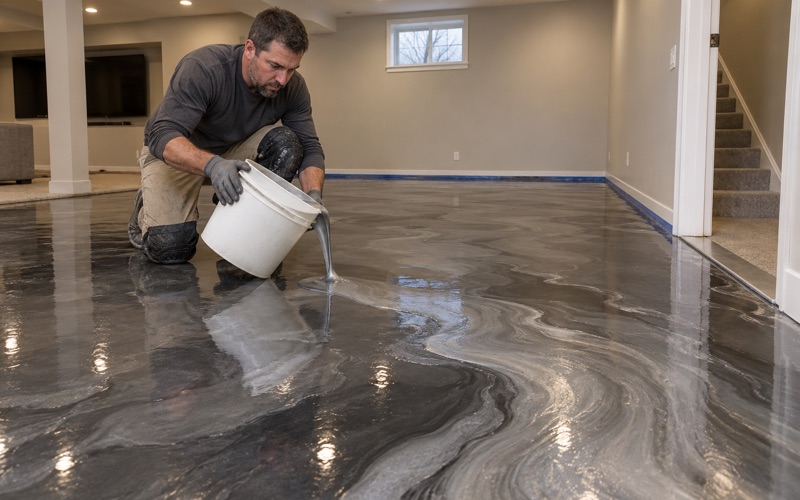
Order matters here. An overhead sewer conversion generally brings overhead plumbing and an ejector pit, and that can mean cutting and patching the basement slab. We would rather coat after that work is finished than before it, so a new floor is not cut open within months of going down. If the plumber is booked for next month, we can still walk the slab now and write the quote around that date.
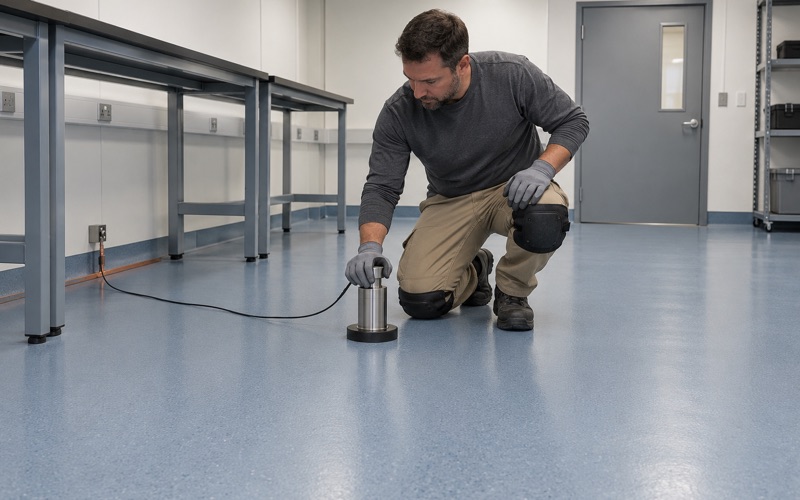
Once the plumbing is in, we detail the coating around the new pit lid and any remaining floor drain, and the patched trench gets ground and profiled like the rest of the slab. Because a basement here has a known path for water, moisture testing is a written line item in our scope, and the warranty exclusions are read out before we start, with moisture named first.
No Mapped Floodplain, but Village-Wide Flash Flooding
What FEMA does and does not map here
FEMA maps no Special Flood Hazard Area in Evergreen Park, and the village’s hazard planning lists no repetitive-loss properties. Its own mitigation plan keeps minimum participation in the National Flood Insurance Program, an action written for communities with no mapped Special Flood Hazard Area. That does not mean the village never floods; it means the risk the village describes is urban flooding.
The village says extremely heavy rain causes urban flash flooding throughout, and it places the whole community in a high urban flooding susceptibility zone. A 2024 mitigation action adds a storm sewer and stormwater detention facility for street flooding in the Evergreen Avenue and Maude Avenue area. Because the village calls the risk village-wide, we plan a basement floor the same way whether or not the house sits near that project.
What that means for a coated basement
For our planning, a heavy storm is the event that matters, not a river crest. A basement that has seen water after a downpour often shows it in the slab, through efflorescence, staining or a lifted old coating, and we look for those signs at the estimate. They tell us whether a moisture-mitigation primer belongs in the system before the build coat.
What we will not do is call the result flood-proof. A coated basement floor is easier to clean after water comes in than bare or painted concrete, but it does not keep water out of the room. That job belongs to the overhead sewer and to the village’s own storm projects. If a backup has happened, the floor is cleaned and left to dry before we test it at all.
Floor drains and sump pits in the build
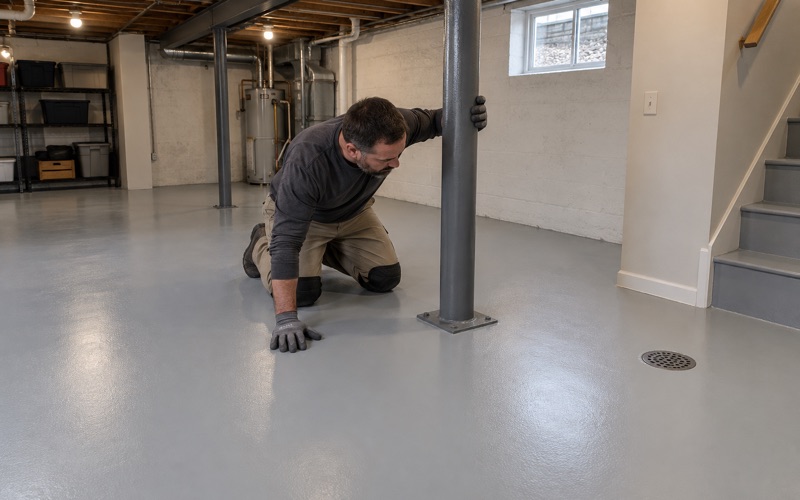
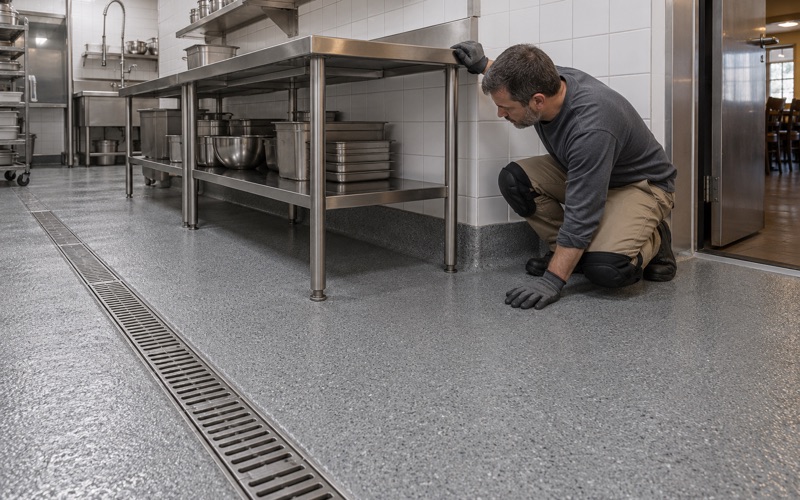
Where a basement has a sump pit or a floor drain, we finish the coating to the edge of the casting rather than over it, so the drain still works and can be serviced. We terminate the coating cleanly at those openings, because a ragged edge is where a film tends to start lifting. The floor around a drain is often pitched, and we keep that slope rather than leveling it away.
Topcoat choice matters around a drain as well. A polyaspartic or polyurea topcoat over 100% solids epoxy gives a basement floor a hard wearing surface, and a light quartz aggregate broadcast near the drain adds grip where the floor is most likely to be wet. We set the texture with the owner before the job, since more grip also means more scrubbing.
Permits at Village Hall on Kedzie Avenue
Our village contractor license comes first
The Evergreen Park Building Department works out of village hall at 9418 S. Kedzie Avenue, and its rules are strict for a village of 3.16 square miles. A general or sub-contractor license must be applied for, paid for and assigned a number before any permit issues, and a permit is required for any alteration, addition, repair or remodel.
Illinois issues no state license for flooring or coatings work, so the village license is the credential that counts here. Instead of a state number, we show owners that village contractor license along with the certificate of insurance the village requires. The permit process also asks for a sworn statement of total project cost, which our written proposal already supports line by line.
Rental houses and commercial slabs
A non-owner-occupied property posts a $10,000 cash bond before a permit issues. Landlords who want a basement or garage coated in a rented house should plan for that cash up front, since the permit and the start date both wait on it. For a two-flat, we also schedule with the other owner before the first bag is opened.
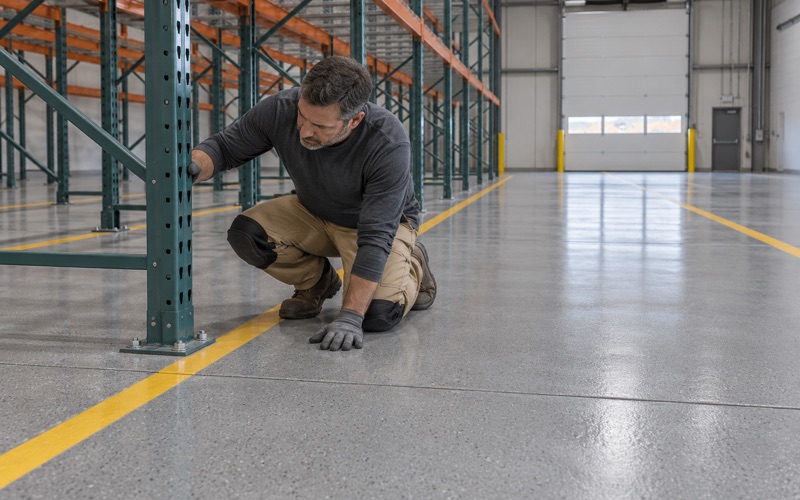
Commercial slab work follows a different line on the permit sheet, which calls for VisQueen and wire mesh throughout. That requirement applies to commercial slabs, not to a residential basement or garage, and we keep the two apart when we explain a permit to a homeowner.
A village that has kept its own rules
Evergreen Park incorporated on December 20, 1893, to stay separate from Chicago, and it still runs its own departments under a mayor, a village clerk and six trustees. It works under the 2021 edition of the International Building Codes.
Our grinding and shot blasting are loud, so we plan them inside the village’s construction hours, and a one-day garage job is set up to finish before a neighbor’s evening. On 95th Street near Little Company of Mary Hospital or on a quiet side block, the plan is the same: permit in hand, license on file, noise kept to the allowed hours.
- 20+ Years in Business
- Moisture Testing in Every Quote
- Written Proposals