Evanston Epoxy Flooring has spent more than 20 years putting epoxy flooring in Deerfield garages, basements and building floors, and the first thing we do on any slab here is find out how old it is. A floor poured a few seasons ago and one poured in the 1960s take different preparation, different testing and sometimes a different system entirely.
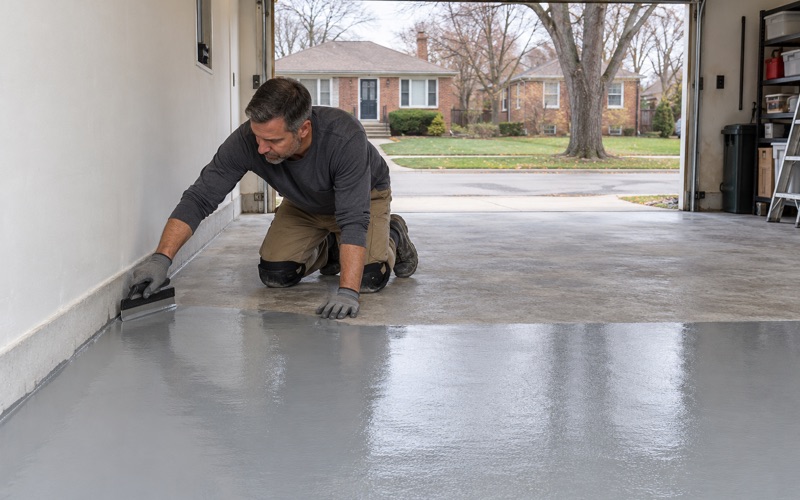
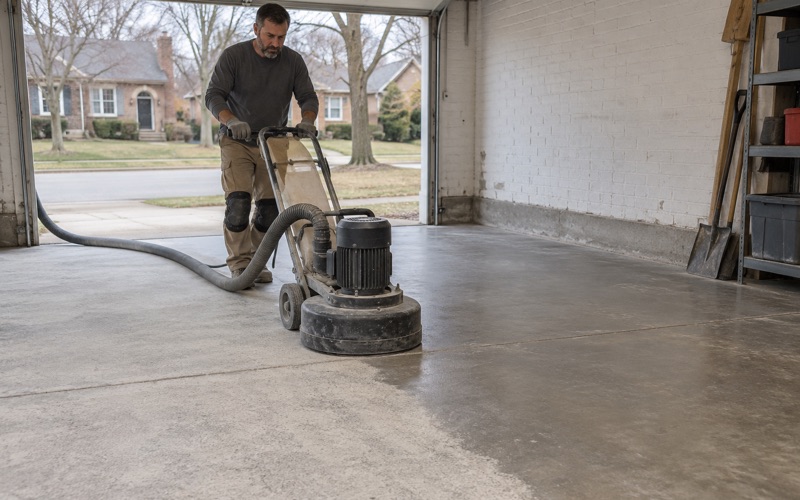
Every slab we coat is opened with a diamond grinder or a shot blaster before any primer goes down, and we never acid etch. Moisture testing sits in the written scope as its own line, on a garage slab as much as a basement one, so it happens before the coating rather than after a blister. The proposal then names the product, the system build and the finished thickness.
That last point matters more than it sounds. When the floor is done, you can hold the proposal against what went down and check it line by line, instead of taking a brand name on trust. We also read the cracks and any old paint first, and we say so when a slab needs repair before it can be coated.
More than a thousand Deerfield homes built since 2010
Deerfield, a North Shore village that counted 19,196 people at the 2020 census, has kept building. The American Community Survey’s 2024 five-year estimates count 870 housing units built in the 2010s and 199 more since 2020, on top of 575 from the 2000s. Together that is 1,644 of the village’s 7,800 units, or 21.1 percent, dated 2000 or later.
A young slab is not a blank slate
A garage slab poured in 2015 or 2021 looks clean, but new concrete usually carries a weak, smooth top layer called laitance and sometimes a curing compound or sealer from the builder. Epoxy laid over either is bonding to the film, not the concrete. Diamond grinding takes that layer off and leaves an open profile, typically in the ICRI CSP 2 to 3 range for a coating system.
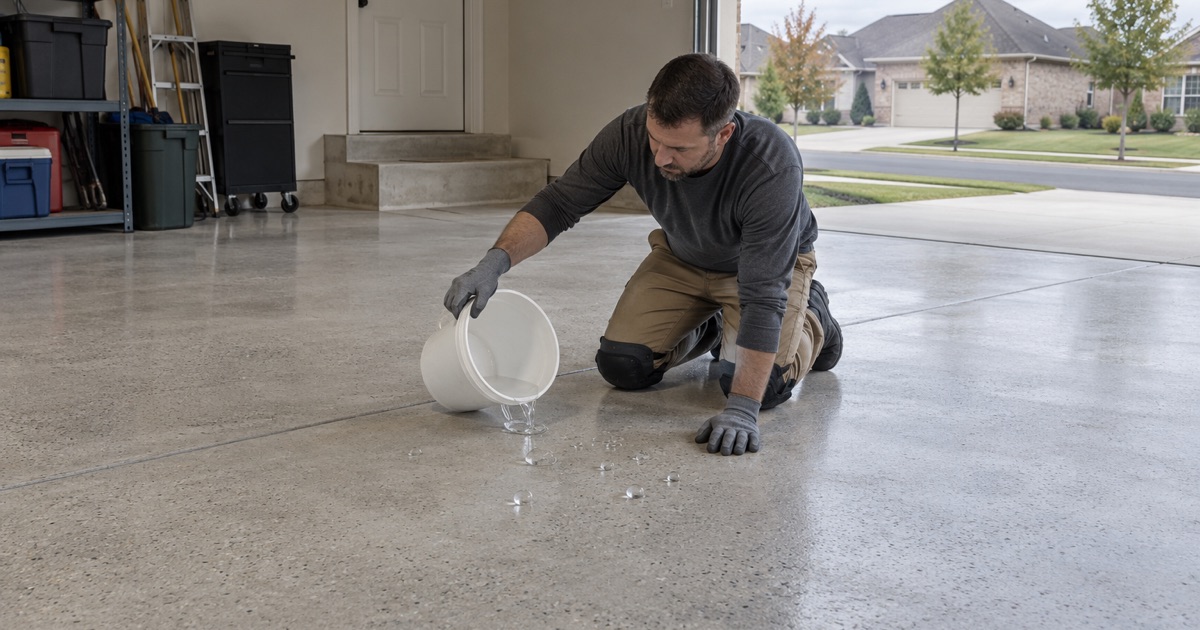
A lithium silicate densifier applied by a builder is a particular trap, because it hardens the surface and can resist both grinding and primer bond. We confirm it is gone by watching a drop of water soak into the ground surface before we mix anything, and we grind again where it beads.
A recent garage still has no vapor retarder
Newer construction tempts people to assume modern moisture protection under the floor. In a house, an under-slab vapor retarder meeting ASTM E1745 is common practice beneath living space, but the residential code’s IRC R506.2.3 exception has never required one under a garage slab. A 2018 garage can wick ground moisture the same way an older one can.
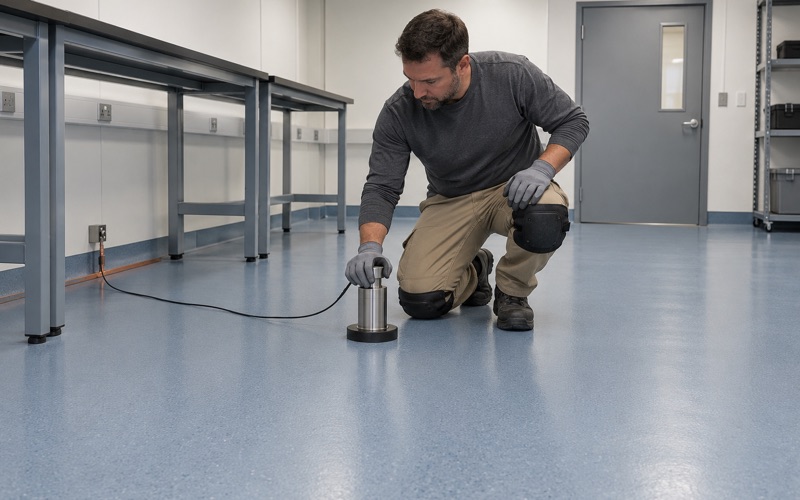
So the moisture line in our scope applies to new floors too. Depending on the slab, that means an ASTM F1869 calcium chloride test, ASTM F2170 relative humidity probes set into drilled holes, or an ASTM D4263 plastic sheet check as a first read. Those readings decide the primer before the price is final.
The 575 houses from the 2000s
Houses built between 2000 and 2009 sit in between. Their garage slabs are past the curing questions of a new pour and may be bare or may carry a roll-on kit coating that has started to lift where tires park. That peeling usually traces to a floor that was cleaned rather than profiled.
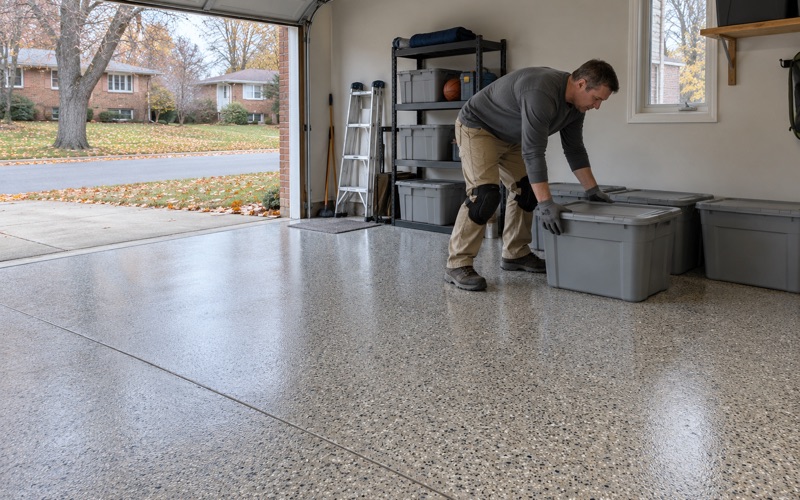
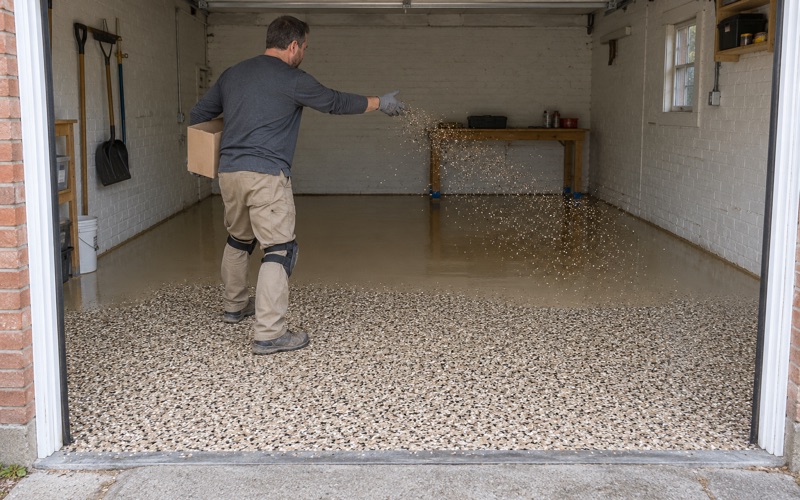
Hot tire pickup is the other common failure on these floors: a warm tire softens a thin coating and pulls it off when the car leaves. Our garage builds use 100% solids epoxy with a vinyl flake broadcast and a polyaspartic topcoat, which stand up to that and to the calcium chloride brine and rock salt tracked in every winter.
Looking for epoxy-flooring closer to Franklin Park? See Epoxy-Flooring in Franklin Park.
A 1960s slab is a different job
The newer houses sit alongside a much larger postwar base. The same census table counts 1,597 units from the 1950s and 1,767 from the 1960s, together 3,364 units or 43.1 percent of the stock. Street by street, a garage poured last decade and one poured six decades ago can sit a short walk apart.
What 60 years does to a garage floor
A slab from that era is 55 to 75 years old and predates ASTM E1745, the 1997 standard behind modern vapor retarder practice. Many have had a lifetime of oil, deicer and patching. Before we quote, we look at how the surface has worn, where salt has scaled the top, and whether old patches are sound or hollow under a hammer.
Older floors also tend to carry history: a coat of porch paint, a failed kit, an oil stain that never came out. Each has to be removed or ground through, because a new coating bonds only as well as the weakest layer under it. Shot blasting suits big, open slabs, while a hand grinder reaches the edges and the floor drain.
Cracks we fill, and cracks we tell you about
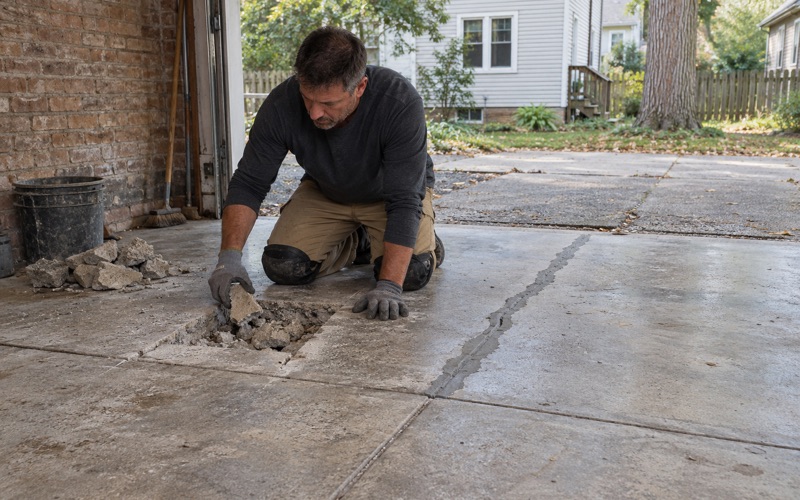
A 1960s garage slab usually has some cracking, and we sort the cracks before writing a number down. Static hairline cracks get ground out and filled with a rigid epoxy or polyurea repair material. Cracks that are still moving, or that have one side higher than the other, are a repair conversation first and a coating conversation second.
We are plain about what a coating can do here. It is a film that follows the slab beneath it, so a crack that keeps moving will show through in time, and no system we sell will stop it. The written warranty says the same, and we read its exclusions aloud before you sign, starting with moisture.
Older slabs and what a coating will not fix
Owners of older houses sometimes ask whether a sealed floor will help with radon. We do not sell a floor coating as radon reduction. In Illinois that work requires a radon mitigation license from IEMA, and a coating over a cracked 1960s slab is not a mitigation system, whatever the brochure on a kit box suggests.
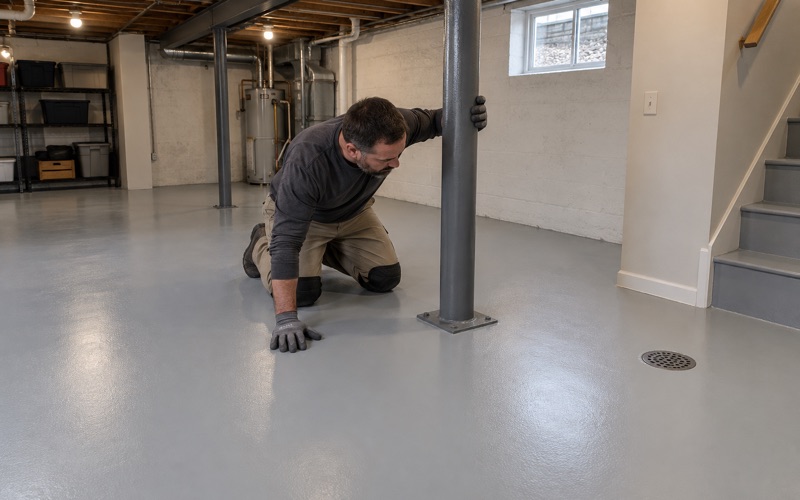
Where a test shows vapor coming through a slab with no retarder beneath it, the answer is a moisture-mitigation primer under the system, priced as its own line. Where testing shows a slab too wet even for that, we say so and decline the coating rather than install a floor we expect to blister.
947 houses from the 1990s, and an owner’s decision
Between the postwar base and the newest builds sits a middle layer that is easy to overlook: 947 units built in the 1990s, plus 536 from the 1980s. The 1990s floors are roughly 25 to 35 years old, which is often old enough to have been coated or painted at least once.
Recoating a floor that was coated once
A recoat starts with the question of whether the old system is still bonded. Where it is sound and thick, we can sometimes grind it to a fresh profile and build over it. Where it has lifted at the tire lines or the apron, it all comes off, because a new layer cannot hold down an old one that has already let go.
Curing is scheduled against slab temperature and the dew point spread at the surface, not against a date. A garage that is unheated may have to wait until spring, and we will tell you so rather than risk amine blush or a soft cure.
Only 310 detached houses are rented
Deerfield’s detached houses are overwhelmingly owned. Of 7,515 occupied units, 6,203 are owner-occupied, about 82.5 percent, and the census counts 5,425 owner-occupied detached houses against just 310 detached houses that are rented. When a Deerfield garage floor gets coated, the person deciding is almost always the person who parks on it.
That shapes how we work. An owner is choosing between a flake floor, a quartz aggregate broadcast for more grip, or a plain high-build coat, and wants to know what each costs to maintain. Every home job also gets a written contract and the Home Repair: Know Your Consumer Rights pamphlet before work starts, as the Illinois Home Repair and Remodeling Act requires.
Attached houses and shared walls
The census also counts 294 attached single-family units in the village. Where a townhouse garage shares a slab, a wall or a driveway apron with a neighbor, we schedule with the association or the other owner before the first bag is opened, because dust, odor and a closed driveway reach next door whether or not anyone planned for it.
On a shared slab, we also confirm where one owner’s floor ends before we cut a control line or stop a broadcast, so the finished edge lands on the property line rather than on a guess. A clean termination there looks deliberate for years.
Large rental buildings: a building manager’s floor
Renting in Deerfield is concentrated in a different kind of building. The census counts 935 units in structures of 50 or more, and 749 of the village’s 1,312 renter households live in them. On those properties the coating buyer is a building manager or an association board, and the floors in question are shared ones.
Garages, corridors and service rooms
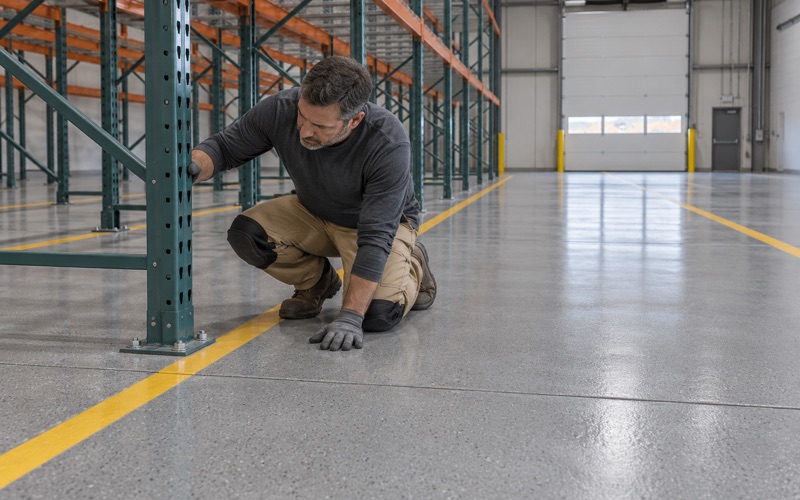
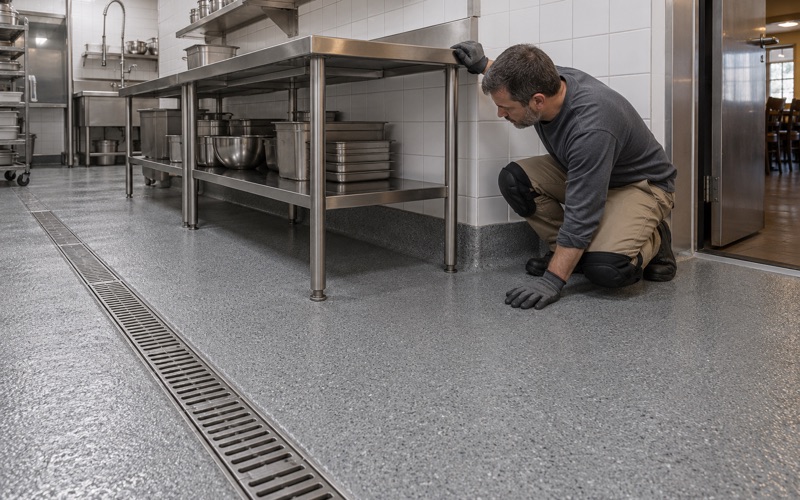
A large residential building tends to put its coating work in the parking level, trash and mechanical rooms, and back-of-house corridors. Those areas take a different build than a home garage: a thicker 100% solids epoxy or a urethane cement system where hot water, chemicals or heavy carts are part of the day, and a textured broadcast where people walk wet.
We cove the wall junctures in wash-down rooms so the floor can be cleaned to the edge, and we keep coatings within the Illinois VOC limits in 35 Ill. Adm. Code Part 223, which bind the installer as well as the manufacturer. In an occupied building, low-odor systems also keep residents on the floors above comfortable.
Scheduling around a building that never closes
An apartment garage cannot simply shut for a week. We phase the work by bay or by level, agree on the order with the manager before work starts, and plan grinding and shot blasting inside permitted hours so residents are not hearing it at night. Fast-return polyaspartic topcoats help get cars back on sooner.
Paperwork matters on these jobs as well. Illinois issues no state license for flooring or coating work, so the word licensed means nothing on its own here. Instead we bring the bond and insurance certificates a manager’s file needs, and we confirm with the Village of Deerfield what it asks of a contractor before work begins.
- 20+ Years in Business
- Moisture Testing in Every Quote
- Written Proposals