Evanston Epoxy Flooring brings more than 20 years of concrete coating work to epoxy flooring in Brookfield, and this page is written for business owners and landlords rather than homeowners. A storefront changes hands, a counter moves, a stockroom becomes a workroom, and the floor is the last thing anyone looked at before signing the lease. We look at it first.
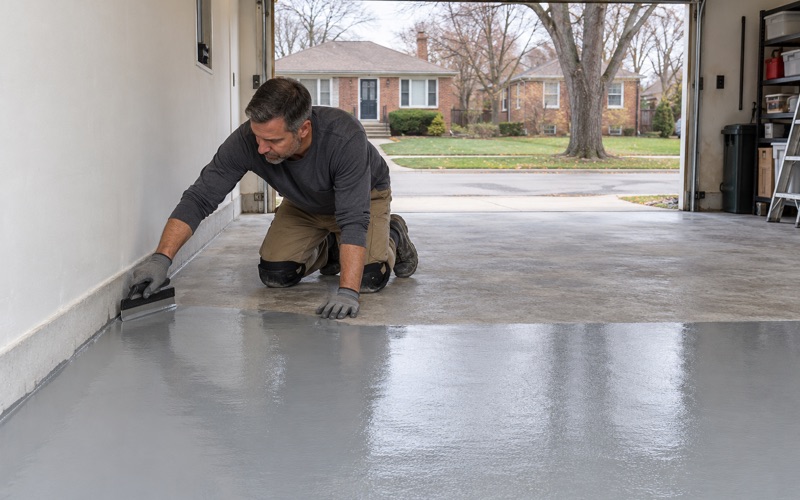
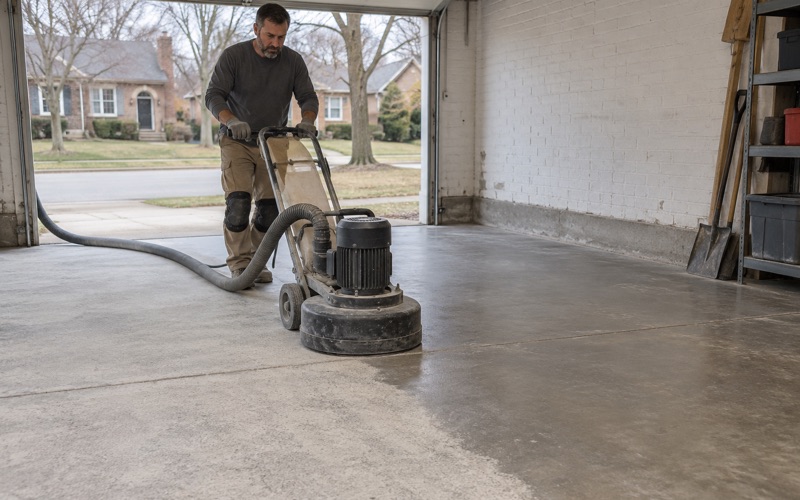
Every slab we coat is opened with a diamond grinder or a shot blaster, never acid etched, because a coating can only hold to concrete it can actually reach. Before we price anything we read the cracks, the old paint and whatever coating a previous tenant left, and we tell you plainly when the slab needs repair first. A coating is a thin film that follows the slab beneath it, and it will not stop a moving crack from moving.
Our proposals name the product, the system build and the finished thickness, so an owner or a landlord can check what was quoted against what went down. That matters more in an old building, where the right system depends on what the grinder uncovers.
Four Corridors the Village Calls Aging
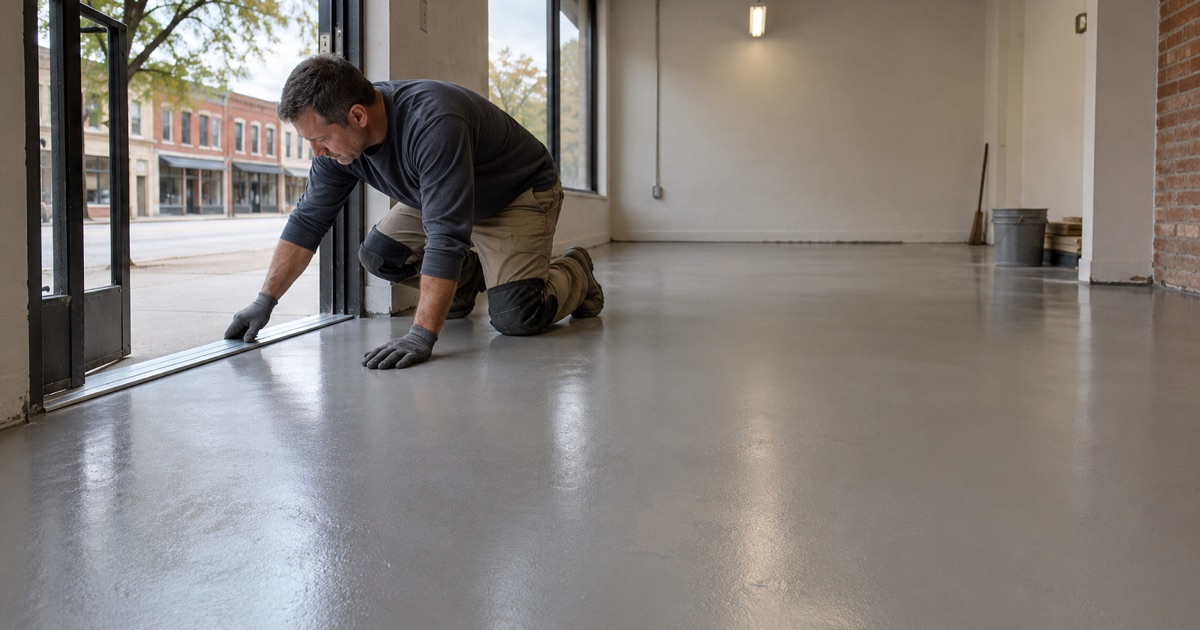
Brookfield is a village in Cook County, about 13 miles west of downtown Chicago, with a 2020 census population of 19,476. Its 2024 hazard-mitigation annex, part of the Cook County multi-jurisdictional plan, names four commercial corridors with aging buildings: 47th Street, Ogden Avenue, Grand Boulevard and Broadway Avenue. That list is also a fair map of where an old commercial slab is most likely to turn up.
47th Street and Ogden Avenue
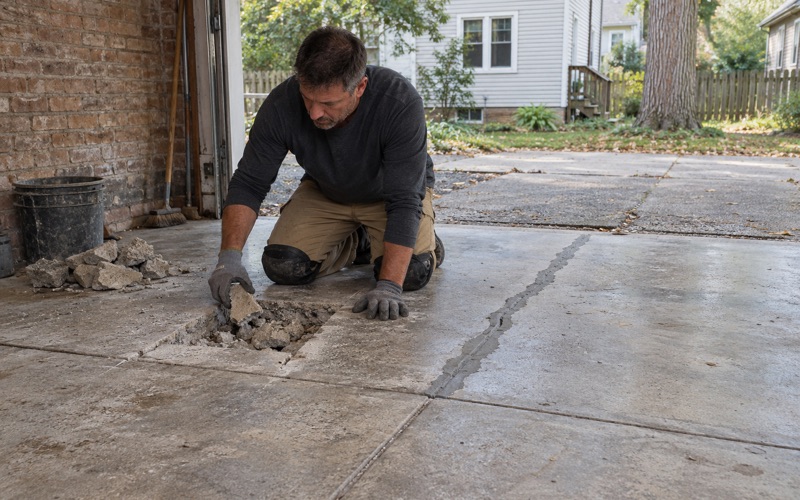
An aging commercial building on 47th Street or Ogden Avenue has usually been through several tenants, and each one left something on the slab. Typical finds include vinyl tile mastic, painted concrete, carpet adhesive, leveling compounds poured over low spots, and patches where plumbing was moved for a long-gone business. None of that is a reason to refuse a job, but all of it changes the grinding plan.
Old mastic in particular gets handled carefully, because some black adhesives from earlier decades contained asbestos and should be tested before any grinder touches them. Once the layers are identified, we grind to an ICRI concrete surface profile matched to the system, usually CSP 2 to 3 for a thin film and coarser for a urethane cement or a thick broadcast floor.
Grand Boulevard and Broadway Avenue
On the shop blocks of Grand Boulevard and Broadway Avenue, a new tenant may be one small business taking over a whole room against a fixed opening date. That pressure is exactly when a slab gets coated without being tested, and the floor fails a season later. We would rather move an opening by three days than coat over a problem we have not measured.
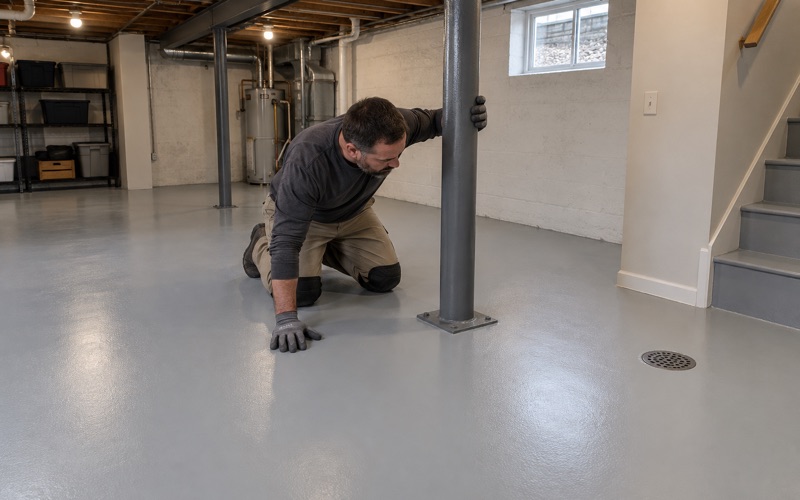
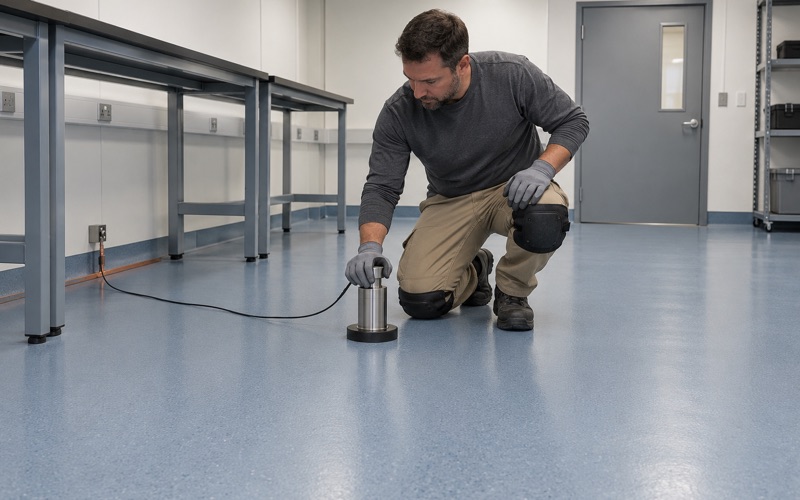
Moisture testing is a written line item in our scope, not an upsell after a blister. In an older storefront we usually set ASTM F2170 in-situ relative humidity probes, because a slab poured decades ago may sit on no vapor retarder at all, and a calcium chloride test alone reads only the top of it. The results decide whether the system needs a moisture-mitigation primer.
Looking for epoxy-flooring closer to La Grange Park? See La Grange Park Epoxy-Flooring.
Ogden Avenue and Congress Park: Two TIF Districts
The Ogden Avenue TIF, 2008
The Ogden Avenue TIF district dates to 2008. Among the new businesses the village names in it are an auto parts store, a scuba shop and a coffee redevelopment, which is a fair picture of how different the tenants on a single corridor can be. Each of those uses asks something different of the concrete.
An auto parts counter takes dropped metal, rolling carts and spilled oil, which suggests 100% solids epoxy with a quartz aggregate broadcast for grip. A shop where gear gets rinsed indoors needs that same grip plus careful detailing at any floor drain. A sales floor that mostly needs to look good under foot traffic may only need a thinner build with a polyaspartic topcoat.
The Congress Park TIF, 2011
The adjacent Congress Park TIF followed in 2011, and between the two districts new tenants have been moving into older commercial space for well over a decade. A TIF is a redevelopment tool, and no source we know of ties it to floor work, so we never suggest the district will pay for or reimburse a coating. Your budget for the floor should stand on its own.
What redevelopment does produce is tenant build-outs where the floor is one trade among many. We coordinate with the general contractor or the landlord so grinding happens before fixtures go in and after the messy demolition is done, and so the coating cures before shelving, racks or equipment are set on it.
Working Around Open Hours
Not every job is an empty room. When a business on Ogden Avenue or 47th Street is already open and wants its floor redone, we schedule around the hours the building has to stay open, sometimes splitting the room so half the floor stays usable. On a split job, the seam between the two halves is planned so it lands under a fixture line or a doorway rather than across the middle of an aisle.
Grinding and shot blasting are loud, so we plan that work inside the village’s construction hours rather than letting a one-day job run into a neighbor’s evening. We confirm those hours with the village before the schedule is set, and the dates go into the proposal beside the system and thickness.
Sales Floor, Service Counter and Back Room
One storefront rarely needs one floor. The front of a shop is judged on appearance, the counter on cleanability and grip, and the back room on whether it survives carts and pallets, so we may quote two or three systems in one lease space and say why each area gets what it gets.
The Sales Floor
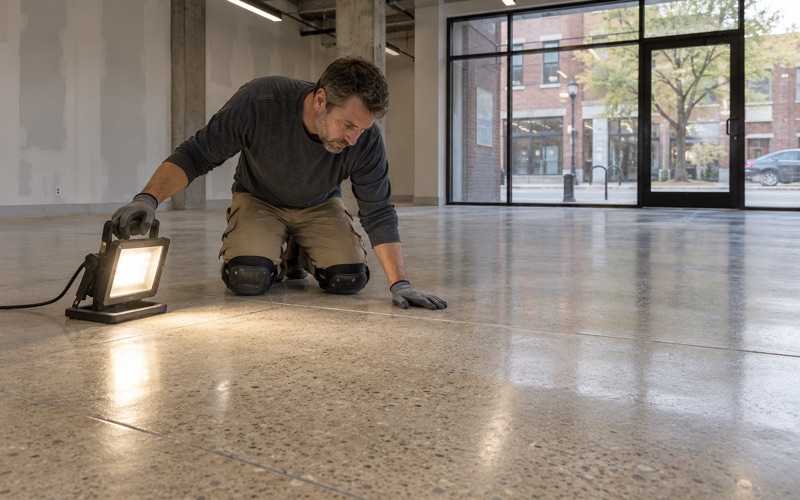
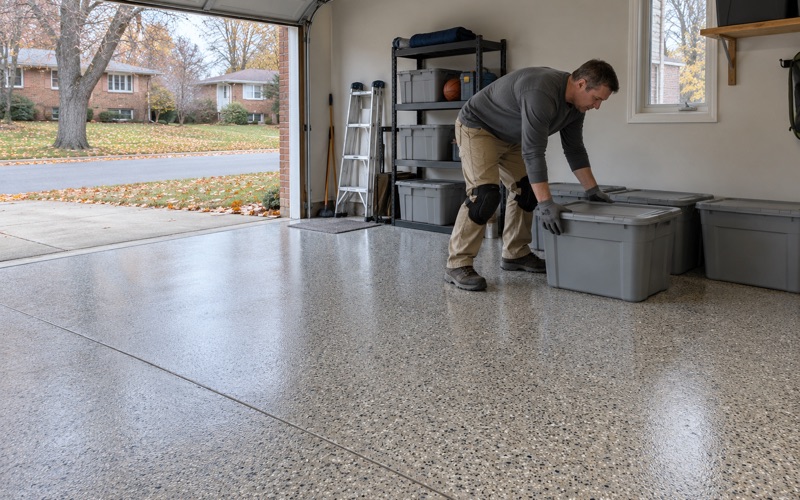
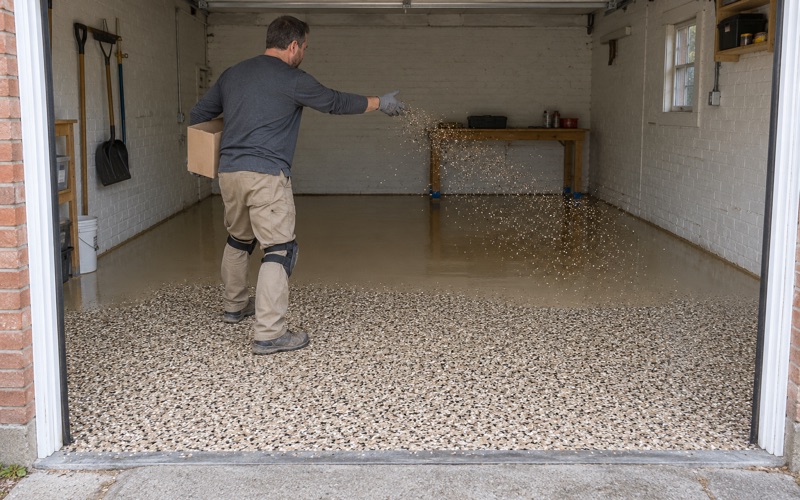
Customers see the sales floor, so color and finish matter most there. A vinyl flake broadcast hides the patching an old slab usually needs, while a clear coat over a ground slab shows every repair, which is something we point out before you choose. On a slab with sound concrete and few repairs, a lithium silicate densifier with a ground finish is sometimes the better answer than any coating.
Cracks in an older building need an honest read. A dormant shrinkage crack can be filled and coated over, but a crack that is still moving will telegraph through any film laid over it. We mark which cracks we expect to show again and write that into the proposal, so nobody is surprised when one does.
The Service Counter and Any Food Area
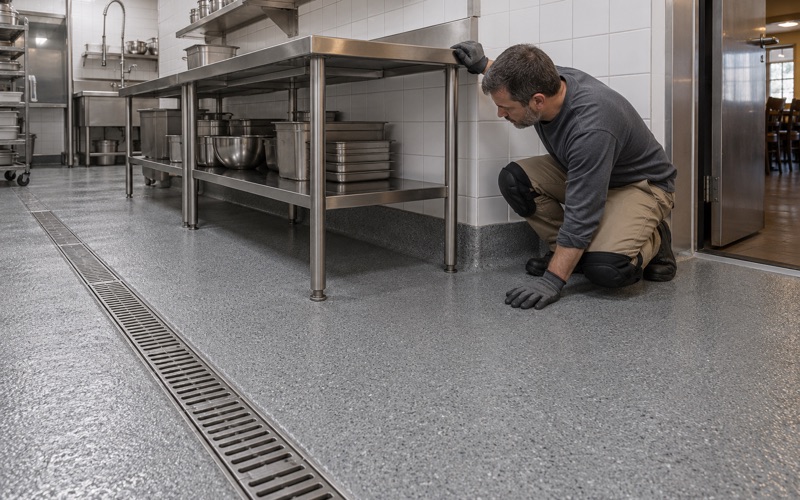
If the new tenant serves food or drink, the floor answers to the Cook County Department of Public Health, whose jurisdiction covers suburban Cook County including Brookfield. Illinois has adopted the 2022 FDA Food Code, and section 6-201.13 addresses coved floor and wall junctures, so we build an integral cove base rather than leaving a seam for water to sit in.
Urethane cement is usually our choice behind a coffee counter or in a prep area, because it tolerates hot water, steam cleaning and constant wet mopping better than a standard epoxy. Section 6-201.11 makes an exception for antislip floor coverings in areas subject to moisture, so a textured broadcast near the sink is consistent with the code rather than at odds with it.
The Back Room
Stockrooms and workrooms behind old storefronts are where the slab is often in the worst shape and the budget is often thinnest. A 100% solids epoxy at a real thickness, on a slab ground to an open profile, holds up to hand trucks and dropped cartons far longer than a roll-on paint, which matters when the lease runs for years.
Back rooms also tend to hold whatever an earlier tenant could not move: an old floor drain, a patched trench, a pad where equipment once sat. We detail those transitions before coating so the new floor does not peel at the edges of a patch, and if a section needs concrete repair first, the proposal says so and prices it separately.
Building and Planning Before the Shop Opens
Chapter 12 and the 2021 Codes
Tenant build-outs in Brookfield run through the village’s Building and Planning divisions, part of Administration and Finance. Chapter 12 of the municipal code was updated on April 10, 2023, to the 2021 International Building Code and related codes along with the 2023 National Electrical Code, and site plan review sits in its own 2023 section of that chapter.
Whether a coating needs its own permit is the village’s call, not ours, but it usually sits inside a build-out that does, with plumbing, walls or wiring moving. We ask the owner or general contractor where the permit and inspections stand, then fit grinding and coating into that sequence so an inspector is never stepping over a fresh, uncured floor.
Paperwork We Bring
Illinois issues no state license for flooring or coating work, so instead of a license number we bring proof of bond and insurance, and we ask Building and Planning what the village wants from a contractor rather than assuming. Coatings are chosen inside the Illinois VOC limits in 35 Ill. Adm. Code Part 223, which bind the installer as well as the manufacturer.
Low-odor systems also matter in a building where the business next door stays open while we work. Before the job is sold we read the warranty exclusions aloud, moisture first, so a landlord and a tenant both know what the coating covers and what it does not.
Curing Before the Doors Open
Opening dates in old buildings are sometimes set before the heat is running, and a coating laid on a cold slab cures slowly or not properly at all. We schedule curing against slab temperature and the dew point spread at the slab surface rather than the calendar, because a slab too close to dew point grows amine blush on epoxy and weakens the bond of the next coat.
Polyaspartic and polyurea topcoats shorten that wait, but they have their own limits on humidity and working time, so the topcoat is picked for the room’s conditions on the day rather than for speed alone. A walkthrough a few days before the job confirms the heat is on and the slab is where it needs to be.
- 20+ Years in Business
- Moisture Testing in Every Quote
- Written Proposals