Evanston Epoxy Flooring has spent more than 20 years on epoxy flooring in Bensenville and the rest of the north and west suburbs, and the floors we see in this village lean harder toward production than most. A shop where parts are cut, formed and assembled punishes a coating differently than a storage aisle, and we build the system for that difference.
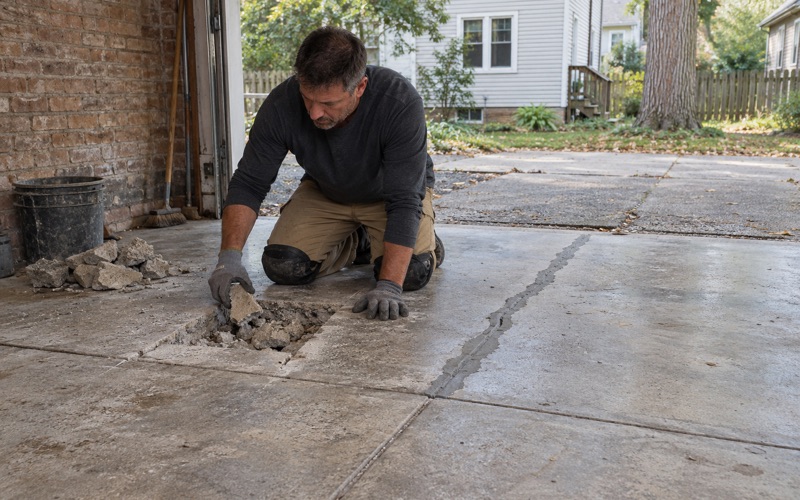
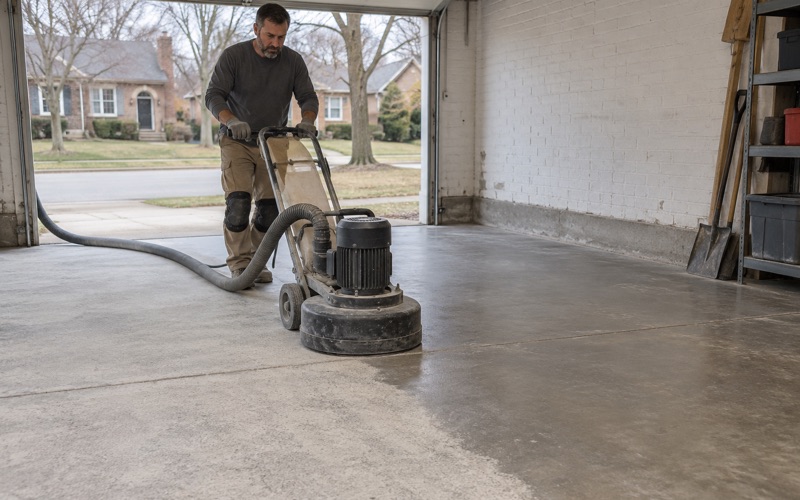
Every job starts with the slab, not the product. We open the concrete mechanically with a diamond grinder or a shot blaster, never acid, and we read what is already there before we price anything: the cracks, the old paint, the worn-through coating from the last contractor. When a slab needs repair before it can take a coating, the quote says so in plain words.
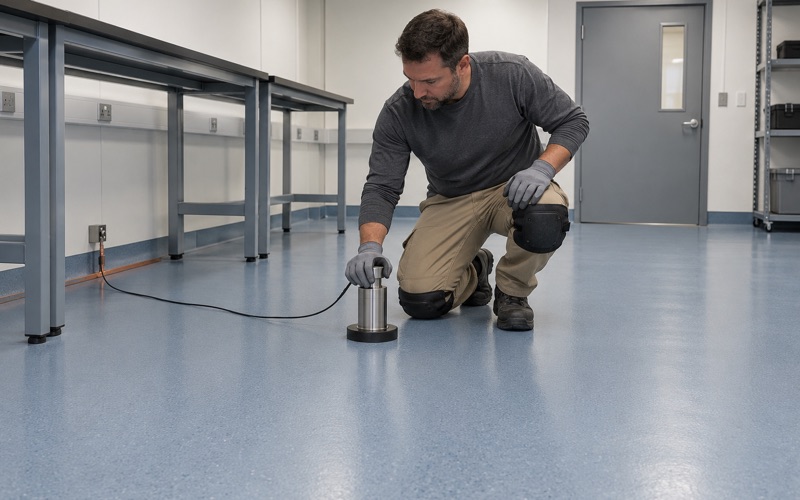
The proposal then names the product, the system build and the finished thickness, so the floor that goes down can be checked against the one that was sold. Moisture testing sits in that scope as its own line item, and the warranty exclusions are read aloud before anyone signs, with moisture first on the list.
Tables, Envelopes and Roll-Formed Metal: Who Makes Things Here
The makers on the village employer roll
Bensenville’s December 2024 principal-employer schedule, published in the village’s annual comprehensive financial report, names four manufacturers alongside its larger employers. AMTAB Manufacturing Co employs 250 making tables. Victor Envelope Company employs 220. All Metal, Inc. and The Protectoseal Co each employ 200, the first roll-forming light-gage metal and the second building vapor and flame control equipment.
We list them as neighbors, not as customers. The point is what their presence says about the industrial floor stock in the village: part of it is production and fabrication space, where material is cut, bent, assembled and packed, rather than only racked aisles where pallets sit and wait.
What a production floor asks of a coating
A fabrication floor takes point loads from machine feet, repeated impact from dropped parts and tools, and a steady film of cutting fluid, hydraulic oil and drawing compound. A thin roll-on product fails there quickly. We usually specify a 100% solids epoxy base at a stated thickness, with a quartz aggregate broadcast where traction matters more than looks.
Where heavy carts or pallet jacks run the same path all day, urethane cement is often the better answer than epoxy alone, because it tolerates heat, impact and wet conditions with less trouble. The proposal says which system goes where, so a shop with a wash bay and a clean assembly area does not end up with one coating forced across both.
A mechanical contractor’s shop and yard floors
Ewing Dougherty Mechanical also appears on the village list, with 200 employees. A mechanical contractor’s building typically mixes three floor problems: a pipe and sheet-metal shop, a staging area for equipment headed to job sites, and often a vehicle bay where trucks come in wet and leave oil behind.
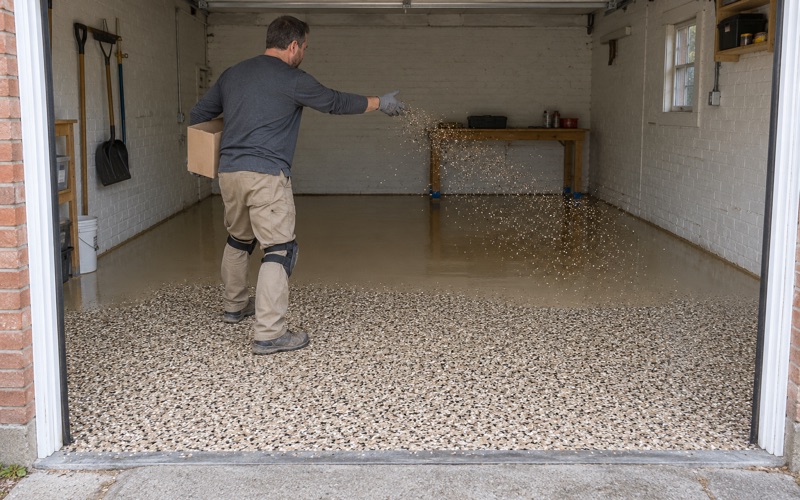
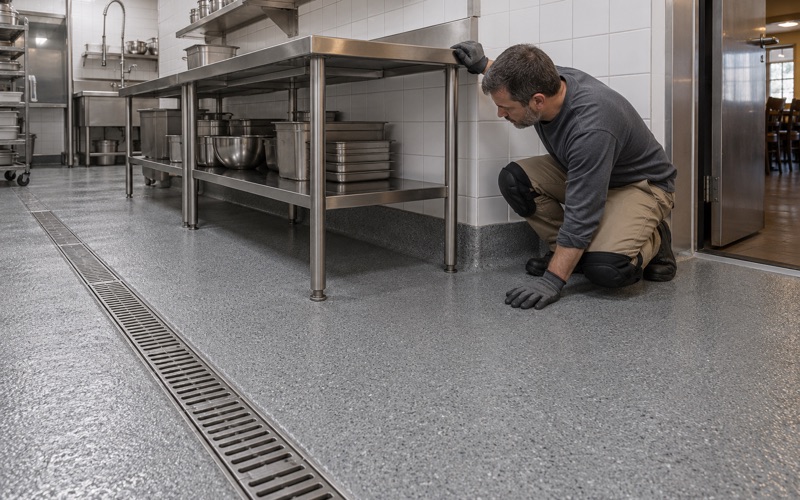
For buildings like that, we split the floor into zones before we quote. The shop side gets an impact-tolerant build, the bay gets a broadcast texture and a chemical-resistant topcoat, and the office corridor can take a decorative vinyl flake broadcast. Each zone is priced on its own line.
In a vehicle bay, a thin coating can show hot tire pickup: warm tires soften the film and lift it as they roll away. A properly built 100% solids system with a polyaspartic topcoat resists that, and so does letting the floor reach full cure before the first truck parks on it.
Looking for epoxy-flooring closer to Bellwood? See Epoxy-Flooring in Bellwood.
Metal Shop Floors: Dropped Stock, Oil and Rolling Carts
Impact from roll-formed and cut stock
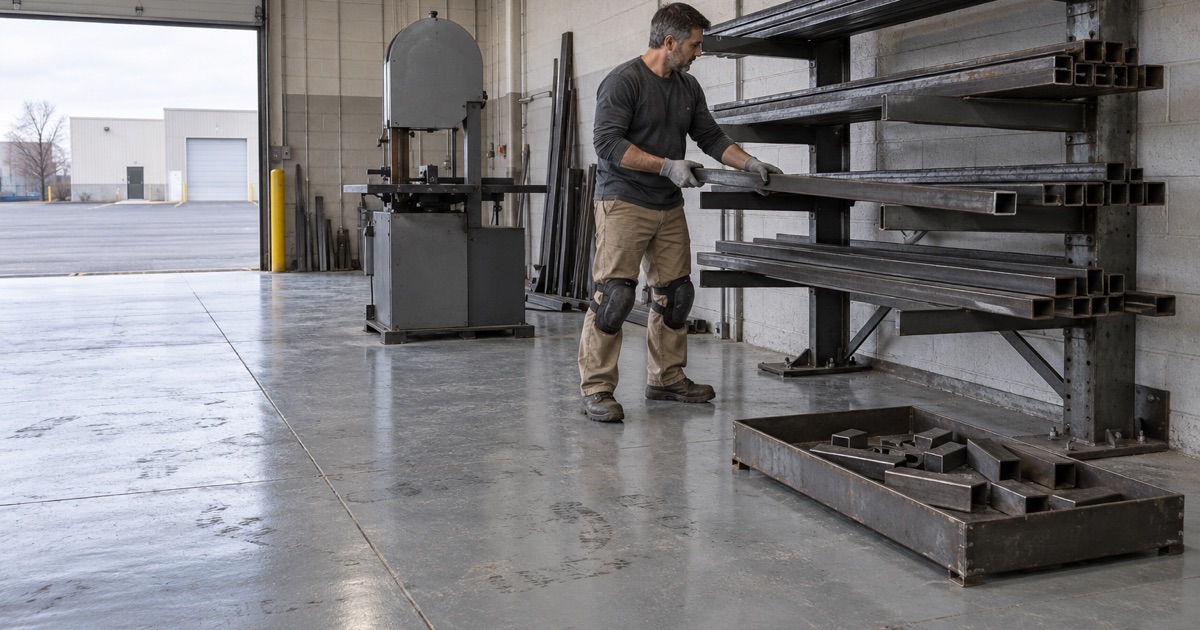
Roll-formed light-gage metal, the product the village list credits to All Metal, typically leaves the line in long lengths with sharp cut ends. In any shop handling stock like that, bundles get set down hard and offcuts hit the floor. A brittle coating chips at each of those points and then lifts outward from the chip.
Bond is what holds a coating through that abuse, and bond starts with profile. We grind or shot blast to a surface profile on the ICRI CSP scale suited to the build thickness, then confirm it before mixing anything. A thicker system over a properly opened slab survives impacts that would chip a thin film.
Oil, fluids and footing
Machine shops leak. Press lines, roll-forming stands and saws all leave a film of oil that soaks into bare concrete and sits on top of a smooth coating. On old oil-soaked concrete we degrease and grind until the contamination is out, and we tell the owner when it runs too deep for a coating to hold.
On the finished floor, footing comes from texture rather than hope. A quartz broadcast locked in under a polyaspartic or polyurea topcoat gives grip in a walkway that stays slick with fluid, and we can grade the texture coarser at the machines and finer along aisles that get mopped.
Equipment makers and controlled areas
The Protectoseal Co builds vapor and flame control equipment, and manufacturers of precision equipment commonly separate clean assembly and test rooms from the rough shop. Floors in those rooms are judged on cleanability and on dust: a sealed, seamless surface that does not shed concrete dust onto finished parts.
Where electronics are tested or assembled, a static-dissipative or ESD floor may be specified to a stated resistance range, and that has to be designed in from the primer up rather than added later. Lithium silicate densifier is an option on bare concrete in storage rooms that will never see a coating at all.
Six TIF Districts and Where the Industrial Floors Sit
TIF XII North Industrial
The village’s 2024 budget schedules name six tax increment financing districts, and only one carries a purely industrial name: TIF XII North Industrial. Bensenville borders the southwest corner of O’Hare International Airport, and the village describes itself as home to more than 1,500 businesses.
Older industrial slabs often carry decades of history: earlier coatings, patched trenches from moved machinery, and saw cuts that have opened over time. A floor coating is a film that follows the concrete under it. It will not stop a moving joint or a heaving slab, and we say so before the work rather than after.
Joints are where industrial floors often fail first. We clean out failed joint filler, decide with the owner which joints stay open as control joints and which get filled, and carry those lines through the coating rather than bridging them and waiting for the crack to telegraph back.
Route 83/Thorndale and Irving Park/Church Road
Two more districts are named for corridors: TIF VI Route 83/Thorndale and TIF VII Irving Park/Church Road. Corridor buildings often mix uses, so a single address can hold a fabrication bay, a parts counter and a showroom under one roof, each needing a different floor.
Commercial jobs here are scheduled around the hours a building has to stay open. That can mean coating half a shop over a weekend and the other half the next, or working nights so a parts counter opens on time. Fast-cure polyaspartic topcoats help when the return-to-service window is short.
We schedule curing against slab temperature and dew point rather than the calendar. A large shop with its overhead doors open can lose the dew point spread a coating needs at the slab surface, which invites amine blush on epoxy. We measure at the floor, and when conditions are wrong we wait rather than gamble.
Grand Avenue
The remaining districts include TIF IV Grand Ave/Sexton and TIF XI Grand Ave/York Road, both on Grand Avenue, along with TIF V Heritage Square. Together the names sketch where the village has focused redevelopment.
Grinding and shot blasting are loud, and commercial lots can sit within earshot of houses. We plan the noisy work inside the village’s construction hours so a one-day job does not run into a neighbor’s evening.
Permits, Licensed Trades and a Smaller Garage Market
Who reviews the work
Permits in Bensenville run through the Village of Bensenville Community Development department. Illinois issues no state license for flooring or coating work, so instead of a license number we show whatever contractor license, bond and insurance the village asks for, and we confirm those requirements against the current permit application before scheduling.
We choose floor coatings within the Illinois limit on VOC content, which binds the installer as well as the manufacturer, and the product named in the proposal is the one an owner or inspector will find on site. That matters on a production floor, where staff often keep working in the next bay during the cure.
Licensed trades on the same job
Floor work in a shop often turns up other trades: a trench drain to reset, a floor box to lower, a plumbing line to relocate. Bensenville’s permit application requires electrical and plumbing contractors to be licensed by an Illinois municipality and to post an original $10,000 surety bond with the village, and roofers to hold a State of Illinois license.
When a floor job needs electrical or plumbing changes, a contractor meeting those requirements handles that scope, and we sequence the coating around the rough-in so nobody cuts into a fresh floor. The same plain dealing applies to radon: a coating is not radon mitigation, which in Illinois takes an IEMA license.
Half the homes rented
Bensenville’s residential side is smaller than its 2020 census count of 18,813 might suggest. Of 7,015 occupied housing units, 3,553 are owner-occupied and 3,462 are rented, and 1,168 units sit in buildings of 50 or more. Owner-occupied detached houses number 3,080, which is the realistic pool for a residential garage floor.
Nearly three quarters of the village’s housing units, 73.8 percent, predate 1980, so on a garage here we test before we quote. We use ASTM F1869 calcium chloride or ASTM F2170 in-situ probes, because an older slab may have been poured without a vapor retarder beneath it.
Where a garage belongs to a condominium or a two-flat, the job is scheduled with the association or the other owner before the first bag is opened. Every home job also gets a written contract and the state’s Home Repair: Know Your Consumer Rights pamphlet before work starts, as the Illinois Home Repair and Remodeling Act requires.
- 20+ Years in Business
- Moisture Testing in Every Quote
- Written Proposals